China and the challenges of globalization









While protectionism in the form of tariffs or other disincentives to manufacture abroad can seem to provide or protect domestic jobs (usually mid-level factory jobs), it is at best a short-term fix. Because prices for protected goods must inevitably rise, protectionism is actually like a “tax” that all citizens pay in proportion to their purchases of protected goods. Moreover, the “tax” is regressive in that it skews to those who have lower incomes (whose purchases of protected goods constitute a higher proportion of their disposable incomes). Thus, the many subsidize the few.
On its surface, this tradeoff can seem a rational choice for national policy. There is nothing intrinsically wrong for the many to subsidize the few. There is even a praise worthy sense of common humanity and national family. The problem is that, over time, in an interconnected world, protectionism sub-optimizes economic growth and undermines a country’s relative capacity to build national wealth.
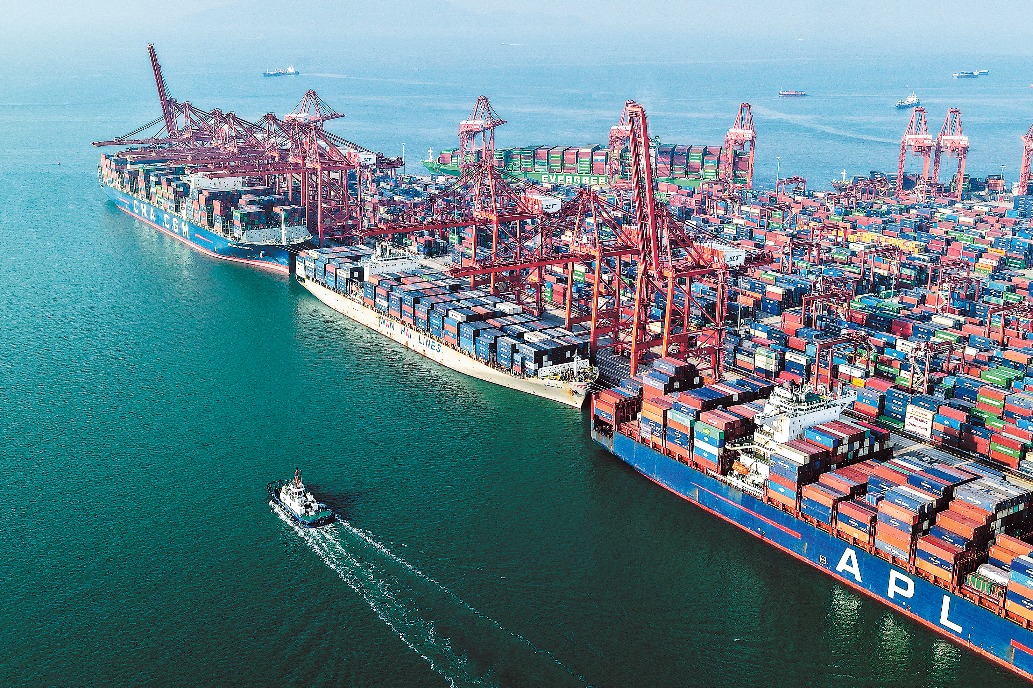
Globalization certainly facilitates developing countries whose workers are willing to work for low wages. That’s one reason why China has been the biggest beneficiary of globalization. While China has now become less dependent on global trade — as China’s economy has grown, workers’ wages have risen and domestic markets have expanded — China still champions globalization for its own continuing development. Ideally, this benefits both the developing world and the whole world.
There are, however, serious challenges. Taking the globe as a whole, globalization optimizes economic growth and development. (This is Economics 101: the law of comparative advantage.) Yet, because humanity is organized as fiercely independent and highly diverse nations (almost 200)—often divided by ethnicity or religion—the benefits of globalization cannot naturally be allocated evenly by country. While markets are rationally efficient, they also can be unintentionally cruel. National inequalities grow insidiously; festering, they foster instability, even violence. Eventually, no one is immune.
Moreover, multinational corporations and international investors have accreted a huge, disproportionate share of the riches of globalization, the impact of which has widened precariously the world wealth gap between rich and poor. The trajectory could lead to tragedy and it must be altered. In assuming its share of globalization leadership, China must likewise assume its share of globalization responsibility.
The author is a public intellectual, political/economics commentator, and international corporate strategist.