



Fears over aircraft carriers uncalled for









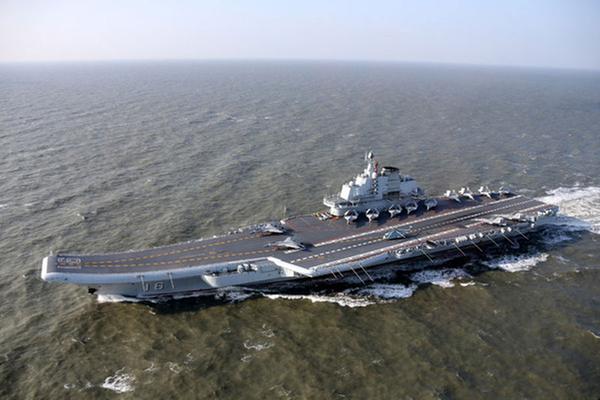 |
| Chinese aircraft carrier Liaoning returns to Qingdao, China after Pacific drill, January 13th, 2017. Comprised of aircraft carrier Liaoning, a number of destroyers, some J-15 carrier-based fighter jets and helicopters, the fleet sailed through the Bohai Sea, the Yellow Sea, the East China Sea and the South China sea. [Photo/CRI] |
A domestically built aircraft carrier indeed marks a very important step for China toward boosting its naval combat capability and helping safeguard its national interests across the oceans. Aircraft carriers are an important, and in these times a necessary, component of a country's navy.
Despite that can China transform its navy into an ocean-going maritime force without developing aircraft carriers? The answer is definitely "no".
Due to the limitations of their functions, both submarines and destroyers or frigates cannot be used as substitutes for aircraft carriers in modern warfare. An aircraft carrier and the formation, given its strong and continuous navigation capability and aircraft mobility, can sail deeper into the oceans and thus can control a wider maritime area.
With its aircraft carriers and their vessel formations, China's navy can patrol the Pacific and Indian oceans to safeguard its national economic as well as scientific and technological interests.
By forming a complete combat system with an aircraft carrier and its formation, a country can not only develop a strong offensive military ability, but also build a solid defensive system that can help it conduct multiple traditional and non-traditional military missions.
Judging by the experiences of other countries, compared with remote shore-based air forces, versatile air forces usually have a much better combat effect in sea battles. And since no new maritime force is likely to replace an aircraft carrier-based formation in the next couple of decades, China has no choice but to develop its capability to build aircraft carriers if it wants to develop a navy with a wider reach.
Over the past decades, China has been endeavoring to develop its navy into a maritime force with greater fighting ability. But compared with the high standards of some other countries' navies, China's general naval strength is not that satisfactory, because its aircraft, submarine and other vessels are not yet a cohesive force. And aircraft carriers, with the support of submarines, frigates and destroyers, can provide that cohesion to the navy.
A country that possesses aircraft carriers can establish an integrated strategic system through unifying the organizational and command mechanism and adding the cohesive edge to its combat ability by fortifying its defense system.
Some observers have expressed concerns that, to build more aircraft carriers, China might have to divert its financial resources that otherwise could be used for improving people's livelihoods. Such concerns are exaggerated, because without safeguarding national security a country cannot improve its citizens' lives. Without the guarantee of security, there would be no talk of development for a country or its people.
We should realize that China still faces maritime threats such as contradictions, frictions, even the threat of war because of the disputes over sovereignty and jurisdiction of islands and reefs, marine resources and strategic sea lanes. Some non-traditional maritime threats such as the growing pirate activities and threats to China's overseas assets and Chinese citizens working abroad are also of great concern. All these mean China must have a powerful navy to maintain national security and protect Chinese citizens' interests.
China's military budget is only 1.28 percent of its GDP, of which only 10 percent is spent on the navy, which is low compared with that of the United States, Russia and India. China is developing aircraft carriers for defense purposes; it has no intention of challenging other countries. A country poses a threat to other countries because of its national defense policy and strategy, not its military power. And China has always followed a defensive military policy and vowed not to seek hegemony. More important, China will not abandon its defensive military and national defense strategy even if it builds more aircraft carriers.
The author is an expert on military issues.
- A glimpse of life on aircraft carrier Liaoning
- Manufacturing of China's first domestically-manufactured aircraft carrier on schedule
- Images: Aircraft carrier Liaoning
- China's aircraft carrier returns to port after drill
- China's new aircraft carrier to be launched early 2017 and to enter the service by 2020, experts say





