



Unified rules, not exclusiveness, can boost trade









Editor's note: One year after the United States withdrew from the Trans-Pacific Partnership agreement, the remaining 11 members have decided to revive it. The trade agreement will now be called Comprehensive and Progressive Trans-Pacific Partnership, Canadian Prime Minister Justin Trudeau said last week. Two experts share their views on the future of the CPTPP with China Daily's Pan Yixuan. Excerpts follow:
New trade pact against rules of globalization

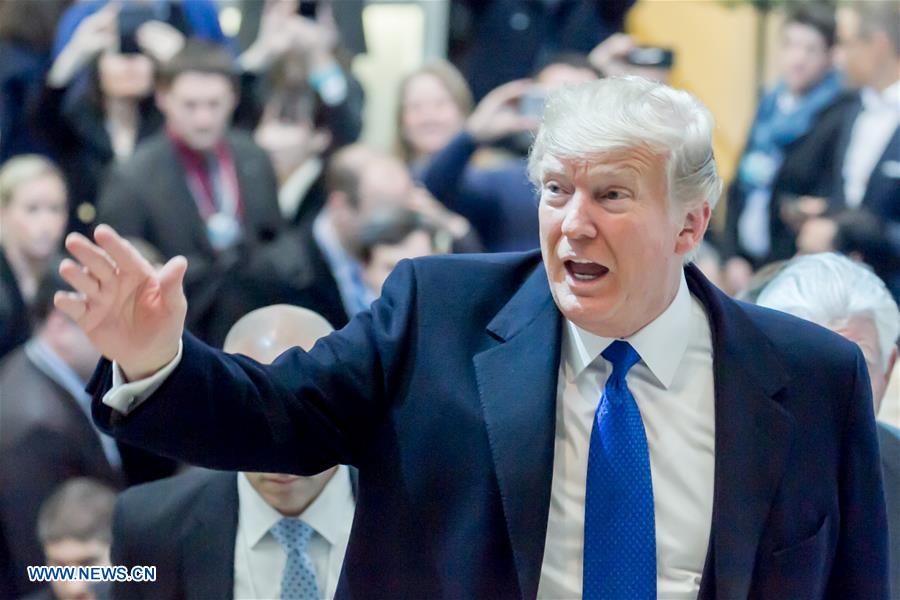
US President Donald Trump pulled out of the TPP and other multilateral agreements ostensibly to reduce the US' trade deficits with other countries, and seek bilateral cooperation in the hope of deriving more benefits for Washington. Trump's move has dealt a blow to other TPP member countries, as they would be deprived of benefiting from the largest economy's market and investment.
Since the US accounted for about 60 percent of the original 12 TPP members' combined gross domestic product, its withdrawal caused the TPP's share to drop from 40 percent to about 14 percent in the world economy.
But despite the decline in its membership and a smaller trade arrangement, the remaining 11 member countries seem to believe the mechanism still has the potential to boost their economies and, hence, have agreed to renegotiate the terms and conditions under the CPTPP, in order to benefit from the low-tariff free trade agreement. For example, as the world's third-largest economy, Japan can make more investment overseas than attracting foreign capital to its almost saturated domestic market.
Plus, the CPTPP can help fulfill one of the TPP's goals, that is, to prevent China from being involved in making trade rules for the Asia-Pacific region. Even countries such as Singapore and Vietnam, both being signatories to several multilateral mechanisms, have worked to exclude China from the CPTPP, which shows the new trade agreement, to a certain degree, will dilute China's involvement in multilateral mechanisms, which goes against the spirit of globalization.
Real deals needed to facilitate free trade

The TPP was designed primarily as an Asia-Pacific trade agreement to check the peaceful rise of China, and to consolidate the US' leadership in regional trade. That explained why the US excluded China, the world's second-largest economy, from the agreement. But the TPP, even in its original form, could hardly boost the US' real economy, let alone revive the US' manufacturing sector. Even former US secretary of state Hillary Clinton, a firm advocate of the TPP, opposed the agreement during the 2016 presidential campaign.
Trump withdrew from the TPP to protect the long-term interests of the US. Since the US accounted for 60 percent of the combined GDP of the TPP members, its withdrawal weakened the trans-Pacific trade mechanism. The Trump administration doesn't find the CPTPP too attractive, either.
Now, Japan is striving to revive the TPP to check China's peaceful rise, and hopes the US would rejoin the new trade agreement. But this political game of keeping China out of the TPP and now the CPTPP is neither good for a trans-Pacific trade agreement nor for free trade, especially because the CPTPP will do little to boost the economies of its member countries.
There are many regional free trade agreements with different rules, and these differences are becoming obstacles for regional trade, in particular for cooperation. If countries want to seek win-win cooperation on a larger scale and higher level, they have to reduce the overlapping rules in these agreements that are impeding regional trade. And the signatory countries to such trade agreements should negotiate a truly global trade system which unifies market rules, and makes them clearer and simpler.





