Trump exploits public illiteracy; media uninquisitive on trade deficits









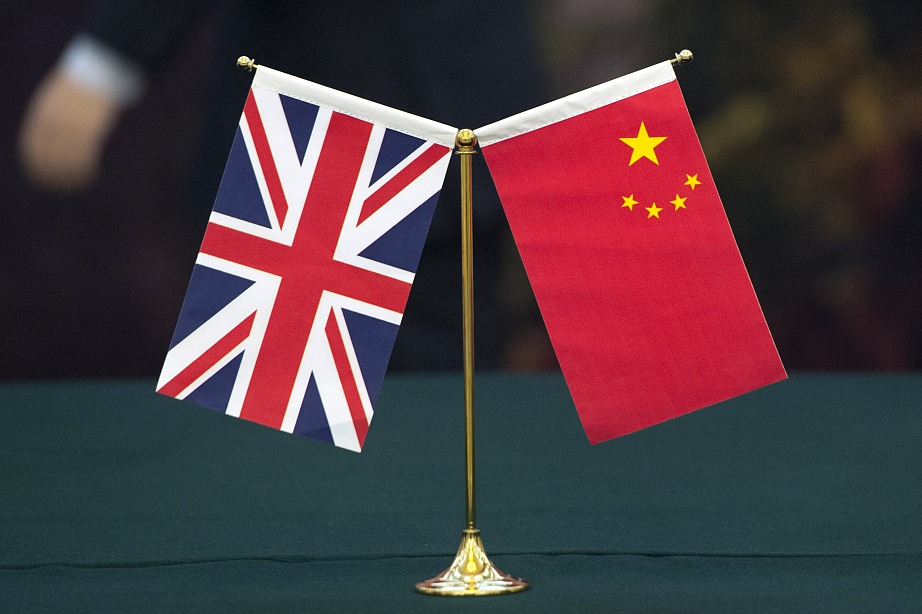
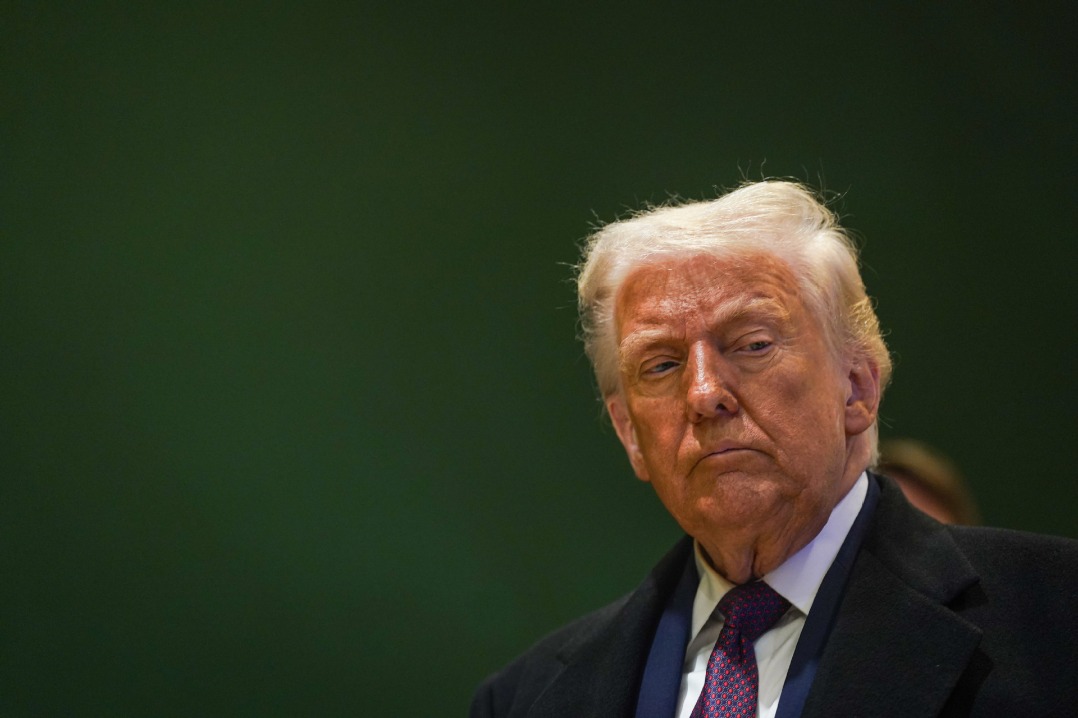
In his remarks before signing a memorandum last Thursday to impose tariffs on up to $60 billion in imports from China, US President Donald Trump continued to describe the US trade deficit as evidence that his nation has been getting ripped off by its trading partners.
"So we're going to get it taken care of. And, frankly, it's going to make us a much stronger, much richer nation," Trump said, lamenting what he claimed was an $800 billion US trade deficit with the world and $375 billion to $500 billion with China.
If Trump, a real estate businessman, could be forgiven for misunderstanding trade deficits, it is unbelievable when US Trade Representative Bob Lighthizer also highlighted trade deficits in hearings before the Senate and House last week.
The same rhetoric was used by Secretary of Treasury Stephen Mnuchin, Commerce Secretary Wilbur Ross and Trump's assistant Peter Navarro, the so-called economic and trade experts.
Their views on trade deficits have been rebuked by every US economist I have interviewed and read. In fact I have yet to find one economist who agrees with them.
That is probably why Mark Perry, a scholar at the American Enterprise Institute and a professor of economics and finance at the University of Michigan, wrote last week that the first economic lesson that Larry Kudlow, the new director of White House National Economic Council, should deliver to Trump is that overall US trade deficits are "Made in the USA", not by "unfair" foreign trade practices.
Perry explained that the trade deficit is equal to the excess of private sector investment over savings, plus the excess of government spending over tax revenue.
"The US trade deficit is therefore just the mirror image of what is happening in the US domestic economy. If expenditures in the US exceed the incomes produced in the US, which they do, the excess expenditures will be met by an excess of imports over exports (read: a trade deficit)," he wrote.
In Perry's view, Trump's imposition of anti-China tariffs will not alter the overall US trade deficit. "Indeed, if China is forced to reduce its bilateral trade surplus with the US, then others will supply what the US consumers and investors demand," he wrote.
He said the only effective way for Trump to cut overall trade deficits would be for him to reduce the US fiscal deficit. "But ironically, President Trump's policies are projected to increase the fiscal deficit, which will result in a larger trade deficit," he said, clearly referring to Trump's tax cut and fiscal deficit plans.
Robert Lawrence, a nonresident senior fellow at the Peterson Institute for International Economics and a professor at Harvard University, also wrote this month on why Trump's focus on trade deficits is misleading.
He listed five misconceptions: trade deficits are bad; trade balances reflect trade policies; trade deficits always lead to job loss and slower growth; trade performance is the most important reason for the long-run decline in US employment in manufacturing; and bilateral trade between countries should be balanced.
Lawrence also argued that over the long run, trade policies are not the most important cause of fluctuations in the trade balance; changes in the determinants of national saving and investment are.
"Moreover, the state of a nation's trade balance per se tells us very little about the health of its economy. Trying to achieve balanced trade (or surpluses) with individual trading partners will only generate distortions and constrain the diversity of goods for purchase while raising prices, with little or no benefit to national welfare," he wrote.
The trade deficit figure cited by Trump is also misleading. For example, China contributed only about $10 in the manufacturing of an iPhone, but its total value, much of it contributed by the US, Germany, Japan and South Korea, is calculated as imports from China. Using Trump's words, it's "transshipment" of trade imbalance to the US via China.
Trump and his team have clearly been exploiting the public illiteracy on the issue, partly because US news media have not pointed out the fallacy each and every time Trump blames other nations for US trade deficits.