The world needs science, and science needs women









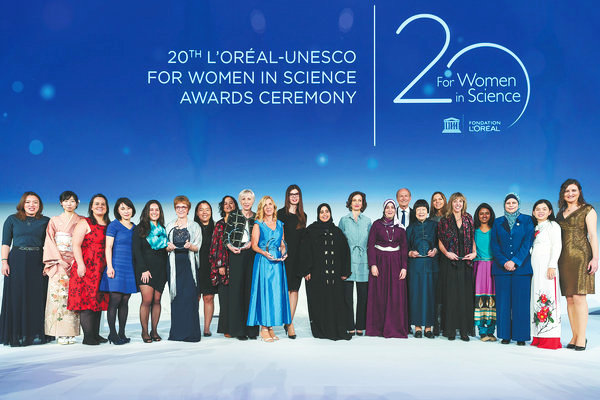
While these last few months will undoubtedly remain in our collective history as those of the global liberation of women's voices in the world of cinema, in politics, the non-for profit sector and even business, there is a sector where women's voices have remained astonishingly silent: science. This is the case despite the fact that science faces the kind of disparity about which we should all, as a society, be concerned.
If the proportion of women engaged in scientific careers has grown, albeit too slowly, many of them still come up against obstacles in accomplishing long and flourishing careers, achieving positions of responsibility or gaining access to funding. As a result, in European Union for example, only 11 percent of senior roles in academic institutions are currently held by women. Less than 30 percent of researchers are women and only 3 percent of Nobel Prizes for Science have ever been awarded to women scientists.
How can we explain that after years of fighting for gender equality, the under representation of women in science should still be so glaring, and above all, what are the consequences for our world?
They are numerous and we must collectively seek to understand them, as much for the society that we want to build, as for the advance of scientific progress and knowledge, which are critical to solving the great challenges of our time.
The absence of women has had and will have major consequences. Let's take two fields of scientific application.
Firstly, in the area of health, there are multiple examples. Have we truly realized, for example, that for a long time, the idea that cardiovascular illnesses were a masculine issue prevailed? The principle clinical trials on reducing risk factors were led exclusively by men. Even in 1999, it was observed that doctors undertook half as many examinations of cardiac illnesses among women than among men. The landmark study on aspirin as a means of reducing the risk of cardiac arrest encompassed more than 22,000 men and not a single woman. Very sadly, this led to inappropriate treatment for women.
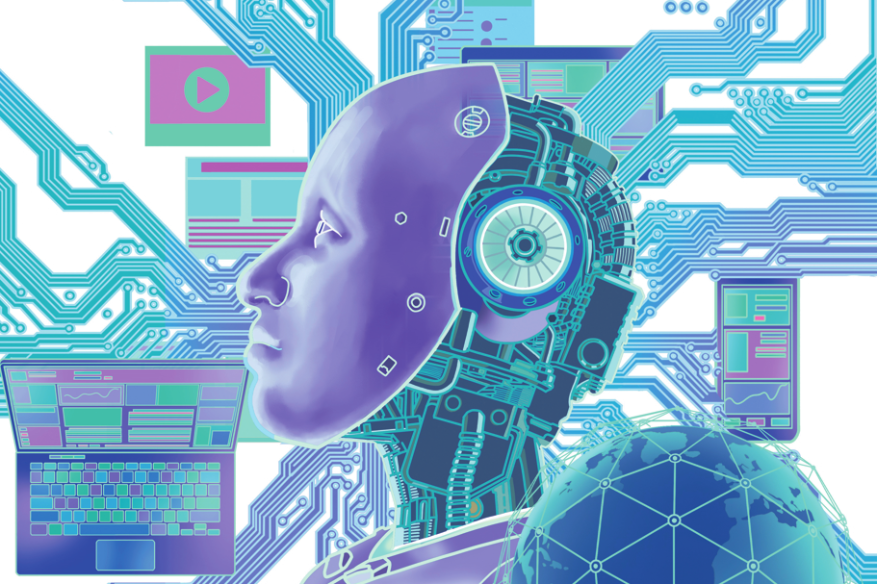
The second field, which is just as concerning, is men's control of the digital revolution, and the subsequent implications for women. In the early stages of voice recognition, there was no doubt over male bias in software development. Consequently, not all that long ago, the number of transcription errors when women used voice recognition applications was considerably higher than among their male counterparts, as the applications had been designed from the outset by men. In the domain of artificial intelligence, which will have a definitive effect on our future, studies have also shown that image banks associate women with domestic tasks and men with sport, and that image recognition software does not only reproduce these prejudices, it amplifies them. In contrast with humans, algorithms cannot fight consciously against acquired prejudices. As artificial intelligence gradually invades our lives, the issues will only increase. If robots are used to model the world in the near future, it is vital that they should be programmed by men and women.
The idea is clearly not to say that women would be better scientists than men, but rather to become conscious that we need a more balanced scientific community in terms of gender representation, so as not to deprive ourselves of everyone's creativity and talent, and to design, through scientific progress, a more inclusive society. Creating coalitions for a more inclusive science is urgent, in order to best address the challenges facing the world, while advancing knowledge for the benefit of all.
The world needs science, and science, more than ever, needs women.
The author is executive vice-president of the L'Oréal Foundation.