Zero-tariff step is good medicine









Anti-cancer drugs will soon be cheaper after State Council move
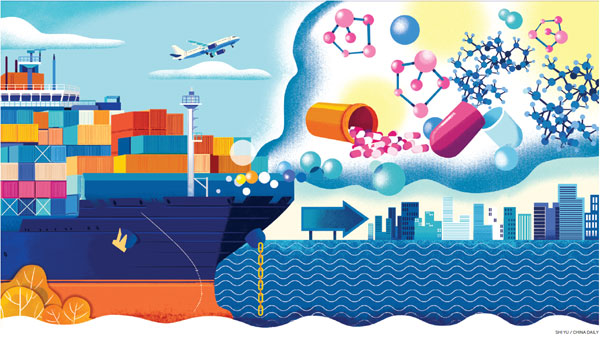
Zheng Lei and his friends were both excited and relieved on Thursday when they heard that the State Council, China's Cabinet, announced that the country would levy no tariffs on imported cancer-fighting medicines from next month.
Over the past 18 months, the 33-year-old engineer in Hefei, capital of Anhui province, has paid out more than 5,000 yuan ($793) each month on treatment, much of it to buy imported medicines to tackle his father's lung cancer.
"In addition to foreign medicines, I also face medical bills generated from other therapies like many other cancer patients' families," Zheng said.
"So when my friends told me the price of drugs from overseas will probably drop when the zero-tariff policy is effective, I was hugely relieved. My medical bills will shrink," he said.
The no-tariff policy to reduce the cost for cancer-patient families and improve the country's healthcare system was approved at a State Council executive meeting on Thursday.
The meeting, presided over by Premier Li Keqiang, also said other measures will be carried out to increase the benefits for cancer patients and their families.
A significant level of value-added taxes will be reduced for the production and import of cancer-treating medicines. Government procurement and cross-border e-commerce will also be used to eliminate unreasonable prices and surcharges.
The move was the latest after the premier pledged the central government's determination to levy as few tariffs as possible on imported cancer medicines when he met with the press in March.
Experts estimated that the tariff-free policy is expected to reduce costs for more than 4 million patients suffering different types of cancers, a number equivalent to nearly one fourth of the world's new cancer patients each year, said the National Center for Cancers.
"Apart from the reduction in tariffs, relevant departments should also join in lowering medical prices with integrated policies in the process of production, logistics and importing raw materials," Li said at the meeting.
"Prices should be really reduced for some anti-cancer drugs that patients are in desperate need of to make them and their families to feel the difference."
Just two days before the meeting, Li visited Shanghai Roche Pharmaceuticals Co, which focuses on anti-cancer medicines. He said some drugs can be included in medical insurance and called on pharmaceutical companies like Roche to reduce the prices of key medicines.
According to the National Center for Cancer, the number of new cancer patients in China each year is 4.29 million, with more than 10,000 people diagnosed with various tumors per day. China accounted for nearly one fourth of the world's new patients suffering cancer, the center said. Many of them are facing long periods of treatment with imported medicines.
Tariff rates for imported cancer medicines range from 2 to 8 percent depending on the types and their origin.
Chen Bo, a professor at the Cancer Hospital of the Chinese Academy of Medical Sciences, said the no-tariff policy is expected to mostly benefit patients using targeted drugs. These fight the spread of cancer by targeting specific molecules.
Some patients have to pay up to 50,000 yuan per month for targeted drugs, Chen said. For Chinese patients, targeted drugs are all imported and are under patent protection, which means they cannot be copied by domestic pharmaceutical factories, he said.
Zheng said the monthly cost of 5,000 yuan for him was a huge burden, but it's even more difficult for some of his friends using targeted drugs.
Shi Lichen, founder of the medical assessment agency Maisikanglai Technology Co in Beijing, said the move demonstrated the country's determination to reduce prices of anti-cancer medicines.
"Additional policies should also be introduced at the same time, including shortened time for new medicines to be approved, embracement of cancer medicines into reimbursement of the medical insurance system and measures to reduce costs in the logistics process," Shi said.