



B&R Initiative key to SCO countries









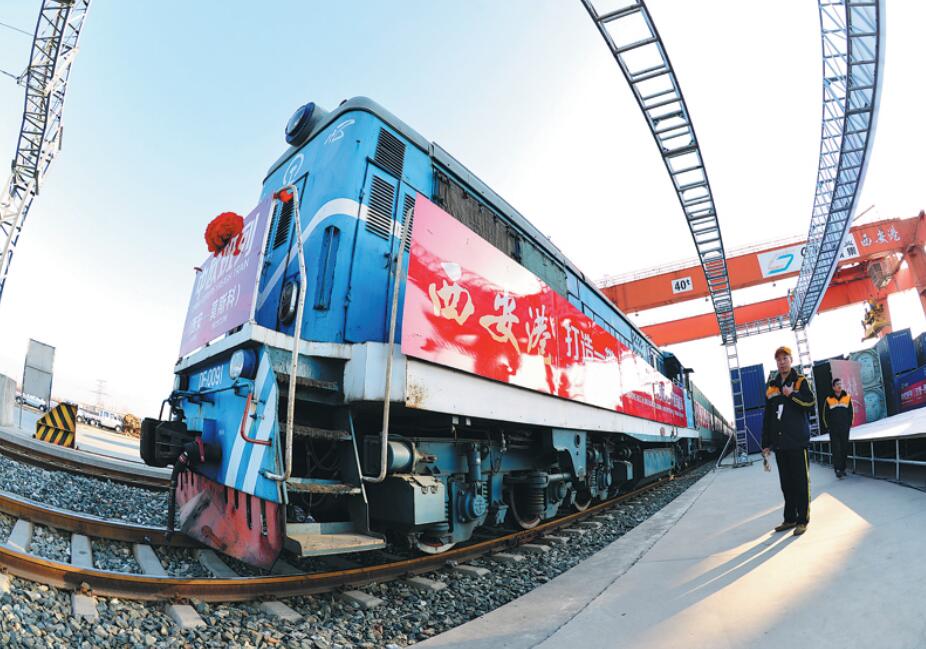
Opportunities lie in infrastructure, urbanization, industrialization, and other communication sectors
The Belt and Road Initiative and new business modes will further promote economic ties among members of the Shanghai Cooperation Organization, which are deploying more resources in railways, trade, financial services and people-to-people exchanges, experts and business leaders said.
New opportunities will come from the growing demand of countries in Central Asia, Eastern Europe and South Asia for infrastructure projects and their developing priorities on sustainable development in urbanization and industrialization, and in the service and communication sectors, they said.
This comes as the SCO Summit kicks off in Qingdao, Shandong province, on Saturday, aiming to inject new drive into regional economic integration.
The SCO members, which include China, Russia, Kazakhstan, Kyrgyzstan, Tajikistan, Uzbekistan, India and Pakistan, cover about half the world's population and are important participants of the B&R Initiative.
A number of major joint projects have been completed in SCO member states under the framework of the B&R Initiative since 2014, including highways, railways, tunnels and electric power plants, which improve cross-border logistics and promote trade among SCO countries.
PJSC TransContainer, Russia's biggest container operator, will run three trains carrying container cargo per week from the middle of June, between Yiwu in Zhejiang province and Moscow.
In response to the soaring logistics demand between China and Russia, as well as among other SCO member states, TransContainer's new cargo route will have a capacity of 50 40-foot equivalent unit containers, said Alexander Podylov, director of sales and business development of the Russian freight cargo operator.
Alexander Machkevitch, chairman of Eurasian Resources Group, a Kazakh international mining company, said the group is discussing joint projects with Chinese companies in Kazakhstan, encouraged by the fast growth pace of the B&R Initiative.
"Historically our aluminium smelter, which is the only producer of aluminium in Kazakhstan, was built with China Nonferrous Metal Mining (Group) Co and is one of the largest foreign investments made by China anywhere in the world," he said. "One of the new projects is related to the reconstruction of the two power generation units at Aksu electric power plant."
"These projects are based on the stabilized economy of SCO members, and their surging goods, commodities and service imports from each other, as well as the quickly diversifying multilateral trade and investment activities among them," said Wang Zhipeng, a professor of regional economy at Beijing Jiaotong University.
The total volume of trade in goods between China and the other SCO member countries reached $217.6 billion in 2017, an increase of 19 percent from the previous year, official data show.
Mutual investment has been growing steadily, with China's non-financial direct investment in other SCO member countries amounting to $74.2 billion and investment in the "reverse direction" totaling $1.09 billion as of April 2017, according to the Ministry of Commerce.
China has also built 21 economic and trade cooperation zones within the territory of the SCO countries, making contributions to expanding local employment and increasing tax incomes.
Eager to further strengthen ties, China and member countries of the Eurasian Economic Union signed an agreement in Astana, Kazakhstan, in May to cut trade barriers and facilitate economic activities.
The economic and trade agreement covers 13 chapters, ranging from customs cooperation and trade facilitation, intellectual property rights, to government procurement, with new topics including e-commerce and market competition, according to the ministry.
The Eurasian Economic Union was founded by the leaders of Russia, Belarus and Kazakhstan in May 2014. The treaty of the union came into force in 2015, when Armenia and Kyrgyzstan joined the bloc.
The Ministry of Commerce said the agreement aims to further reduce non-tariff trade barriers, improve trade facilitation, while creating a favorable environment for industrial development and boosting China's economic and trade relations with the Eurasian Economic Union and its member countries.
Zhou Shijian, an economics professor at Tsinghua University, said the agreement will help the six countries better shape the "docking" of the fast-growing B&R Initiative.
"Even though many parts of the world are still having troubles with unilateralism and trade protectionism, China and the five-nation union have reached broad consensus on Eurasian economic integration," he said.










