Trade conflict will redefine US-EU ties









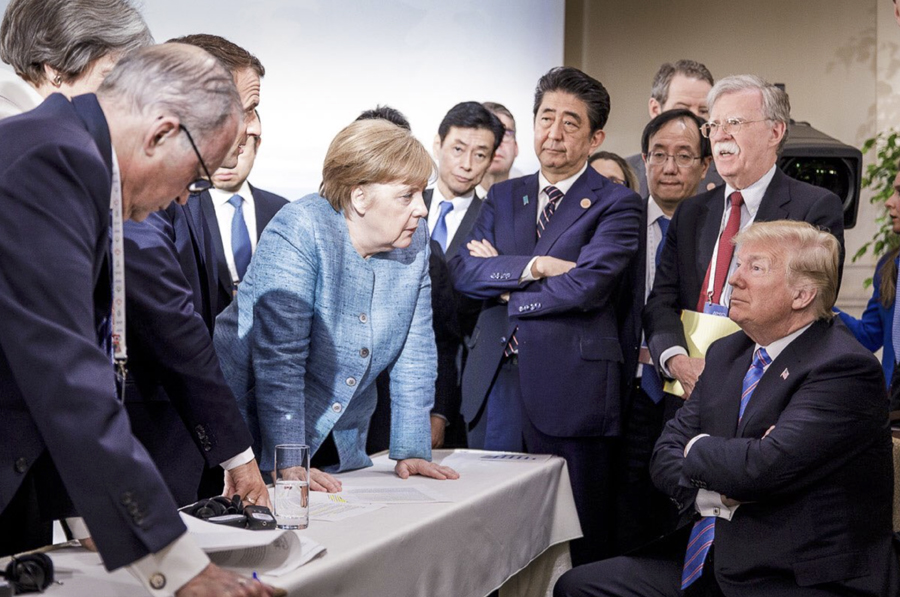
At the just-concluded G7 Summit in Charlevoix, Canada, US President Donald Trump threatened to "stop trading" with some of the US' closest allies unless they change what he believes to be unfair trade policies. This once again shows the United States and its allies, especially the European Union, are facing a severe test.
On June 1, the US imposed steep tariffs of 25 percent on steel and 10 percent on aluminum imports from three of its biggest trading partners, including the EU. In an immediate response, the EU announced additional tariffs on about $7 billion worth of US products, leading the allies closer to a trade war.
Since 22 of the EU's 28 member states are also the US' security allies in the North Atlantic Treaty Organization, the EU expected permanent exemption from the indiscriminate tariffs Trump imposed on steel and aluminum imports in March claiming they threatened "US national security". And when the EU published a list of possible retaliatory moves against the US, French President Emmanuel Macron and German Chancellor Angela Merkel separately met with Trump in the hope of pre-empting a trade war. But the EU was disappointed with the one-month exemption the US offered.
Furthermore, the EU could not agree to exercise voluntary control or accept quotas on the export of steel and aluminum as the US required. Also, the EU was aware of the US' determination to reduce trade deficits by all means and realized that a compromise will not shield it from more indiscriminate protectionist policies of the US.
Trump rubbed salt into the wounds of the EU by criticizing NATO, withdrawing from the Iran nuclear deal and starting an investigation into imported automobiles, which comprise the largest proportion of EU exports to the US. Brussels retaliated at once, saying it would cooperate only if Washington provided permanent exemption from the "punitive" tariffs.
The basis of cross-Atlantic relations after World War II was the extensive and close economic cooperation between the US and Europe, which has helped them to control disputes and remain allies even when EU-US trade competition increased. For instance, the US-EU disputes over Iraq and steel and aluminum almost reached the flash point when George W. Bush was US president, but he didn't take any Trump-like measures because he valued the US' ties with the EU.
Therefore, Brussels thought it could influence Washington as an equal partner. But Trump's unpredictability and the rise of populism in the US that he represents have now made the EU realize the cross-Atlantic partnership is led by the US, and Europe is no longer an equal partner.
True, EU-US relations have suffered a serious blow, but it is too early to say this is the beginning of the end of the partnership. The trade conflict will continue affecting cross-Atlantic ties. But despite taking retaliatory actions against the US, the EU still prefers to avoid a trade war.
The EU's countermeasures, however, are limited because of the differences among its members. As the largest US trade partner among EU member states, Germany seeks a compromise with the US in order to protect its own interests. But France, which has relatively low stakes in the US market, would prefer to confront the US head-on. How long will the EU "trade counterbalance" last depends on how long Germany and France can hold on to their agreement on what tough measures to take against the US.
Brussels has filed a complaint with the World Trade Organization against Washington, and has only a few weeks to evaluate the situation and keep negotiating with the US. However, the chances of rapprochement are slim considering that Trump has not given any signs that he would change his protectionist policies.
The US-EU disputes on vital issues have widened, from global governance and trade to nuclear non-proliferation and regional security. And the two sides assess the global situation, partnerships and priority differently, as well as have different solutions to their problems, which could lead to a re-evaluation of EU-US alliance.
The author is director of European Studies at the China Institute of International Studies.