Lessons for life









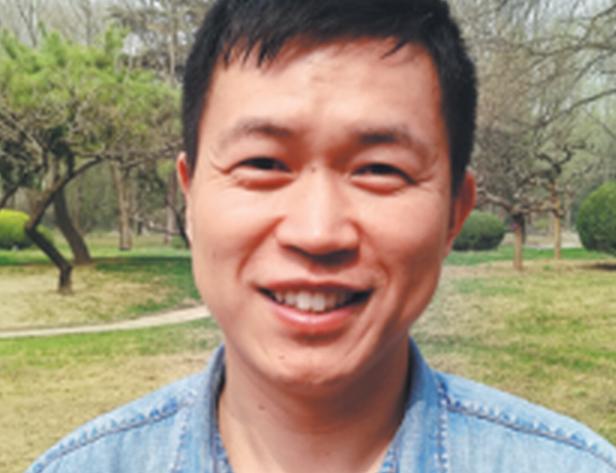
A 2016 paper published in the journal Frontiers of Psychology by Zeng, Peng and Hou Hanchao, also at Tsinghua, found that growth mindset training increased the students' resilience (their ability to adapt to setbacks) which, in turn, improved overall well-being as well as the students' level of engagement with their schoolwork.
Zhang, the vice-principal of Tsinghua elementary school, said: "Grit or willpower is something this school emphasizes a lot. They receive growth mindset training.
"One factor is that they are more optimistic, they can persist longer because they believe they can achieve their goals. Actually, it is typical for students to give up and not persist. But the students in the positive education experiment classes believe they have more self-efficacy in performing this goal. The second difference is that they have more peer support. They encourage and kind of supervise each other. So, as a group, they can achieve better."
In addition, Zhang said: "Growth mindset is an important characteristic that this school tries to develop. We want to get them out of their comfort zone and grow."
She said a growth mindset "tells them that they can do it as long as it is not stretched too far.... They think, 'I can always become better'."
Zhang said a growth mindset is also developed through purposeful practice. "We ask them to intentionally practice something and then they can see their growth."
Wang Jing, who teaches English to second-graders at the Tsinghua-affiliated elementary school, said she has seen improvements in the relationship aspect of the PERMA approach in her 7-and 8-year-old students.
"In the first grade, some of them didn't behave very well, but they gradually change. They become kinder to their friends. Most of the students listen to other students talking. I think this is quite a big change. They know how to respect other students. They know the rules and they know how to create a harmonious atmosphere for others. ... There are very healthy friendships now."
Wang said that although conflict among students cannot be avoided, "the students can use the positive way to see the things and, especially after the teachers give instruction and explanation, they can apologize to each other, and also the parents understand each other better than before.
"At this age, we concentrate on the relationship module," Wang added. "I think kids can influence their parents, and parents give us positive feedback, (which creates) this kind of positive circle teachers influence the students, students influence the parents, parents give us positive feedback."
Furthermore, the teachers need to adapt all aspects of the school's teaching to incorporate ideas from positive psychology. For example, history teachers might discuss the character strengths of historical figures and math teachers might incorporate the practice techniques of growth mindset training.
Zhang, from the Tsinghua-affiliated elementary school, said: "The teachers who participate now, at the experimental testing stage, are all volunteers who are enthusiastic about psychology. But if we do it on the scale of the whole school, some teachers who are not interested in psychology will see it as an extra burden."
In addition, implementing positive education throughout a school system is not easy. Teachers have to be trained in the principles of positive psychology, and detailed curriculums need to be developed and adapted for local conditions. However, Shao Kaize, from the personnel office of the Qingyang district's bureau of education in Chengdu, said teachers in the area are paid less than the median wage.
Peng Kaiping, the dean at Tsinghua University, points out that the win-win synergy between well-being and academic success sounds counterintuitive. "Many people don't believe it," he said. "A ridiculous article circulating on WeChat even claims that it is a foreign conspiracy to make China lower its standards. You see that kind of mentality is still strong."
Supporters of the program argue that positive education can be an important support for the ongoing reforms in the Chinese economy and society.
Zeng Guang said positive education is consistent with Chinese culture. "There is a huge overlap between Confucianism and positive psychology. For example, important research by Chris Peterson and Seligman divided the character strengths into six categories: wisdom and knowledge; courage; humanity; justice; temperance; and transcendence. Confucius emphasized all of them except transcendence."
Edmund Phelps, a professor of economics at Columbia University and winner of the 2006 Nobel Prize in Economic Sciences, said a flourishing spirit is essential to the "mass innovation and entrepreneurship" supported by Premier Li Keqiang. His 2014 book, Mass Flourishing, which draws on Aristotle's ethics and Seligman's research, said the innovative technologies that changed the world in the 19th and 20th centuries were not driven by changes in institutions, but by changes in average people's philosophy of what makes a good life.
He emphasized that a flourishing economy depends on having a vital people. "That takes us back to education, What I'm calling for is instruction in the good life, beginning in kindergarten. Learn to be adventurous, to be an explorer, to embrace the unknown, to have a thrill from uncertainty.
"We have to get back to an educational curriculum that goes back to the sagas of ancient times," he added.
Around the world, positive education is still at the experimental stage, tested at just a few schools. But the growing evidence of positive results in many countries and cultures is gaining the attention of leaders.
Liu Dachun, dean of the Qingyang Institute of Education Science in Chengdu, said China needs something like positive education because "parents, students and teachers really need a kind of psychological and spiritual lift. Without spirit, people cannot live. It is moral education." Liu said this idea follows President Xi Jinping's 2015 call "to spread the positive energy of the society" and the core values of socialism proposed by the president five years ago.


- Shanghai to host embodied intelligence expo in July
- Chongqing sets GDP growth target of over 5% for 2026
- Xinjiang strengthens economic, cultural ties with Hong Kong, Macao
- Former senior political adviser sentenced to 12 years for bribery
- Hubei's government becomes first in China to add 'emotional value' to work report
- Foshan eyes new steps to enhance its manufacturing and trade prowess