



Changes amaze Middle East businessmen









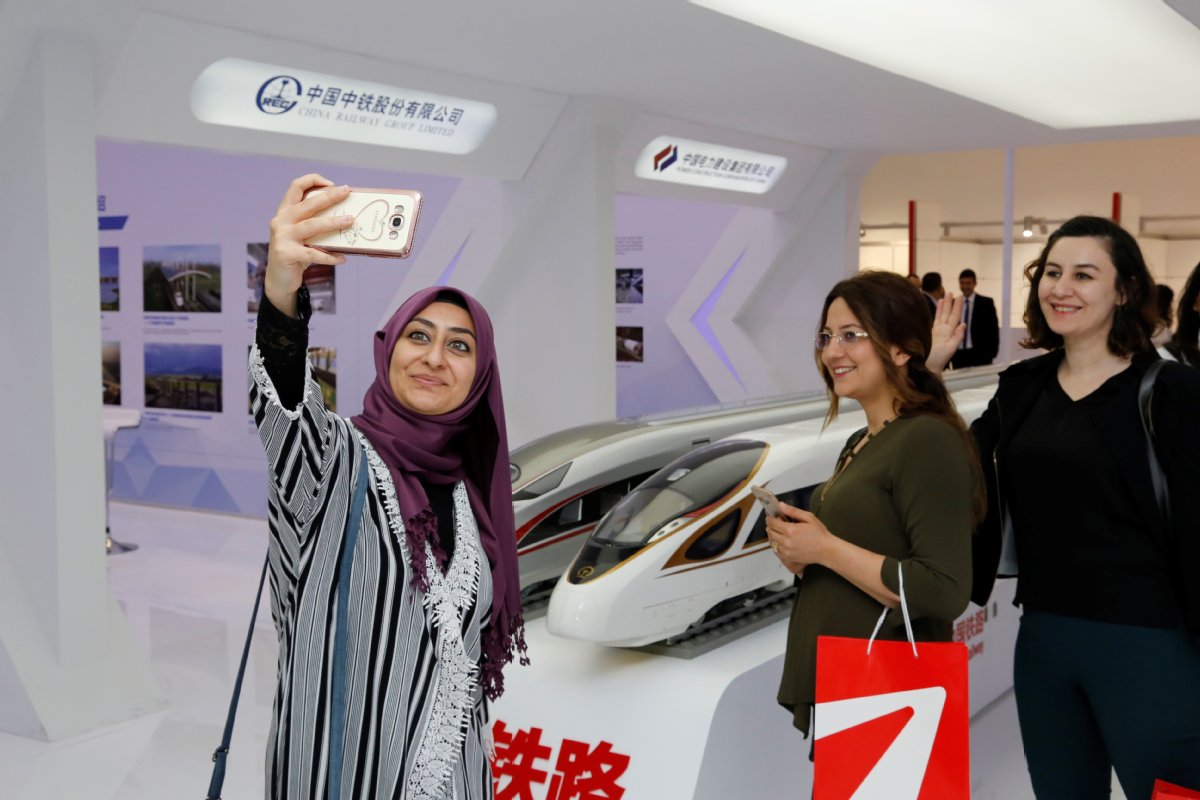
Firm owners witness world's factory becoming an innovation powerhouse
CAIRO - In September 1987 in Beijing, Arafat Harahsheh spotted legions of commuters' bicycles on the streets of the Chinese capital. He thought the Chinese were holding a sports event.
"It must be some bicycle marathon going on," the Jordanian student thought. He had just arrived in China for his undergraduate studies. It turned out, however, that the "bicycle marathon" was just a common occurrence on Beijing's streets, and bicycles were the Chinese people's preferred method of transportation back then.
"The kingdom of bicycles" was one of the many names foreigners used several decades ago to refer to the populous east Asian country well-known for its long history and cultural wealth. Today, China is still full of bicycles, but now bike-sharing is popular, involving mobile payment in keeping with the digital times, while cars prevail in urban traffic.
"At first there were bicycles, then private cars thanks to the increased resident income. Now bicycles are back again but backed by e-commerce innovation. It has been a remarkable and respectable process," Harahsheh said, commenting on China's profound changes over the decades since the start of its reform and opening-up in 1978.
Harahsheh was among the group of international students and business people that formed an expatriate community in China after it opened its doors to the outside world 40 years ago.
In 1992, Harahsheh got a job in a Shanghai-based foreign-owned garment company. In 1995, he co-founded a trading company exporting Chinese industrial products to Arab countries.
Now the chairman of the Arab Businessmen Forum in China, Harahsheh described China's opening-up as a combination of the inflow of both technology and investment, and the rise of local entrepreneurs as small and medium-sized business owners.
"The two forces helped create domestic jobs, increase the government's revenues and form a middle-income class, building the foundation of China's economic miracle over the past 40 years," he said.
In 1992, 26-year-old Turkish businessman Murat Kolbasi visited Shanghai and found the secret of the Chinese gadgets that beat his products in the European market.
Impressed with the low labor costs in China, Kolbasi signed a production deal with a local factory, combining Turkish expertise with Chinese manufacturing power. More than a quarter of his company's products are now made in China.
Kolbasi said he believes a robust Chinese economy generates more opportunities than challenges for businesses around the world.
"By joining China's opening-up, my company has become more competitive in the global market than 30 years ago," he said.
China is updating its trade relations with the world by increasingly exporting more high-tech products.
An Asian Development Bank report estimated China's share of the Asia-exported high-tech goods at 43.7 percent in 2014, up from 9.4 percent in 2000, making it the top high-tech products exporter in the region, ahead of Japan and South Korea.
The World Bank estimated the worth of China's high-tech exports in 2016 at $496 billion, over 20 percent of the global total.
"Things were made in China in the 1980s; now many are designed in China and innovated in China," Kolbasi said.
China's first overseas high-speed rail project was completed in Turkey in 2014, with a 530-kilometer railway linking Ankara and Istanbul.
With expertise and technologies built up over decades, China is helping many countries to upgrade their infrastructure.
Among the examples is Egypt's new administrative capital located east of Cairo, where a Chinese company is working on a central business district project.
It involves 19 towers, including residence and office buildings, in addition to a 385-meter skyscraper, which will be the highest in Africa once completed.
While increased personal incomes enable Chinese tourists to buy a lot abroad, China's domestic consumer market has also greatly expanded in size and changed in structure.
The first China International Import Expo, scheduled for November in Shanghai, is expected to help foreign exporters spot consumption trends in China.
Such platforms can offer Turkey opportunities to reduce trade deficits with China, Kolbasi said.
He said that despite the fact that 52 percent of Turkish exports are now bound for Europe, the lion's share is sure to go to China in the future.
"Many Chinese visitors to Turkey like local products and tastes, such as Turkish coffee, and hope to enjoy them back home," he said, seeing a boost in "the sales of our company's Turkish coffee maker".
"China's high-speed railway is as fast as a rocket, but the nation's progress is even faster," said Palestinian businessman Yahya Saleh.
Saleh came to China to learn the Chinese language in the 1990s, and recently, his son decided to follow in his father's footsteps.
Marveling at China's economic success, more and more people in the Middle East are starting to learn Chinese and acquaint themselves with Chinese culture in Confucius Institutes and Classrooms. There are now more than 20 of those in the region - the Chinese equivalent to Germany's Goethe Institut or Spain's Instituto Cervantes.
Despite the region's increased cultural and people-to-people exchanges with China, Harahsheh said more needs to be done in that area.
"I have shuttled between Arab countries and China for more than 30 years, and I've found Chinese editions of Arabic books are still scarce and vice versa. This is not helpful for researchers and businessmen on either side," he said.
"Cultural exchanges help people understand each other and live in peace. We need a 'Translation Movement' between the Middle East and China," Harahsheh said, referring to the ancient efforts in Baghdad to translate Greek classics into Arabic.




















