



Achieving connectivity through opening-up policies









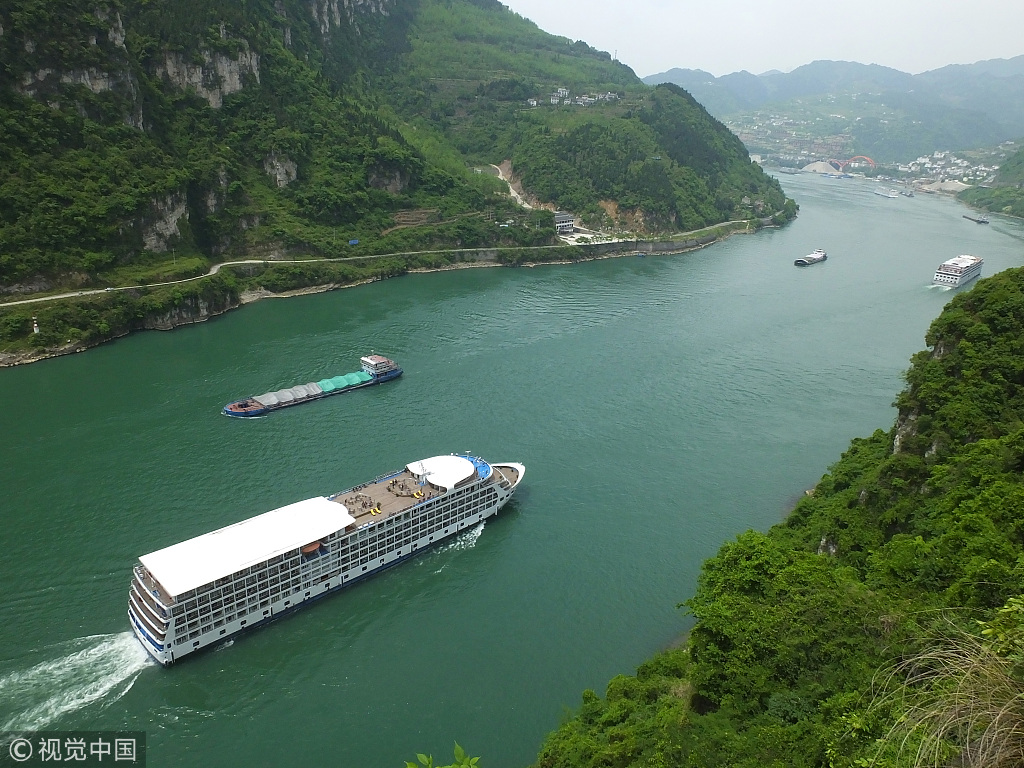
In 1978, long before the ambitious plan of reviving the Ancient Silk Road was even mentioned, China began to reform its economy under the leadership of Deng Xiaoping toward a market economy. Back then, the coastal regions of China benefited greatly from these reforms and achieved unprecedented economic development, whereas, the western inland regions lagged far behind due to their distance from seaports, lack of adequate infrastructure and investments. The development gap between the eastern coastal hubs and the inland regions kept growing until the last decade of the 20th century. It is worth mentioning that this gap between the coastal regions and the inland was first and foremost due to a preexisting severe lack of connectivity between the inland regions themselves. Hence, there was an evident need of implementing opening-up policies and developing a network of infrastructures that would reduce those geographical barriers between the coastal cities and the inland ones. In 1994, the construction along the Yangtze River of the world’s largest power generating facility – the Three Gorges Dam (operational since 2003) – became a clear sign that development in the inland could be achieved through concerted efforts and the implementation of a targeted development strategy. In the following years, the central government, as well as the local governments of the inland regions, carried out on-ground research on the western regions and identified the resources and latent potential of these areas. This process led to the launch of the China Great Western Development Strategy (also known as Go West Strategy) in 2000, a breakthrough policy agenda aimed at speeding up the economy of the inland regions and provinces while attracting foreign investments and high-caliber international talents. The development strategy exceeded expectations, boosting in particular the industrialization and urbanization of Chongqing by securing infrastructure development, attracting foreign investments and fostering know-how exchange among local and international talents.
In 2009, Chongqing – the largest among the four administratively direct-controlled municipalities of China and the most distant from the coast – proposed as part of the “12th Five-Year Plan” the creation of the “West Triangle Economic Zone”, a special economic zone that would further accelerate the development of the inland regions initiated by the “Go West Policy”. This proposal, which included other two major inland hubs, namely Chengdu and Xi’an, was submitted to the National Development and Reform Commission of the People’s Republic of China and promptly approved by the central government. The opening-up policies in the “West Triangle Zone” promoted fixed-asset investments, and exports achieved remarkable results in terms of pushing forward a transition from low-end to high-end industrial manufacturing, developing a network of logistics infrastructures and enticing long-term national and foreign investments.
In 2010, the Ministry of Housing and Urban-Rural Development of the People’s Republic of China designated Chongqing and other 4 cities (Beijing, Tianjin, Shanghai and Guangzhou) as “National Central Cities” in recognition of their positive impact on the surrounding cities and areas with regard to infrastructure development, finance, business licensing and innovation leadership. However, in the following years, Chongqing’s sphere of influence expanded far beyond the inland regions, becoming a strategic industrial and logistics hub along the Yangtze River Economic Belt and establishing international win-win international partnerships such as in the case of Yuxinou railway in 2011.
The improvements made in transport infrastructure during the previous years have shown quantifiable increases in terms of trade flows among regions. Hence, in 2014, the Chongqing Municipal Government issued the Opinions on Implementing the Belt and Road Initiative and Building the Yangtze River Economic Belt and announced an investment of RMB 1.2 trillion by 2020 aimed at consolidating national and international existing connectivity projects such as the Chongqing-Xinjiang-Europe international railway, meanwhile developing new logistics infrastructures such as the Terminal 3 of Chongqing Jiangbei Airport and a network of international flights, interurban subways, interregional highways and high speed rail tracks.
As a foreigner who has been living and pursuing her postgraduate studies in China (Chongqing University) since September 2015, I had the chance and pleasure to carry out research regarding the aforementioned opening-up policies and their influence on international trade. Needless to say, backed by the opening-up policies, China is gradually shifting the traditional model of the east as a mere mass producer and exporter center into a more balanced producer-consumer network between Asia and and other continents, in particular Europe.
Lorella Brienza is a Master student at Chongqing University with Chinese Government Scholarship. She has been living in China since 2015.
The opinions expressed here are those of the writer and do not represent the views of China Daily and China Daily website.





