Experts: Private sector can build Africa's success









The private sector should be encouraged to play a more important role in China-Africa cooperation, experts from both China and Africa said.
Chinese private investment in Africa exceeded $60 billion between 2015 and 2017, according to the Ministry of Commerce. China has catapulted from being a relatively small investor on the continent to becoming Africa's largest economic partner over the past two decades.
However, many experts believe there is still much scope for Africa to open up its market to private investors from China.
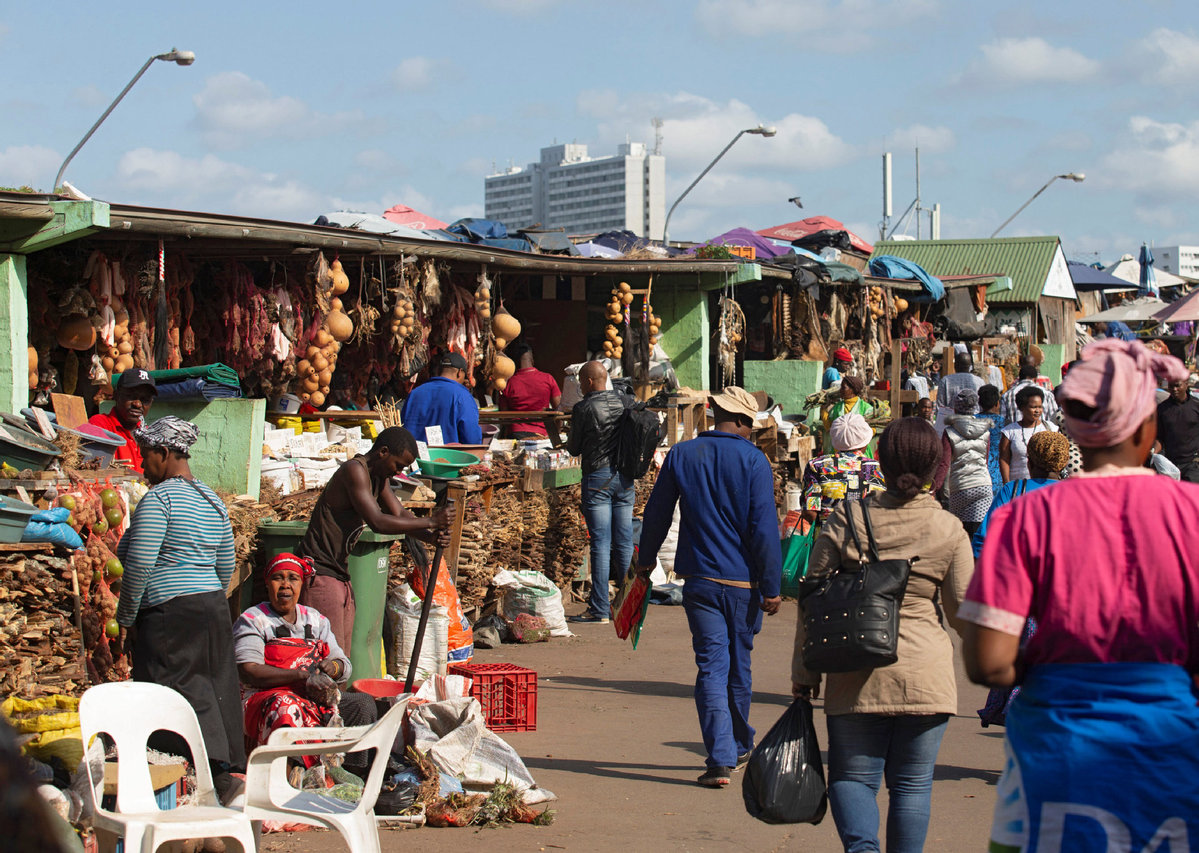
"If you go to any market in Africa, it's all about Chinese products - clothes, shoes, and anything you want is Chinese," said Teklu Tesfaye, a senior official at the World Bank in Ethiopia. "So can we replicate that in more sectors, such as agriculture? Can we bring more machines and fertilizer? Definitely yes," he said.
He noted that the private sector is the growth engine in most economies, and thus it should be encouraged to play a more important role in cooperation between China and Africa.
He added that it's important for the governments of African nations to prioritize the creation of an environment that enables private investment.
Qian Keming, vice-minister of commerce, said at a news conference in March last year that he believed there will be growing potential for cooperation between China and Africa.
He noted that arable land on the continent is much greater than in China, and he believes more and more Chinese enterprises will go to Africa to invest in the sector.
Li Xiaoyun, a professor who has conducted research about South-South cooperation between China and Africa, said it was important for African countries to create a pro-Chinese business environment with the growing presence of China in Africa.
China can send aid, conduct trade and facilitate investment through the Belt and Road Initiative to help Africa develop infrastructure and encourage more Chinese companies to invest in Africa, he said.
A report released in June 2017 by consulting firm McKinsey & Company from the United States estimated that there are more than 10,000 Chinese firms operating in Africa, about 90 percent of them are privately owned.
The report also found that private firms from China also play a major role in creating jobs as 89 percent of their employees were local Africans, creating nearly 300,000 jobs for African workers. The report suggested that Chinese-owned businesses could eventually employ several million Africans.
Moreover, nearly two-thirds of Chinese employers provided skills training. In companies engaged in construction and manufacturing, where skilled labor is a necessity, half offer apprenticeships, the report said.
Piao Yingji, a researcher of African economy and Sino-African economic cooperation at the Chinese Academy of Social Sciences, said the steady increase of private investment from China to Africa, especially after 2010, has helped create jobs in Africa and improved infrastructure.
However, there was still much room for Chinese investment, especially in the manufacturing sector.
"Manufacturing is among the sectors that create the largest number of jobs. That makes the sector more important for African nations, many of which are faced with problems of youth unemployment," she said.
Private investors should also be encouraged to take part in infrastructure development in Africa through models such as public-private partnerships, she said.
There is also potential for Chinese investors in high-tech industries and the service sector in countries such as South Africa, Egypt and Morocco, she noted.
Meanwhile, for African countries, further economic integration was the way to go as they undertook to improve their business environment to leverage complementary strengths, she added.
According to the World Bank, economies in sub-Saharan Africa are among regions that have the highest share of reforms making it easier to start a business in 2016 and 2017.