



AI holds lots of promise, but has pitfalls too









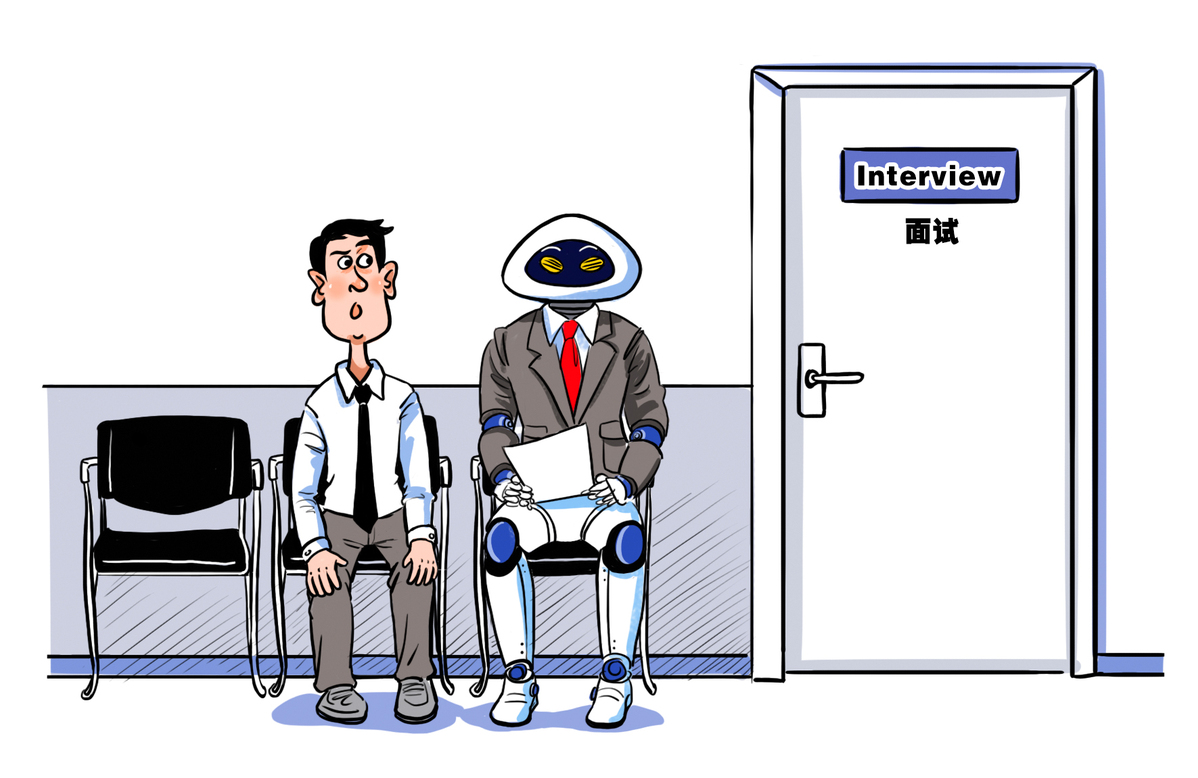
Like any transformative trend, the rise of artificial intelligence (AI) brings major opportunities as well as poses significant challenges. But the gravest risks may not be the ones most often discussed.
According to new research from the McKinsey Global Institute, AI has the potential to significantly boost overall economic productivity. Even accounting for transition costs and competition effects, it could add some $13 trillion to total output by 2030 and boost global GDP by about 1.2 percent per year. This is comparable to-or even larger than-the economic impact of past general-purpose technologies, such as steam power during the 1800s, industrial manufacturing in the 1900s, and information technology in the 2000s.
Perhaps the most discussed concern about AI is the prospect that intelligent machines will replace more jobs than they create. But MGI's research found that the adoption of AI may not have a significant effect on net employment in the long term. Extra investment in the sector could contribute 5 percent to employment by 2030, and the additional wealth created could drive up labor demand, boosting employment by another 12 percent.
But while the overall picture is positive, the news is not all good. For one thing, it is possible that it will take time for AI's benefits-particularly with regard to productivity-to be felt. Indeed, MGI's research suggests AI's contribution to growth may be three or more times higher by 2030 than it is over the next five years.
This is in line with the so-called Solow computer paradox: productivity gains lag behind technological advances-a notable phenomenon during the digital revolution. This is partly because, initially, economies face high implementation and transition costs, which estimates of AI's economic impact tend to ignore. MGI's simulation suggests that these costs will amount to 80 percent of gross potential gains in five years, but will decline to one-third of those gains by 2030.
The more troubling potential feature of the AI revolution is that its benefits are not likely to be shared equitably. The resulting "AI divides" will reinforce the digital divides that are already fueling economic inequality and undermining competition. These divides could emerge in three areas.
The first divide would emerge at the company level. Innovative, leading-edge companies that fully adopt AI technologies could double their cash flow between now and 2030-an outcome that would likely entail hiring many more workers. These companies would leave in the dust those that are unwilling or unable to implement AI technologies at the same rate. In fact, enterprises that do not adopt AI at all could experience a 20 percent decline in their cash flow as they lose market share, putting them under pressure to shed workers.
The second divide concerns skills. The proliferation of AI technologies will shift labor demand away from repetitive tasks that can more easily be automated or outsourced to platforms, toward socially or cognitively driven tasks. MGI's models indicate that job profiles characterized by repetitive tasks and little digital know-how could fall from some 40 percent of total employment to about 30 percent by 2030. And the share of jobs entailing non-repetitive activities or requiring high-level digital skills is likely to rise from some 40 percent to more than 50 percent.
This shift could contribute to an increase in wage differentials, with around 13 percent of the total wage bill potentially shifting to non-repetitive jobs requiring high-level digital skills, as incomes in those fields rise. Workers in the repetitive and low-digital-skills categories may experience wage stagnation or even reduction, contributing to a decline in their share of the total wage bill from 33 percent to 20 percent.
The third AI divide-among countries-is already apparent, and seems set to widen further. Those countries, mostly in the developed world, that establish themselves as AI leaders could capture an additional 20-25 percent in economic benefits compared with today, while emerging economies may accrue only an extra 5-15 percent.
The advanced economies have a clear advantage in adopting AI, because they are further along in the implementation of previous digital technologies. They also have powerful incentives to adopt AI: low productivity growth, aging populations and relatively high labor costs.
By contrast, many developing economies have insufficient digital infrastructure, weak innovation and investment capacity, and thin skills base. Add to that the motivation-dampening effects of low wages and ample space for productivity catch-up, and it seems unlikely that these economies will keep pace with their advanced counterparts in AI adoption.
The emergence or expansion of these AI divides is not inevitable. In particular, developing economies can choose to take a forward-thinking approach that includes strengthening their digital foundations and actively encouraging AI adoption. And, to ensure that their changing workplace needs are met, enterprises could choose to play a more active role in supporting education upgrading and continuous learning for lower-skill people.
Moreover, these divides are not necessarily a negative development. The reallocation of resources toward higher-performing companies makes economies healthier, potentially providing them with new competitive advantages vis-à-vis other countries.
But the risks posed by these divides should not be underestimated. Vision and perseverance are essential to make the AI revolution work, because it will bring short-term pain before long-term gains. If that pain occurs against a backdrop of frustration with the unequal distribution of AI's benefits, it may trigger a backlash against technologies that could otherwise produce a virtuous circle of higher productivity, income growth and employment-boosting demand.
Jacques Bughin is a director of the McKinsey Global Institute and a senior partner at McKinsey and Company, and Nicolas van Zeebroeck is a professor of Innovation, IT Strategy and Digital Business at Solvay Brussels School, Université libre de Bruxelles.





