
日批在线视频_内射毛片内射国产夫妻_亚洲三级小视频_在线观看亚洲大片短视频_女性向h片资源在线观看_亚洲最大网

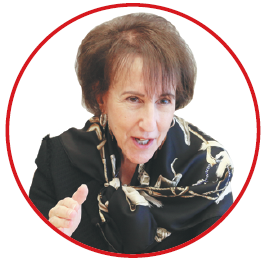
Charlene Barshefsky
Former chief United States trade negotiator
BORN:

August 1950

EDUCATION:

In 1972, Charlene Barshefsky graduated from the University of Wisconsin in Madison with a bachelor's degree, majoring in English and political science.

In 1975, she earned a doctor of laws degree from the Columbus School of Law at The Catholic University of America.

CAREER:

She served as United States Trade Representative, the country’s top trade negotiator, from 1997 to 2001, and as Deputy USTR from 1993 to 1996.

As USTR and a member of President Bill Clinton’s cabinet, Barshefsky was responsible for the negotiation of hundreds of complex market access, regulatory and investment agreements with virtually every major country in the world.

She is Senior International Partner at WilmerHale, an international law firm, and she is based in Washington, DC.

US negotiator who was key to China joining WTO

Charlene Barshefsky paved the way for entry to the global trading bloc in 2001 and says both countries should pursue a 'mutually beneficial, stable relationship'
Zhao Huanxin in Washington

China has vowed to stay the course of reform and increase opening-up. It has been a consensus in China that opening-up was key to the phenomenal economic growth in recent decades.

Speaking at the Boao Forum for Asia in April, President Xi Jinping said, "Our next step in development can only be achieved with deeper reform and wider openness."

At the New York panel discussion, Fu Ying, the veteran diplomat, said: "The changes in China-US relations, though presenting a challenge, can actually help push China's reform. Some of the requests raised by US businesses, like market access, are also what China is trying to address through reform."

She cited the series of market opening measures China announced for the financial sector in April as an example, and said eight of 11 items have been implemented, including the removal of restrictions on foreign ownership of banks and asset management companies, equal treatment of domestic and foreign capital, and allowing foreign banks to establish branches and subsidiaries in China.

'Special responsibility'

Asked to comment on reported attempts to "delink" to some extent the US economy from the Chinese economy, Barshefsky said: "I don't see the point in that. They would just make both countries poor."

She said China and the US are in sharp competition, but they also have a special obligation to each other and to the world, "which is to say, to get along - find the areas of common ground, but the differences do need to be addressed".

"My hope would be that the leaders of both nations would understand they have a special responsibility to work it out," she added.

Some people in the US appear frustrated that, after years of relations between the two countries, China has not become similar to the US. But Barshefsky said: "China is never going to be the way America is. It has no history being the way America is any more than America has a history of being Chinese."

As a WTO chief negotiator, she said her goal was always to see greater compatibility between China and the US, not similarity.

"But greater compatibility goes along with my theory that large powers have to find a way to work out their problems," she said. "They have to act in a manner more compatible with each other's interests, as a means of diffusing tensions and as a means of creating a stable environment."

Drawing experience from countless negotiations in her career, Barshefsky said both China and the US must maintain flexibility in working toward a "sensible goal", especially in the face of what she said was "a down in the cycle of ups and downs" in bilateral relations.

"Each side has to maintain flexibility, each side has to believe in the same goal, the same goal in very broad terms," she said. "The same goal in this case would be a mutually beneficial, stable relationship - seems to me that's a completely set, sensible goal, both for China and for the United States."

Barshefsky said she remembers playing the game "digging to China" in her father's garden when she was a child, using her mother's soup spoons, hoping that she could dig all the way through the Earth to China.

From "digging to China" to dealing with China for decades, Barshefsky said she had unveiled the mystery of a country half the world away and had found that Chinese people, just like those in the US, have the same aspiration that tomorrow will be better than today.

The Chinese people, in return, will forever link her with China's WTO accession, an event they believe is continuing to change the country for the better.


|<< Previous 1 2 3   
Charlene Barshefsky
Former chief United States trade negotiator
BORN:

August 1950

EDUCATION:

In 1972, Charlene Barshefsky graduated from the University of Wisconsin in Madison with a bachelor's degree, majoring in English and political science.

In 1975, she earned a doctor of laws degree from the Columbus School of Law at The Catholic University of America.

CAREER:

She served as United States Trade Representative, the country’s top trade negotiator, from 1997 to 2001, and as Deputy USTR from 1993 to 1996.

As USTR and a member of President Bill Clinton’s cabinet, Barshefsky was responsible for the negotiation of hundreds of complex market access, regulatory and investment agreements with virtually every major country in the world.

She is Senior International Partner at WilmerHale, an international law firm, and she is based in Washington, DC.

US negotiator who was key to China joining WTO

Charlene Barshefsky paved the way for entry to the global trading bloc in 2001 and says both countries should pursue a 'mutually beneficial, stable relationship'
Zhao Huanxin in Washington

China has vowed to stay the course of reform and increase opening-up. It has been a consensus in China that opening-up was key to the phenomenal economic growth in recent decades.

Speaking at the Boao Forum for Asia in April, President Xi Jinping said, "Our next step in development can only be achieved with deeper reform and wider openness."

At the New York panel discussion, Fu Ying, the veteran diplomat, said: "The changes in China-US relations, though presenting a challenge, can actually help push China's reform. Some of the requests raised by US businesses, like market access, are also what China is trying to address through reform."

She cited the series of market opening measures China announced for the financial sector in April as an example, and said eight of 11 items have been implemented, including the removal of restrictions on foreign ownership of banks and asset management companies, equal treatment of domestic and foreign capital, and allowing foreign banks to establish branches and subsidiaries in China.

'Special responsibility'

Asked to comment on reported attempts to "delink" to some extent the US economy from the Chinese economy, Barshefsky said: "I don't see the point in that. They would just make both countries poor."

She said China and the US are in sharp competition, but they also have a special obligation to each other and to the world, "which is to say, to get along - find the areas of common ground, but the differences do need to be addressed".

"My hope would be that the leaders of both nations would understand they have a special responsibility to work it out," she added.

Some people in the US appear frustrated that, after years of relations between the two countries, China has not become similar to the US. But Barshefsky said: "China is never going to be the way America is. It has no history being the way America is any more than America has a history of being Chinese."

As a WTO chief negotiator, she said her goal was always to see greater compatibility between China and the US, not similarity.

"But greater compatibility goes along with my theory that large powers have to find a way to work out their problems," she said. "They have to act in a manner more compatible with each other's interests, as a means of diffusing tensions and as a means of creating a stable environment."

Drawing experience from countless negotiations in her career, Barshefsky said both China and the US must maintain flexibility in working toward a "sensible goal", especially in the face of what she said was "a down in the cycle of ups and downs" in bilateral relations.

"Each side has to maintain flexibility, each side has to believe in the same goal, the same goal in very broad terms," she said. "The same goal in this case would be a mutually beneficial, stable relationship - seems to me that's a completely set, sensible goal, both for China and for the United States."

Barshefsky said she remembers playing the game "digging to China" in her father's garden when she was a child, using her mother's soup spoons, hoping that she could dig all the way through the Earth to China.

From "digging to China" to dealing with China for decades, Barshefsky said she had unveiled the mystery of a country half the world away and had found that Chinese people, just like those in the US, have the same aspiration that tomorrow will be better than today.

The Chinese people, in return, will forever link her with China's WTO accession, an event they believe is continuing to change the country for the better.

主站蜘蛛池模板: 色综合天天 | 男人天堂av在线播放 | 久久免费资源 | 麻豆国产91在线播放 | 东京热毛片 | 人人草在线视频 | 天天操天天干天天插 | 免费一级做a爰片久久毛片潮 | 夜夜爽影院 | 免费看的黄色网 | 黄色国产在线观看 | 天天色天天操天天射 | 欧美最猛性xxxx | 污到下面流水 | 亚洲网在线观看 | 黄色综合网站 | 日韩欧美一区二区三区在线 | 黄色大片网站在线观看 | 在线不卡中文字幕 | xxxx性欧美 | 欧美在线色图 | 国产精品视频免费在线观看 | 五月综合激情 | 日本精品一区二区 | 国产精品免费看 | 18禁毛片| 久久久日本 | 91在线精品李宗瑞 | 成人av三级 | 亚洲免费在线看 | 亚洲黄网在线观看 | 一级片视频免费看 | 国产高清在线观看 | 中文字幕免费高清 | 亚洲午夜久久久久久久久久久 | 亚洲国产第一页 | 玖玖爱在线精品视频 | 色网在线观看 | 97久久精品人人澡人人爽 | 自拍偷拍一区 | 久久久天天 |