China won’t yield to pressure tactics on trade









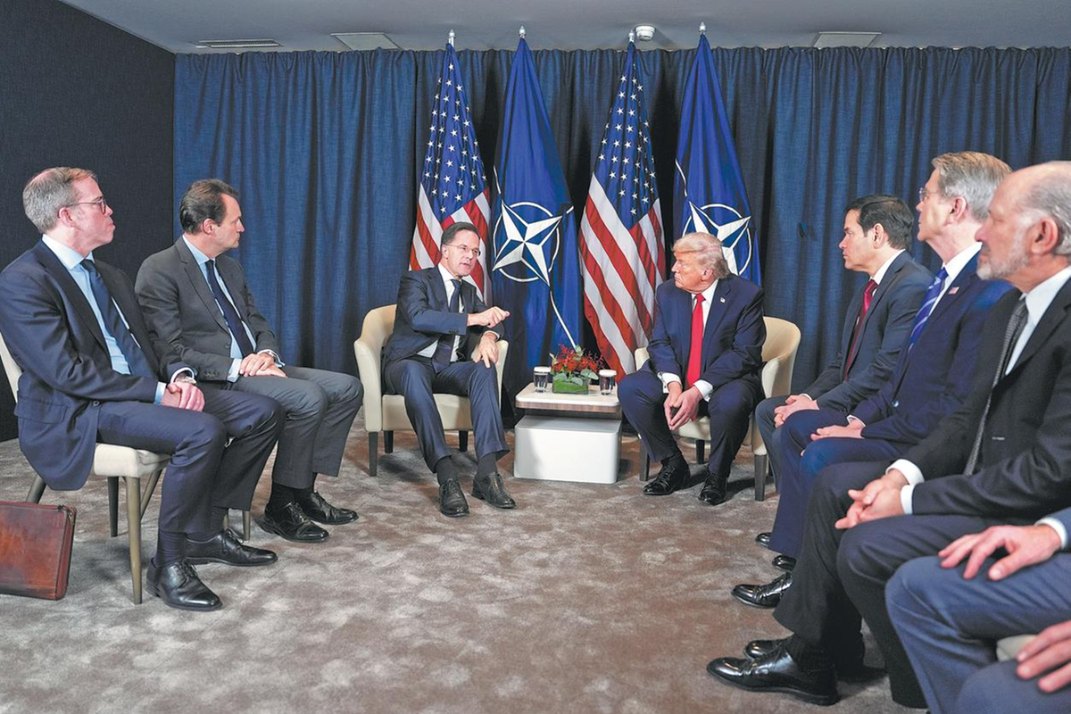
Before his telephone conversation with President Xi Jinping, US President Donald Trump said last week that he believed they would reach "a great deal" on trade but warned billions of dollars' worth of new tariffs would be added if a deal did not materialize.
Then a day after Thursday's phone call, White House economic adviser Larry Kudlow said that a meeting between Trump and Xi, as the leaders agreed to in their phone call, was definite and would include trade talks but added that Trump "could pull the trigger" on additional tariffs on Chinese imports, depending on how the talks go.
There appears to be a sort of intimidation building up in Washington weeks before the Trump-Xi meeting at the G20 summit Nov 30 in Argentina. Whether it is brinkmanship or a part of "the art of the deal", that approach would seem insincere and does not contribute to resolving trade or other conflicts.
The US side occasionally has let out such remarks to try to intimidate China.
"If the US truly wants to resolve the economic and trade issues with China, then it should adopt a serious attitude and have equal-footed talks with us in good faith," instead of trying to intimidate the country, "because no intimidation will work on us", Foreign Ministry spokesman Lu Kang said at a briefing on Oct 30.
Following the announcement of the planned meeting between Xi and Trump, the world stock markets soared on Friday, a reflection that expectations are high that the top two economies would prepare themselves to remedy their wounded trade relations.
In contrast to the mood on the US side, Vice-President Wang Qishan said at a forum in Singapore on Tuesday that China is ready for talks with the US for a trade solution acceptable to both sides.
The remarks echoed what President Xi told Trump in the phone call, in which he urged the economic teams of the two countries to ramp up contacts and consultations to reach an agreement acceptable to both sides.
That has made it all the more clear that China wants a deal that is good for both nations, not at the expense of its trading partner. Xi, in fact, expounded China's views on the win-win nature of trade in his latest speech at the inaugural China International Import Expo in Shanghai on Monday.
"In a world of deepening economic globalization, practices of the 'law of the jungle' and 'winner-take-all' only represent a dead end. Inclusive growth for all is surely the right way forward."
In addition to the mutually beneficial nature of their bilateral trade relations, China and the US have common ground that has been increasingly highlighted by senior officials and China hands: a mutual desire to harness and avoid conflict.
In a China debate held by the Brookings Institution in Washington last week, Susan A. Thornton, former acting assistant secretary of state for East Asian and Pacific Affairs, said the China-US conflicts are manageable, and that the countries have many interests in common, either in countering instability and conflict in regional hot spots or in promoting prosperity for each other and other countries around the globe.
"Maybe the most fundamental interest we have in common is the mutual desire to avoid conflict," said Thornton, now a senior fellow at the Paul Tsai China Center of Yale Law School.
That sentiment was echoed by Vice-President Wang on Tuesday: "The world today faces many major problems that require close cooperation between China and the United States. It is our firm belief that China and the US will both gain from cooperation and lose from confrontation."
Speaking at the same forum in Singapore, former US secretary of state Henry Kissinger said he was "fairly optimistic" that the US and China could avoid a wider conflict that would devastate the current world order.
"The world would be in terrible shape" if the US and China allowed commercial issues to evolve into strategic conflict, Kissinger was quoted by Reuters as saying. "I think we have high incentives to avoid catastrophe."
Dennis Wilder, managing director for the Initiative for US-China Dialogue on Global Issues at Georgetown University, said in an interview with China Daily that a presidential meeting is often called an "action-forcing event", meaning that in the next few weeks, a lot of work is expected for each government beforehand.
Intimidation should not be part of the work, before or after.
Contact the writer at huanxinzhao@chinadailyusa.com