



Ethnic village gets lift from new crops









Growth of operations at nearby port, smarter farming lead to success
Yu Shaogui and his neighbors were once discouraged by their village's location. But now the situation has changed dramatically, thanks to China's opening-up policy and the rapid growth of a new port built adjacent to the community.
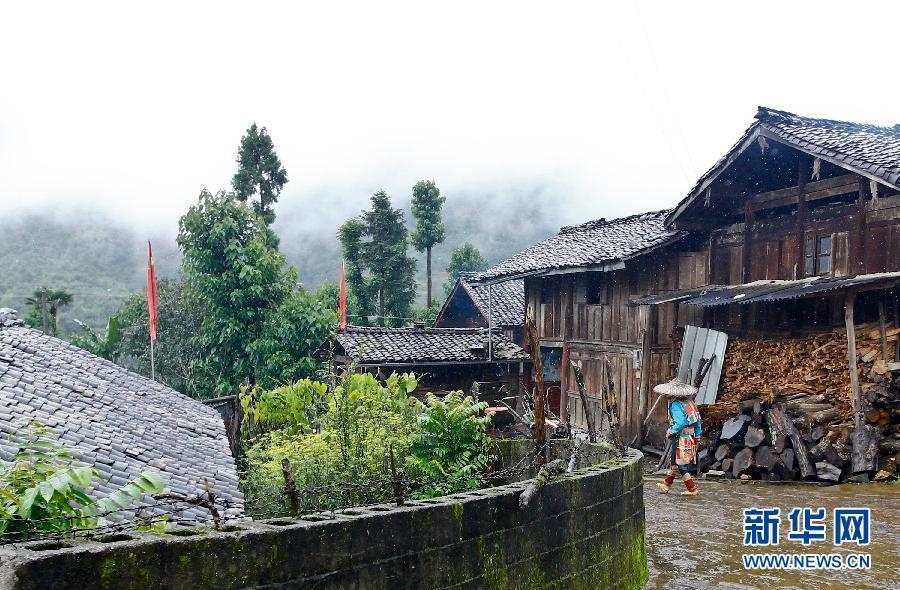
Yu, 37, is from Kou'an New Village, a native Lisu ethnic enclave in the town of Houqiao in Yunnan province's Tengchong city. The community lies along the China-Myanmar border and next to Houqiao port, now a national-level trading port.
The area is mountainous and local farmers have limited arable land, Yu said. Over the years, residents depended on limited agricultural incomes. Lacking confidence in their skills, few dared to venture out to look for jobs in cities.
However, the growth of border trade and enhancement of traffic has greatly benefitted their lives in recent years.
Better connections with the outside world allowed the villagers to advance their agricultural skills. They introduced new economic crops, such as caoguo, a ginger-like plant, to replace the traditional crops of corn and rice.
"Today, every family in our village is growing caoguo, and it has become the major income source for us," Yu said. "Our incomes are growing fast, too." Caoguo is used both as a seasoning and an herbal medicine.
According to Cai Wenhui, the village Party chief, the entire village grows more than 200 hectares of caoguo, and villagers can earn around 8,000 yuan ($1,150) per year growing it.
Meanwhile, the villagers have also been growing other things, such as tea-oil and walnut trees, in recent years.
Last year, the average income reached almost 10,000 yuan, which puts them above the poverty line by local standards.
Since 2016, a new policy has allowed people from several villages along the border to participate in cross-border trade.
Each resident is given a daily tax-free quota for goods in certain categories, including bananas and bamboo, from neighboring Myanmar states, so long as the goods' value is less than 8,000 yuan.
The villagers gradually organized themselves to share their quotas, so that they can sell a truckload of goods and reduce transportation costs.
According to Cai, last year, more than 900 villagers out of a population of 1,700, joined the business. Some of them have learned to speak a bit of the Myanmar language to communicate better.
"This year, the scale of border trade in our village is expected to reach 5 million yuan," Cai said, adding that the policy is helpful for increasing villagers' incomes and eliminating poverty.
According to Tengchong city's business and trade department, the local port-based economy has seen rapid growth in recent years, with more opening-up and increases in traffic and the port's service capacity.
The main imports of Houqiao Port are agricultural and related products and ore. Its main exports are building materials, flowers, fruit and daily necessities.
In 2017, the port handled a total of 131,900 trade deals, an increase of 35.2 percent year-on-year; the goods' value reached 909 million yuan, an increase of 43.4 percent.
Now the village houses are built in an integrally planned and concentrated area with convenient infrastructure, including roads, streetlights and exercise grounds.
Most families live in comfortable multistory homes, with modern appliances and spacious courtyards. The villagers even have access to the internet, despite its distance from the county-level town.
Yu said the village's improvements since he was a child are clear. There were no modern buildings back then, only traditional houses with thatched roofs scattered through the surrounding hills and valleys. There were only muddy paths, which became slippery when it rained.
"We couldn't imagine that asphalt roads would come to our village someday," says Yu.
Since 2008, the local government has launched programs to help villagers enhance their living environment, including providing subsidies to rebuild homes.
Yu spent about 2 million yuan, earned mostly from growing caoguo, to rebuild his home in 2015.
As Houqiao Port continues to expand, more businesspeople and truck drivers have stopped in the village to spend the night. Yu was the first to offer his spacious new home as an inn in 2016. The business brings in more than 100,000 yuan a year, he said.
"Nowadays we are encouraged to develop our own businesses, and we're confident about the future," Yu said, adding that three other homestay inns have now been established by fellow villagers.
Li Yingqing contributed to this story.





- Xinjiang reports highest foreign trade growth in China
- Harbin authorities demand return of pensions paid out to deceased
- Global research project on AI guardrails launched in Beijing
- Partnering with China, embracing opportunities
- China's cyberspace regulators announce measures for protection of minors
- Beijing's 'Rocket Street' promoted at aerospace conference













