



The ills of ‘fan economy’ come to the fore









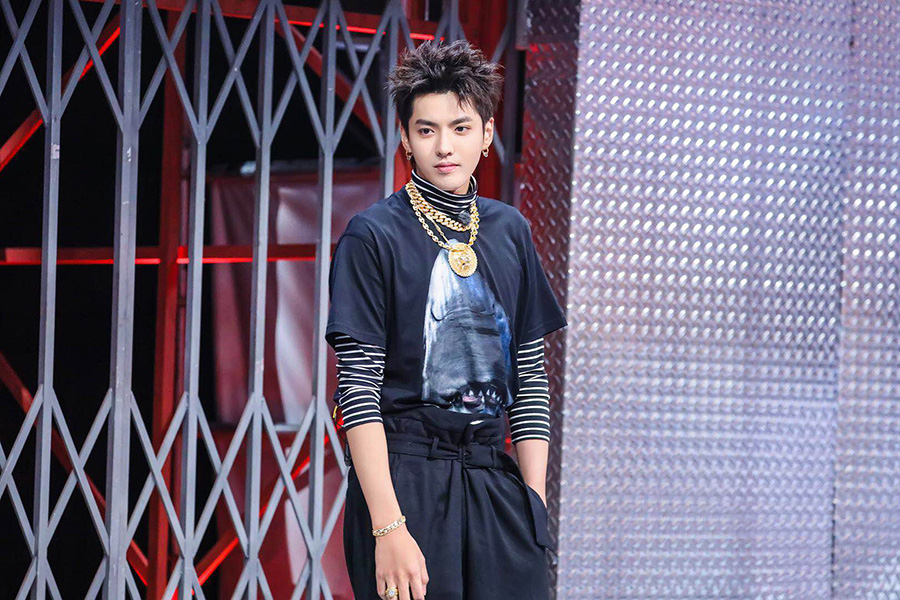
Editor’s note: Chinese-Canadian singer Kris Wu has become the subject of an online debate in China and the United States following claims that his debut album Antares, released early this month, dominated Apple’s iTunes Store in the US, seven of the 14 songs in the album entered the Top-10 list within four days and over 14 million albums were sold in less than 24 hours, more than the new songs of Lady Gaga and Ariana Grande that were released around the same. Many Twitter users in the US say they had not heard of Wu before and allege the figures have been fudged. Two experts share their views on the issue with China Daily’s Yao Yuxin. Excerpts follow:
Blind fan following not good for society
Entertainment portfolios have boosted leisure spending in China in recent years and created a “fan economy”, which in turn has raised controversies at times. The controversial claim about Wu’s new album is one such example.
Starting in Japan and the Republic of Korea, the fan economy has made its way to the Chinese entertainment industry, and is purportedly aimed at establishing a “more equal relationship” between a star and his or her fans.
Instead of requiring their idols to strictly follow social and moral norms as in the past, today’s fans tend to stand by their idols even if their acting or singing skills are terrible, and they behave badly and throw tantrums in public.
No wonder Wu’s fans have made every effort to elevate his album to the top of the popularity chart and are unconditionally defending their idol by using cyber-bullying tactics against his critics.
Thanks to the one-child policy in the past, many youths, most of them born after 2000, feel lonely and find solace in supporting their idol.
Besides, some smart companies are exploiting the emotions of young fans to raise capital for some stars or their own ventures using the name of a celebrity. At times, such companies, unwittingly or otherwise, also encourage the young fans to behave irrationally.
It’s legal for fans to raise capital or pay for their idol. But if the fans are immature, and thus cannot tell right from wrong, they should solicit more advice from families or schools, or social guidance. And it is the responsibility of family members and teachers to do so.
Sun Jiashan, a researcher at the Chinese National Academy of Arts
Not difficult to identify false claims for sales
Whether the claim of Wu’s new album ruling the US iTunes Store will be considered a fraud depends on the motive behind it. If his fans’ voluntarily boosted the figures just to show their support, it may not be considered a fraud. But if they were coerced or encouraged by a business group to do so for a specific purpose, the fudging of figures would be deemed illegal.
Thus, Apple should not have removed Wu’s debut album from its iTunes Store for a while without carrying out background checks on the buyers and without figuring out the real motive behind their purchase.
Although it’s uncertain whether Wu’s debut album is involved in fake sales, in China there is a chain that pursues profits by helping buyers to increase the numbers of downloads of some apps, or to become a trending topic on Weibo or the “most read story” on WeChat.
The e-commerce law and Anti-Unfair Competition Law already provide specific rules for cases such as cheating in sales and fabricated positive response from customers. They stipulate that those engaging in such activities could be held responsible.
Besides, technology too can be used to monitor the sales volume and the quantum or type of consumers’ response to deal with such cases. Alibaba, for example, uses such technology to track the deals of online retail platforms on Taobao and ban those crossing the red line.
Zhu Wei, an associate professor of law at China University of Political Science and Law





