Chinese bourses gain leverage abroad









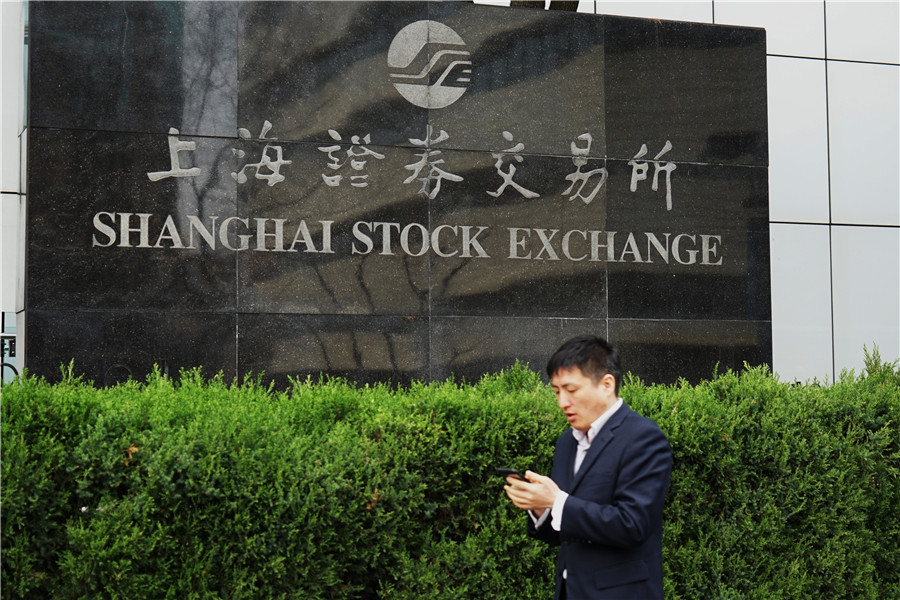
Stakes in stock exchanges of South Asia represent strategic moves to bolster Belt and Road projects
China's bourses are picking up stakes in stock exchanges abroad in the hope of giving further impetus to Belt and Road Initiative projects.
The moves are also expected to increase the global presence of mainland capital, besides offering the benefit of Chinese expertise to local bourses.
Experts said the stake buys are in line with a global trend that started in the year 2000.
Stock markets have been picking up stakes in exchanges of other countries, in a bid to forge bilateral or international cooperation, share knowledge, expertise and technologies, enable concerted crisis-management measures, coordinate rules, regulations and supervision, and make capital available for companies.
For instance, the New York Stock Exchange and Nasdaq of the United States acquired stakes in European exchanges such as the Euronext and the OMX about a decade ago.
On Sept 4, a Chinese consortium comprising the Shenzhen Stock Exchange and the Shanghai Stock Exchange acquired a 25-percent strategic stake in the Dhaka Stock Exchange, Bangladesh's largest bourse, for 9.47 billion taka (about $120 million).
The consortium's bid beat other bids by stock exchanges from other countries such as India, the US and Turkey.
In December 2016, a Chinese-led consortium successfully bid for a 40-percent stake in the Pakistan Stock Exchange. The consortium was led by China Financial Futures Exchange Co Ltd, and included the SSE, the SZSE, and two local companies.
The three Chinese investors collectively hold a 30-percent stake in the PSE.
"Stake acquisitions and strategic partnerships with overseas bourses in countries participating in the Belt and Road Initiative will help raise funds for listed companies executing BRI projects, besides enhancing economic cooperation between the countries concerned," said Wang Maobin, investment department chair at the University of International Business and Economics in Beijing.
"Such moves will also help Chinese entrepreneurs build a stronger presence on the international stage, and exploit business opportunities abroad, especially in BRI economies."
Both Bangladesh and Pakistan are participants in the China-led BRI. For Chinese bourses, stock exchanges in Asia are good cooperation partners and investment targets from a market perspective.
Closer ties among these exchanges will foster mutual business benefits, including trading cost reduction brought about by sharing of infrastructure, information, disclosures and supervision experience, Wang said.
Economies of scale are also possible and are often a key motivation behind exchange-to-exchange cooperation and stake acquisitions, he said. Besides, such deals also facilitate exchanges' development, Wang said.
"Besides the traditional business of stock trading, modern exchanges are getting more and more into derivative transactions. All of these will be very helpful to secure financial support for Belt and Road projects in Asia, especially when exchanges cooperate well.
"Deeper cooperation between Asian stock exchanges will also improve crossborder regulatory environment concerning securities, which will obviate cross-market arbitrage and check illegal behaviors, and help Asian exchanges seek cooperation and mutual benefits with US and European exchanges."
Dong Dengxin, director of the Finance and Securities Institute at the Wuhan University of Science and Technology, said Chinese exchanges' investment in foreign exchanges is a necessary step for Chinese capital and companies to go abroad, including economies related to the Belt and Road Initiative.
As China has the world's second-largest capital market, it is important for the mainland's bourses to have interests abroad, he said.
"Chinese companies have been investing large amounts of capital in Belt and Road projects. If Chinese stock exchanges forge good cooperation with local exchanges outside China, or own stakes in them, it will help such projects to access finance through local exchanges," Dong said.
However, a local exchange's ability to make available finance for Belt and Road projects depends on the development of the exchange itself. The number and quality of companies listed on a local exchange are key factors too, Dong said, adding Chinese bourses' management experience will be of some help to other exchanges in Asia.
He also said stakes in foreign bourses will strengthen the international influence of Chinese companies, including securities firms.
Xinhua contributed to this story.