



FTZ to deepen cooperation with nearby regions









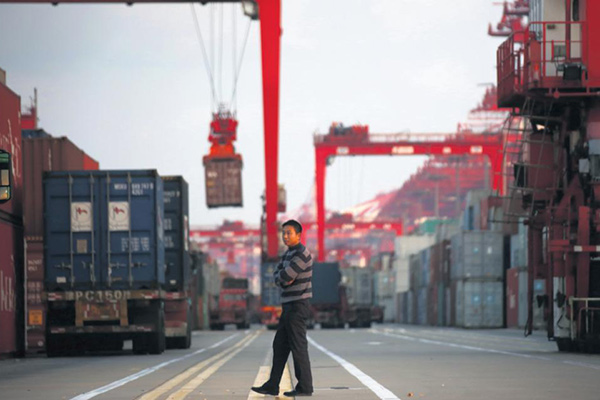
China (Shanghai) Pilot Free Trade Zone is the country's first domestic free trade pilot zone and shows China's determination to further open up its economy under the new circumstances. The pilot free trade zone, approved by the State Council, China's Cabinet, in September 2013, includes seven bonded areas spread over 120.72 square kilometers.
As an experimental zone for comprehensive reform, the FTZ combines openness and innovation, a risk stress-testing zone for the open economy system, and a pilot area for improving the government's governance, while supporting the Belt and Road Initiative.
Since its establishment, the Shanghai FTZ has strived to become a highly open, efficient and legally normative free trade zone based in key functional areas of finance and trade, advanced manufacturing and technological innovation. In fact, by the end of 2017, the FTZ had completed more than 76 percent of the 98 key reform tasks according to the general plan.
The number of newly registered enterprises in the Shanghai FTZ now exceeds 50,000, and in 2017, the actual scale of foreign direct investment was $7.02 billion, with the total import-export trade volume being 1.35 trillion renminbi ($194.27 billion). And by the end of last year, the FTZ had 849 financial supervision organizations and 4,630 emerging financial institutions.
The key system exploration of the FTZ is investment management centered on negative list management, a trade regulatory system centered on trade facilitation, an innovative financial system targeting capital account convertibility and service openness, and an in-process and post supervision system centered on transforming government functions, with the aim of building an innovative system that measures up to international trade and investment rules and standards.
Also, the FTZ has deepened investment management system reform. The negative list for foreign investment was reduced, and now includes only 45 items, while a pilot program for the negative list for market access has been launched.
In terms of opening-up, 70,200 free trade accounts and 769 cross-border two-way renminbi capital pools were opened in the FTZ in 2017. The trade facilitation level, too, has increased remarkably, and last year the average time needed for customs clearance was reduced by one-third compared with 2016.
The Shanghai FTZ also has issued China's first FTZ financial service industry opening-up negative list, improved the overseas investment service platform and established the Belt and Road Initiative technological trade measure and enterprise service center.
The FTZ is also exploring new ways of accelerating governance reform. It has launched a pilot reform project for separating business licenses issued by industry and commerce departments and other business certificates issued by other departments, and the first 116 reform measures launched in the Shanghai FTZ are also being promoted in other domestic FTZs.
The Shanghai FTZ has enhanced in-process and post-regulatory system construction covering 21 regulatory departments and 108 industries. The special customs control zone has established a mechanism for information sharing with port and financial regulatory departments of 80 countries, cities and regions.
According to the Shanghai FTZ's comprehensive deepening reform and opening-up plan issued by the State Council in 2017, the FTZ will be developed by 2020 into an global-standard free trade zone boasting freedom of trade and investment, open and transparent rules, a fair and highly efficient supervision system, and a convenient business environment.
And the Shanghai municipal government is committed to further promoting the interactive development of the FTZ and Shanghai Zhangjiang National Innovation Demonstration Zone, and building a world-class national science center with strong innovation capacity.
The FTZ will develop an open environment through system and mechanism innovation and administrative management reform, which would attract international high-end service companies. Which in turn would help spread the high-end service industry including finance, insurance, consulting and legal services to the neighboring cities and regions.
Indeed, the Shanghai FTZ is set to deepen connection and cooperation with neighboring regions, in order to play a driver's role in regional economy.
The author is a professor of economics at Capital University of Economics and Business.





