



Beijing not interested in any 'Cold War'









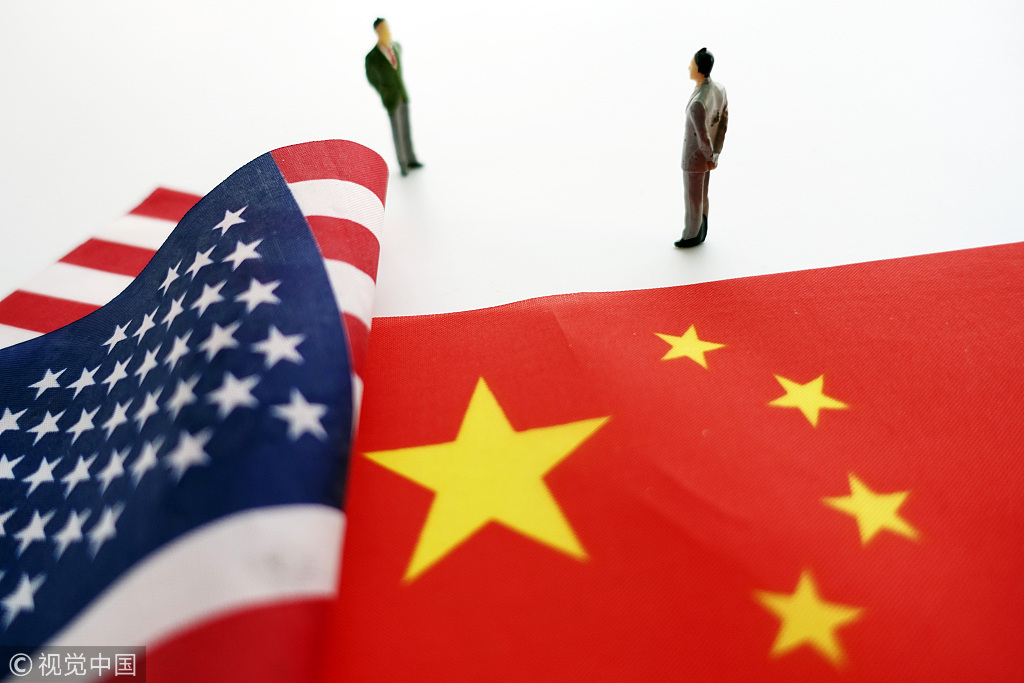
Of late, there has been talk of and concern over a possible "Cold War" between the United States and China. The argument goes that Beijing and Washington are competing to establish their respective versions of "political correctness" and global order.
And although the Sino-US trade conflict has eased after US President Donald Trump agreed at the G20 Summit in Buenos Aires on Saturday to not impose additional tariffs on Chinese imports and President Xi Jinping said China will increase US imports, Beijing still favors a multilateral approach to international trade based on rules and equality while Washington seems keen on pushing ahead its version of "fairness" and "reciprocity".
Before the G20 Summit, the US had also been ignoring the World Trade Organization's consultation and arbitration system while trying to impose its demands on China and its other trade partners.
On the one hand, China appears confident of promoting its path of socialism with Chinese characteristics, and showcasing its economy as an alternative mode of development. On the other hand, US Vice-President Mike Pence earlier questioned China's approach to developing its Belt and Road Initiative, raising doubts over its global financial transparency and debt sustainability related to infrastructure connectedness.
Yet looking for any similarity between the present Sino-US tensions, which to a large extent has been defused now, and the Cold War would be an exercise in futility. The Cold War was a massive ideological confrontation, initially between the US and the Soviet Union, with each bent on developing its own version of world order. From time to time, their conflict even extended to the real battlefield such as the Korean War and Vietnam War.
But despite their vast differences, China and the US have not entered into such zero-sum ideological competition. China is promoting its idea of a world of diversified civilizations and shared destiny. And its disputes with some of its neighbors notwithstanding, it insists on sharing its overlapping interests with other countries.
The US, too, has taken a far more realistic approach to China. The Trump administration's foremost concern is "hiring Americans and buying Americans", that is, exports and investments. Also, the Trump administration withdrew from the Trans-Pacific Partnership agreement and the Paris climate accord, ostensibly to reduce its global responsibilities.
But still, the US alleges China has not been as open as it should be, especially on import tariffs and trade barriers. Perhaps China's State-owned enterprises and subsidies have been troubling the US, prompting it to question China's efforts to become an innovative nation.
Basically, the Trump administration seems less interested in imposing US values on China and the world, or waging an ideological war. In fact, while trying to "reconcile" with the Democratic People's Republic of Korea, the US does not seem interested in turning the trade disputes with China or Russia into an exchange of allegations over Pyongyang's nuclear program.
Therefore, talking about a new "Cold War" is making much ado about a trade conflict that seems on way to being resolved. Yet one cannot say China-US relations will proceed smoothly until the two sides accept that sharing common economic and trade benefits is in their best interests.
China has observed the WTO rules and therefore not violated any international law to attain its current leadership status. The US, however, wants the WTO to be reformed. For instance, it says the WTO might have not imposed its strict rules on areas such as labor rights, environmental protection, intellectual property rights and technology transfer, and China may have used that fact to its advantage. Perhaps that's why the Barack Obama administration formed an additional regional free trade grouping, the TPP, to maximize the benefits of high-level free trade, while excluding China.
With its expedited program of drastically cutting its overall tariff, and President Xi vowing at the G20 Summit to increase US imports, especially of agricultural, industrial and energy products, China is committed to further opening up its economy to the outside world. Its institutional reform to strengthen intellectual property rights protection shows its determination to deepen its collaboration with the world. And its emphasis on neutral competition demonstrates it believes in fair conduct of business.
Therefore, we hope the US will better understand the trade policies of China-which aim to build a community of shared destiny for humankind-and the world will realize it is not interested in sparking a new "Cold War".
The author is a professor at the Institute of International Studies, Fudan University, Shanghai.





