



Spring Rush not just a transport issue









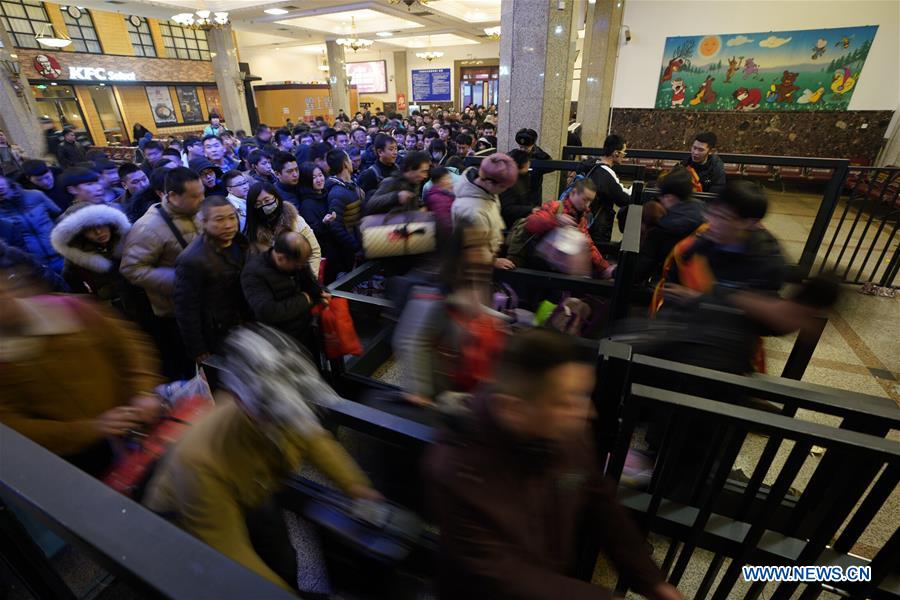
Editor's Note: China is now in the middle of the annual Spring Festival travel rush (chunyun), the largest human migration in the world, during which 3 billion trips are expected to be made. The massive scale of chunyun is a severe test for China's transportation system. How to reduce the pressure on the transport infrastructure during chunyun? Two experts share their views on the issue with China Daily's Liu Jianna. Excerpts follow:
More than just a traffic problem
To begin with, the Spring Festival travel rush is as much a social and cultural issue as a transport and traffic problem. Putting the staggering data aside, we need to put the horse before the cart and find the cause of the largest human migration. In general, the ongoing rapid urbanization, together with just a couple of long holidays and the Chinese tradition of family reunions during Lunar New Year, has led to the large scale travel rush during Spring Festival, which usually lasts about 40 days from the 15th day of the last month to the 25th day of the first month of the Chinese lunar calendar.
Essentially, chunyun is an issue of supply and demand. Given that infrastructure construction commensurate with the one-time rush would inevitably lead to expensive waste later, the authorities should better focus on the demand side to alleviate the pressure of chunyun.
Yet measures such as free highway passage and a ban on public transport fare hikes will increase the travel demand, rather than reduce it. The good news is that as the population growth rate declines and urbanization gathers pace, chunyun is expected to reduce in scale one or two generations from now.
That neither European countries nor the United States has encountered a similar traffic problem during the Christmas season may offer us some food for thought for transport planning, as well as the promotion of urbanization. So, while speaking of chunyun, we should not be blinded by the mere demand for transport infrastructure during chunyun and overlook the social and cultural factors behind it.
Jia Yuanhua, a professor of transportation engineering at the School of Traffic and Transportation, Beijing Jiaotong University
Balanced economic development needed
True, the amazing achievements China has made in infrastructure construction, which is on full display and tested to the full during chunyun, have been praised by many foreign media outlets. As a matter of fact, the infrastructure boom nearly a decade ago not only made the largest human migration possible, but also propelled the development of other industries including manufacturing, which has served as a crucial engine for China's overall economic development.
As much as we pride ourselves on China's infrastructure achievements, the problems reflected during chunyun deserve careful reflection. Ultimately, China's unbalanced economic development, marked by the more affluent coastal regions in the east and relatively backward regions in the central and western parts of the country, is the reason behind the massive scale of the Spring Festival travel rush.
It would therefore be unrealistic to try and reduce the chunyun scale in the short term in any way except through more balanced economic development in China. To this end, local governments should devise development plans that suit the local conditions and give full play to their advantages. The central government, on its part, should promote more synchronized development among different regions through its overall economic planning.
Besides, the free flow of people as a result of extensive reform of the household registration (hukou) system would help reduce the travel rush, as the hukou system compromises the migrant workers' rights and interests, preventing them from settling down in the host city and treating it as second home.
Shan Guangnai, a researcher in sociology at the Chinese Academy of Social Sciences





