



What the post-INF Treaty world will be like









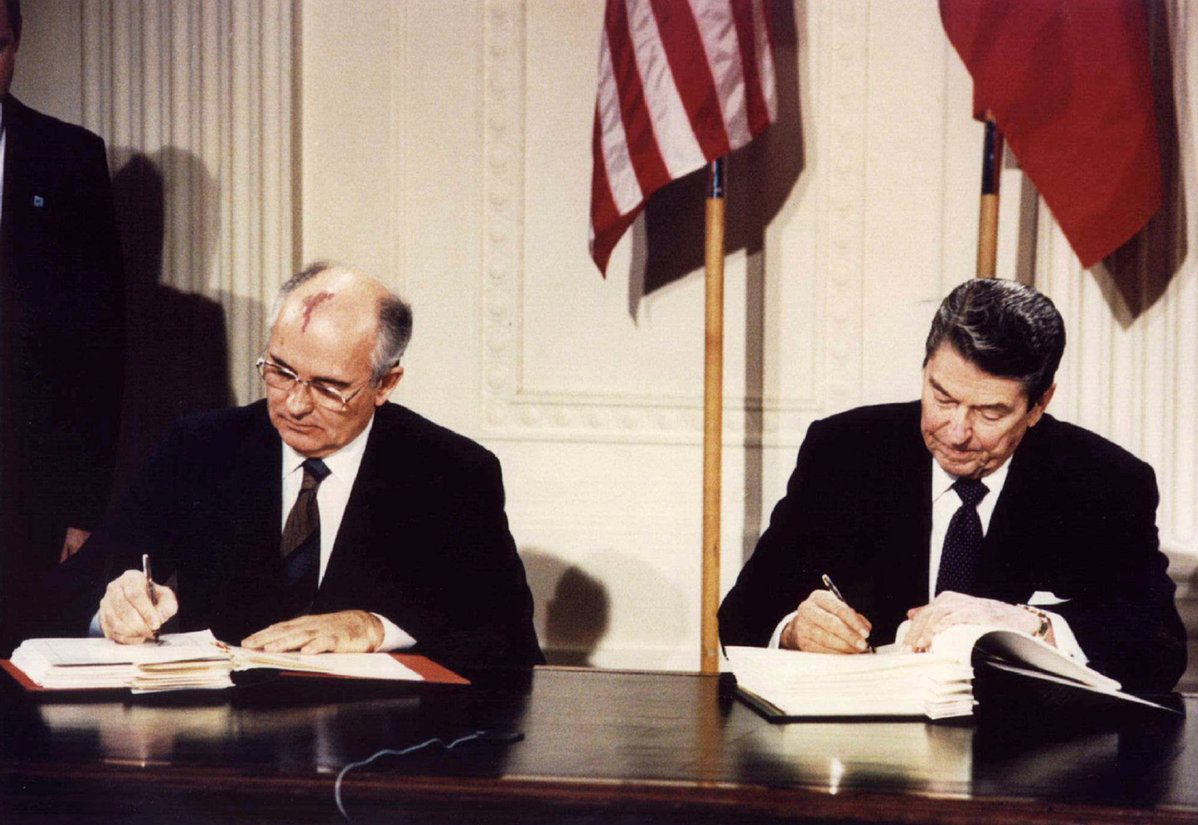
The United States formally suspended the Intermediate-Range Nuclear Forces Treaty on Feb 1, forcing Russia to do so a day later, which heightened regional and international security risks.
Due to the disputes between Washington and Moscow on the INF Treaty, the discussions on global security at the Munich Security Conference on Feb 16 could hardly bear tangible fruits. No wonder NATO Secretary General Jens Stoltenberg appealed before the conference that Russia and the US should abide by the INF Treaty even while stressing that NATO should prepare for a future without an INF Treaty.
The INF Treaty was signed by the US and the Soviet Union (and its successor state Russia) in 1987, eliminating the two countries' land-based ballistic missiles, cruise missiles and missile launchers in the ranges of 500-1,000 kilometers and 1,000-5,500 km. By 1991, in fact, the two countries had eliminated 2,692 missiles followed by a decade of on-site verification inspection.
Along with arms-control and mutual-trust treaties with Europe, the INF Treaty helped reduce the possibility of armed conflict between the two superpowers during the Cold War and thus ensured the security of Europe for about 30 years. But even when the INF Treaty was considered the cornerstone of peace in Europe as well as other parts of the world, its inherent deficiencies limited its effectiveness in ensuring security.
For example, the middle-range missiles banned by the treaty made up only a small part of the nuclear arsenals of the US and the Soviet Union-and although the INF Treaty forbade land-based midrange missiles, it didn't stop the US and Russia from developing sea-based and air-based missiles on a grand scale.
The US sea-based Tomahawk missiles developed in the 1970s can attack targets in the 450-to-2,500 km range, which actually makes them intermediate-range missiles, 20 types of which were used by the US military in the conflicts in Iraq, Libya, Syria, Kosovo and Sudan. Also, the Standard Missile 3 mid-course interceptors of the Aegis system, used for missile defense, also reach a medium range of 600-1,200 km.
By developing missiles in contravention or beyond the scope of the INF Treaty, the US set a bad example for other countries to follow. The US has blamed Russia for breaking the INF Treaty by building the land-based cruise missile 9M729(SSC-8) while Russia claims the missile's range is 476 km, meaning it doesn't violate the treaty.
The 9M729 dispute intensified during the second term of former US president Barack Obama. Russia publicly exhibited 9M729 on Jan 23, inviting official visitors from the US, France, Britain, Germany, NATO and the European Union in order to prevent the US from quitting the INF Treaty. But Russia's efforts were in vain.
The withdrawal of the US and Russia from the INF Treaty will become effective six months after the suspension. Washington has said the only way the treaty can be saved is for Russia to destroy all the 9M729 cruise missiles. But Russia rebuffed the US charges and claimed the US created so much drama in an attempt to get China involved in the treaty.
Some believe China has benefited by not being a part of the INF treaty. Still, since the US sees China's development of nuclear and conventional sea-based and land-based intermediate-range missiles as a challenge to its operations and maneuvers in East Asia, it reiterated a "multilateral INF Treaty" with China (and perhaps other countries) to prevent other countries from developing as a military power, so the US can maintain its regional hegemony.
The deficiencies in the INF Treaty has highlighted the importance of arms control and abiding by the international law, as well as noninterference in other countries' internal affairs. But as the world's strongest military power that is immune to arms control, will the US agree to disarmament of any kind? Will there be restrictions on mid-range missiles and long-range missiles? And are the US and other countries ready to start negotiations on such issues?
These are vital questions to which the US should immediately respond.
The author is a professor at the Institute of International Studies, Fudan University, Shanghai.





