Vocational centers in Xinjiang expel extremism









Vocational education centers in the Xinjiang Uygur autonomous region have proved effective in eliminating religious extremism, which is a common global problem, the chairman of the regional government said.
Religious extremism penetrating from abroad has led to a number of terrorist attacks in China's northwestern region in recent years. In May 2014, about a month after President Xi Jinping visited the region, the central government made maintaining the stability of the social situation the ultimate goal for the region.
As part of the measures adopted to prevent violent attacks and eliminate the breeding of religious extremism, Xinjiang has set up vocational education centers around the region in accordance with the local anti-extremism regulation, according to the regional government.
The centers give free classes on the country's common language, offer knowledge of the law and provide vocational skills for the trainees who have been influenced by terrorism and extremism and are suspected of minor criminal offenses, it added.
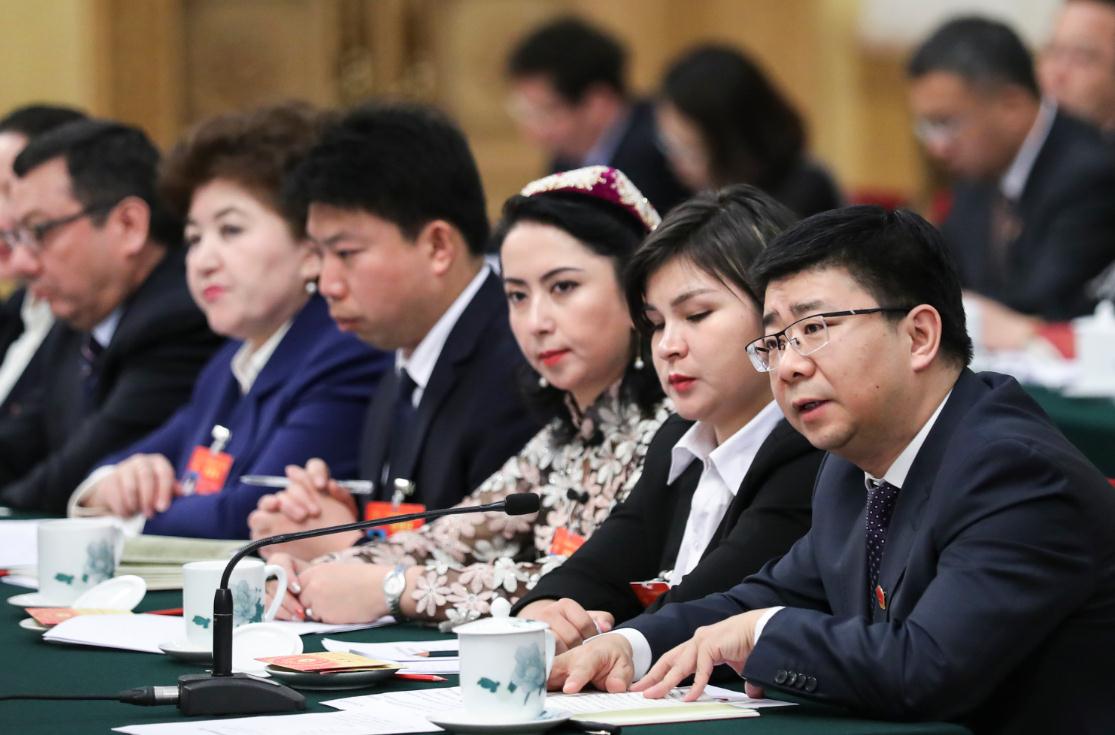
"The centers have proved effective in eliminating religious extremism," Shohrat Zakir, chairman of the regional government, said during a panel discussion on Tuesday at the annual session of the National People's Congress in Beijing.
"Religious extremism is often disguised as a part of religion, which lures people to fall for it. After learning at the centers, graduates can better tell its true intentions."
The establishment of the centers has drawn worldwide attention, and misunderstandings have arisen.
"The vocational education centers in Xinjiang are not concentration or re-education camps as portrayed in some media reports," Shohrat said.
Foreign Minister Wang Yi said during a panel discussion on Sunday of the Xinjiang delegation: "Issues regarding the centers are no longer only about Xinjiang anymore. Some take the opportunity to discredit the image of China and even stir up the good relationship between China and some Muslim countries,"
Shohrat said more than a dozen foreign delegations, including diplomatic officials, were invited to Xinjiang in the past two months so they could see the centers for themselves.
Claims that the trainees are abused and their freedom is restricted in the centers are inaccurate, and there is no way there are more than 1 million people in them, he said.
The centers are actually boarding schools, and the trainees are provided with vocational skills so they can find better jobs with higher pay after graduation, he added.
Shohrat said that as the region-which borders on eight countries including Afghanistan, Pakistan and Kazakhstan-becomes more stable, there will be fewer trainees at the vocational centers.
"One day, the centers won't even be there, when there is no need for them anymore," he said. Ma Pinyan, a researcher at the Xinjiang Academy of Social Sciences, said: "How to eliminate religious extremism is a question that has been bothering international society. Xinjiang's move of setting up the centers is based on its own circumstances and painful experiences in fighting terrorism and extremism in the past."
Religious extremism no longer has a market in Xinjiang, said Abudulrekep Tumniaz, head of the Xinjiang Islamic Institute. "Those who preach religious extremism have gone."
Xinjiang, which has always been China's main battlefield in fighting terrorism, has not experienced a terrorist attack in 27 months, and the current social situation is under control after a series of measures to maintain social stability have begun to work, Shohrat said.
The measures also include strengthening border control and setting up a network of convenient police stations to increase response speed when reacting to violent events.
This year, Xinjiang will be on high alert, since the threats of terrorism, extremism and separatism, which have been responsible for thousands of violent terrorist attacks in the region since the 1990s, still exist. Xinjiang plans to continue to step up efforts to enforce border management to keep the threats outside China.
Also, it will further prevent information on terrorism and extremism penetrating the region via the internet, Shohrat said on Sunday.




- China, Philippines to keep talks open on maritime affairs
- AI governance tops China’s 2025 technology buzzwords list
- China-Swiss exhibition on green construction opens
- China says navy, coast guard are peace guardians
- Hunan scholar donates 104 artifacts documenting Japanese aggression
- Beijing approves first foundational and comprehensive regulation on elderly care