Testing the water









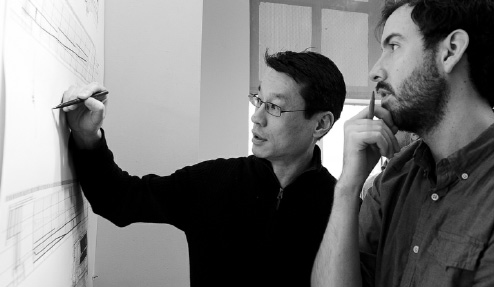
When architect Thomas Wong set about designing an ecology preserve in the Yangtze River estuary, he pushed his ambitions for the project to reach an international audience.
Thomas Wong felt all his efforts had paid off when his design for the Shanghai Yangtze River Estuary Chinese Sturgeon Nature Preserve stood out in an international competition in Shanghai in early March.
The 50-year-old Chinese-American architect from the New York-based Ennead Architects, which has an office in Shanghai, threw his hat in the ring because he regarded the project as an incredibly interesting and important initiative.
"To me, the project was so much more than just another great design opportunity; it was a way to contribute to the rescue of two endangered species and restore a small piece of habitat along the Yangtze River," says the architect designer with 27 years of experience in the industry.
"In a larger sense, this project represents a commitment by China to the natural environment; likewise, we believe it reinforces our pledge toward advancing ecological progress and rebalancing humanity's relationship with nature," he adds.
Wong also considers the project an important mission in civic education and a chance to increase public awareness about the Chinese sturgeon. He hopes people will learn more about the plight of this endangered species, and understand the need to improve their habitat.
Sitting on an island at the mouth of the Yangtze River, the main building will be set in 17.5 hectares of landscaped grounds and house a dual-function aquarium and research facility. Its purpose will be to centralize efforts to repopulate the dwindling numbers of Chinese sturgeon and finless porpoise by engaging with the public and building popular support for ecological conservation.
The complex will feature a series of interior and exterior pools for the breeding and raising of both species designed to mimic their natural migration patterns, as well as facilities dedicated to their research and reintegration into their natural habitats.
The project aims to make the important work of the preserve accessible and engaging to visitors through the aquarium and related exhibitions, allowing them to make direct contact with their research.
"The technical aspects of the project were quite complex as there is a whole infrastructural system of water treatment that had unique design requirements," Wong says, adding that a newly-constructed wetland habitat would also be integrated into the water treatment system.
But he says he very much enjoyed the challenge that this project presented with its natural landscape setting, which he said allowed him and his team to experiment with the conventional understanding of how a building should look.
His initial ideas centered around the same basic premise that the project should be a bridge or mediator between the constructed and natural worlds.
"While we had several interesting approaches, the director of the natural preserve questioned whether the upper limits of the project could be pushed. So, we stressed the idea of the extreme significance of this project and its outward-facing need to represent something to the public," Wong says.
Together, they pushed the ambitions of the project to reach for national and international recognition, and in so doing, raised awareness about the nature preserve's mission and the work it does restoring and protecting the Yangtze River for future generations.
"After our midterm work sessions, we came back to New York and ended up redesigning the entire project with only six weeks left. It was extreme pressure, but we were quite excited about the new direction," Wong says.
Wong's design proposal featured "dramatic forms that rise in undulating, fluid gestures taking cues from the rippling surface of the river and the landscape of the Upper Yangtze, while simultaneously evoking biomorphic anatomy and a vessel-like ark."