



'Clash of civilizations' narrative dangerous









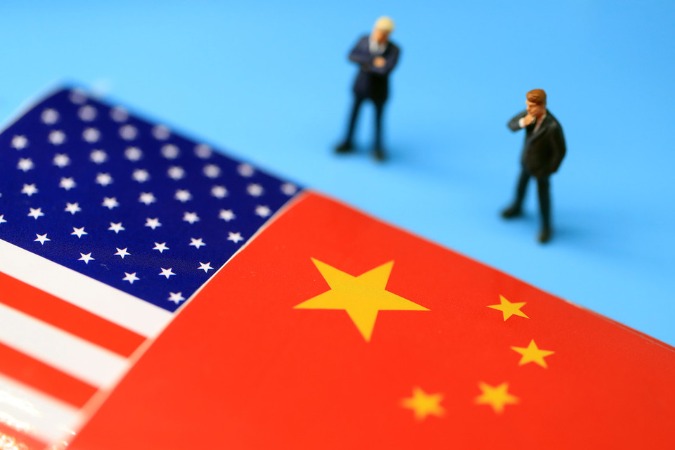
Speaking at a recent defense forum in Washington, Kiron Skinner, director of policy planning in the US Department of State, described the United States' competition with China as "a fight with a really different civilization and a different ideology". She also said that the "Cold War constituted… a fight within the Western family", while the coming conflict with China is "the first time that we will have a great power competitor that is not Caucasian".
Skinner's speech soon went viral for all the wrong reasons, drawing criticism from politicians and academics alike.
The US media speculated that Skinner's speech could have far-reaching implications, meaning the US' China policy might be undergoing another major change-perhaps the US no longer sees China as a strategic competitor but as a rival civilization. Obviously, this sends a dangerous signal.
Some progressive media commentators said that Skinner's statement amounts to racism. Others stressed that her remarks represent US political scientist Samuel Huntington's highly controversial "clash of civilizations" hypothesis, which is experiencing somewhat of a renaissance in the White House.
The Washington Post said the introduction of thinking based on racism and the "clash of civilizations" hypothesis into Sino-US relations is dangerous, because it would create misunderstandings about Sino-US competition.
Racist remarks are not new in US political and social circles, but before the present administration took office they did not come from the mouth of US officials. In social psychology there is a "broken window" theory, which holds that if small unfavorable social phenomena are left unchecked, they will induce people to "break more windows" and thus intensify a negative trend. While originally applied to policing, the theory is relevant to diplomacy, too. After all, Skinner's remarks could break the taboo and prompt other conservative and anti-China forces in the US to use such racially charged language, further damaging China-US relations.
The choice of official language has a subtle but long-term impact on the relationship between countries, and a language that frames countries within a certain historical narrative is the need of the hour.
Yet since the turn of the century, US officials have constantly changed their descriptions of China and Sino-US relations. In 2005, Robert Zoellick, then deputy secretary of state, defined China as a "stakeholder", which was a change from the George W. Bush administration's earlier definition of the country as a "strategic competitor".
In 2009, Jim Steinberg, then deputy secretary of state, proposed the model of "strategic reassurance"-a constructive approach for the two countries to deal with the growing geopolitical differences.
In 2012, China proposed to the US to build a "new type of major country relationship" based on mutual respect, mutual benefit and long-term stability, and resolve disputes through talks while avoiding confrontation. After that, China and the US enjoyed a period of cooperation in the fields of climate change and cybersecurity.
The current Sino-US frictions can be attributed to the White House's changed definition of China. At the end of 2017, the National Security Strategy report defined China as a "strategic competitor", making Sino-US relations a zero-sum game. This change in definition has gradually affected all aspects of Sino-US relations.
Objectively speaking, indeed there is competition between China and the US in various fields, but confrontation is not the form this competition will take. Plus, it has to be explored whether there can be cooperation amid such a competition. After all, the two countries do cooperate on a wide range of issues.
But by putting competition first, the National Security Strategy report has increased mutual distrust at the government and public levels. The resurgence of the "clash of civilizations" narrative has raised public concern, because it is far from the reality of China-US relations.
During their two centuries of contact, the people of China and the US have almost never been hostile to each other. Chinese people are good at learning from the achievements of other civilizations, including Western civilization, because in their eyes, no civilization is inferior or superior to others. Therefore, defining China-US relations as a "clash of civilizations" is an attempt to deny the truth and spread hollow ideas.
The author is an assistant research fellow at the China Institutes of Contemporary International Relations.
Source: chinausfocus.com
The views don't necessarily represent those of China Daily.





