Business council: Huawei ban has costs









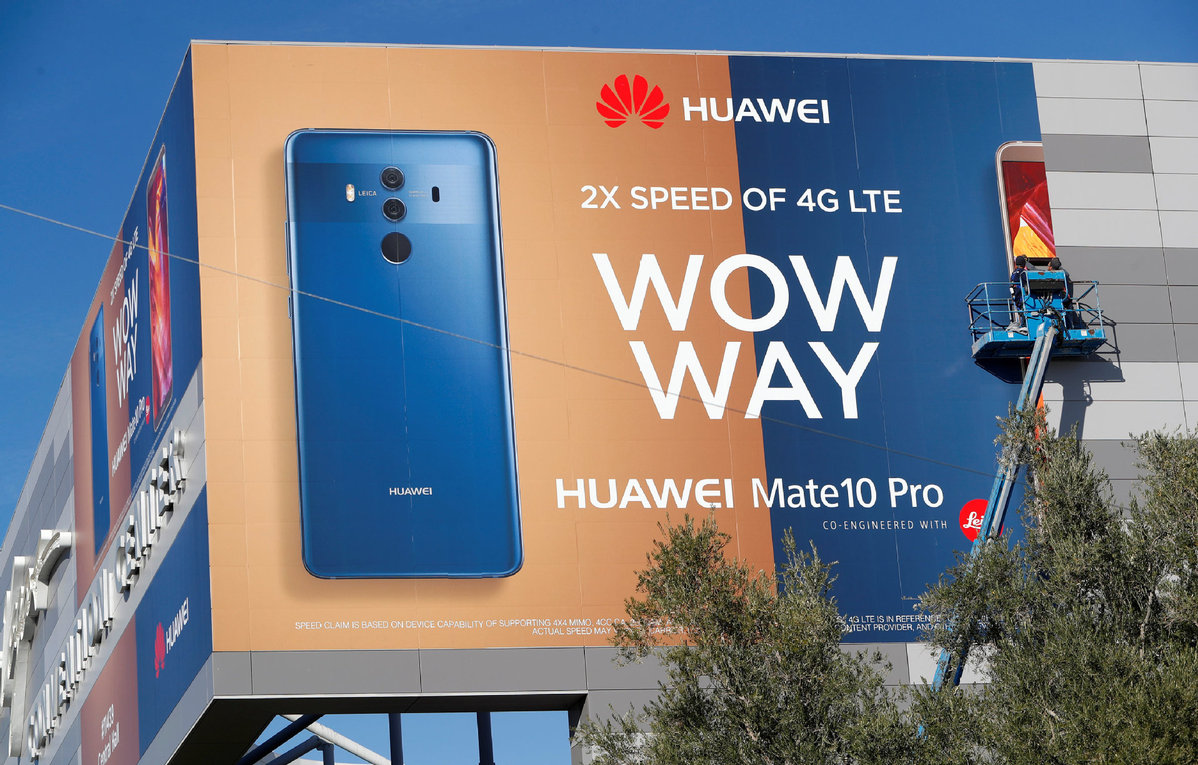
The head of the US-China Business Council (USCBC), whose members include major US chipmakers that are suppliers to Huawei Technologies Co Ltd, said that the ban on the Chinese telecom giant would come with a cost for US businesses, and that fair engagement across technologies would be better than decoupling.
US President Donald Trump, in the name of "national security", signed an executive order on May 15 that led the US Department of Commerce to put Huawei and its affiliates on an "Entity List", which would restrict the sale or transfer of US technologies to the company.
Craig Allen, president of USCBC, said many members of his organization are suppliers to Huawei, and all of them have been impacted by the Department of Commerce's move.
Founded in 1973, the USCBC represents about 200 American companies that do business with China, including Apple and Microsoft. It also includes chipmakers Intel and Qualcomm, which have said they would stop offering supplies to Huawei "until further notice".
While the members will follow US law, there is a cost associated with that, Allen told China Daily.
In a statement on May 16, Huawei said that losing access to US suppliers "will do significant economic harm to the American companies" and affect "tens of thousands of American jobs". In total, American firms sold an estimated $11 billion worth of components to Huawei last year, according to earlier media reports.
"I'm not able to tell you exactly what that costs will be; it differs company from company," said Allen.
"But clearly, from a corporate perspective, this Department of Commerce action has created costs and has escalated the uncertainty quite a bit."
Asked to comment on some voices in the US calling for "decoupling" of the two countries, especially in the technology sector, Allen said both sides should pursue a playing field of "smart competition and engagement", in which they play by a "common set of rules" that are mainly set in the World Trade Organization obligations.
He said it does no one any favors to delink over possible national security concerns. Rather, the fair engagement across technologies is a better way to secure national security than delinking.
"The cost of decoupling will be very high for both economies," he said. "Engagement in a fair competition with common rules is a far better outcome than decoupling."
If there has to be some "decoupling" due to "valid national security concerns" in both countries, that should be kept to a minimum and not exaggerated, he said.
"Normal commerce is in the interest of both of our countries. And we should pursue it vigorously," he added.
Allen also said members of his council worried that they are now in a "very uncertain time" when the already tense situation could potentially deteriorate, as the world's top two economies are embroiled in a protracted trade dispute with the Trump administration escalating tariffs and Beijing retaliating.
"It is important that we come to an agreement over time that addresses the problems that we have identified. And the sooner the better," Allen said.
He said his council had opposed the use of tariffs from the very beginning and hoped a "mutually acceptable and supportive" agreement can be reached in the near term.
"But currently we are moving away from that agreement. We want to get back to moving toward an agreement so that our two economies can begin to interact with each other in a more normal manner," he said.
Allen, who was in Lexington, Kentucky, last week for the Fifth US-China Governors Forum, said he had spoken to a number of Chinese investors in Kentucky and throughout the United States who are bringing jobs and opportunity that did not exist previously.
"Chinese investment in the United States is creating good jobs in areas that are poor, where good jobs are needed," he said. "We should celebrate that advancement of economic opportunity in the United States. And similarly, we should expand US investment in China."
US goods exports to China plummeted by 7 percent in 2018, as trade disputes between the two economies began to take a bite, but still outpaced growth to the rest of the world over the last decade, according to the 2019 State Export Report the USCBC released earlier this month.
It said China continued to be important to US economic growth, supporting more than 1.1 million jobs.