



Trade war will damage East Asia's supply chains









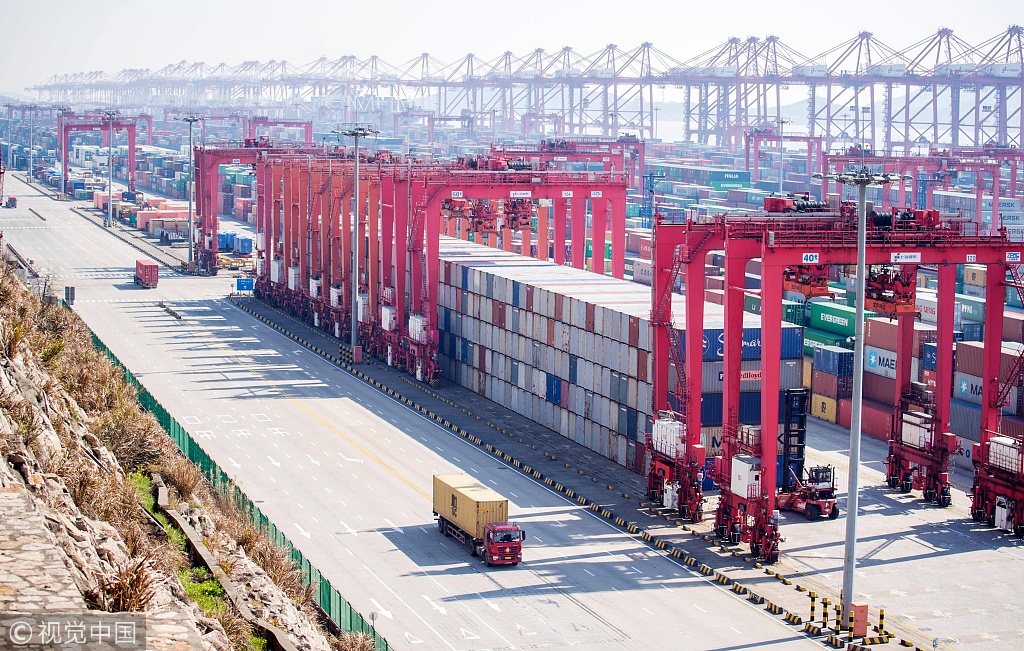
Different countries and regions in East Asia have different advantages. For example, Japan and the Republic of Korea enjoy an edge when it comes to technologies and capital while China has a competitive advantage in market capacity, tech personnel and overall labor force. That's why East Asian economies have successfully built a complete industry chain.
As an emerging market, Southeast Asia has become attractive for many countries and regions, and a significant investment destination for China, Japan and the ROK owing to its cost advantage and huge market potential.
By the end of 2018, Japan, the ROK and ASEAN member states had invested $111.98 billion, $77.04 billion and $116.7 billion in China respectively, and Chinese investments in Japan, the ROK and the 10 ASEAN members states had reached $4.45 billion, $7.64 billion and $89.01 billion.
The industry chains in East Asia have not only strengthened trade relations among the region's economies but also supplied inexpensive but good quality goods to developed countries, especially the United States. But the trade war the US has launched against China has severely affected these industry chains.
For instance, thanks to close China-ROK economic relations, ROK enterprises have been hit hard by the trade war. According to a ROK research institute study, the trade war had had a negative impact on 45.8 percent of the enterprises surveyed in the first quarter of this year, with the automobile and metal machine sectors suffering the most.
Besides, the ROK's exports from January to April declined by 7 percent year-on-year. Japan's total exports, too, dropped in April for fifth consecutive month, with its exports to China declining by 6.3 percent in April. Which means the effects of the US' trade war have spilled to other economies, and could slow down growth in East Asia.
The feared economic slowdown in East Asia, however, will also reduce US exports to the region. As a matter of fact, the World Trade Organization has downgraded its global trade growth forecast by 1.1 percentage points to 2.6 percent.
Since most of the products China exports to the US cannot be replaced in the immediate future, American consumers have no choice but to pay higher prices for them. Which means the trade war triggered by the US would also harm its economy and increase the economic burden of American consumers.
The US' aim is to force China to accept its trade and strategic conditions. But China has made it clear that it will not accept any unequal agreements or buckle under pressure. And as the world's second-largest economy, China can withstand the effects of the trade war.
As more and more East Asian enterprises realize the US is using tariffs to maintain its trade hegemony, they will use advanced technologies such as big data to avoid risks and establish a truly equitable global industry chain.
Perhaps the trade war will prompt some enterprises to move base from China to other economies, but it is highly unlikely that large-scale enterprises will shift operations from China in the short term.
True, the trade war has had an impact on the industry chains in East Asia, but it cannot thoroughly transform them. Given the huge size and potential of the Chinese market, most of the enterprises operating in China are likely to continue doing so, although some of them may prefer to produce intermediary goods in China and export them to other countries to make the end products, so as to avoid US tariffs.
And despite the East Asian industry chains undergoing adjustments, China's improving business environment and further opening-up will ensure that enterprises from advanced economies such as the US, Japan and the ROK continue to operate in China. In fact, more and more foreign companies are likely to consider investing in China. Therefore, the US-triggered trade war's aim to contain China will never be fulfilled.
The author is director of Asia Research Institute, Chinese Academy of International Trade and Economic Cooperation. The views don't necessarily represent those of China Daily.





