New era beckons capital market









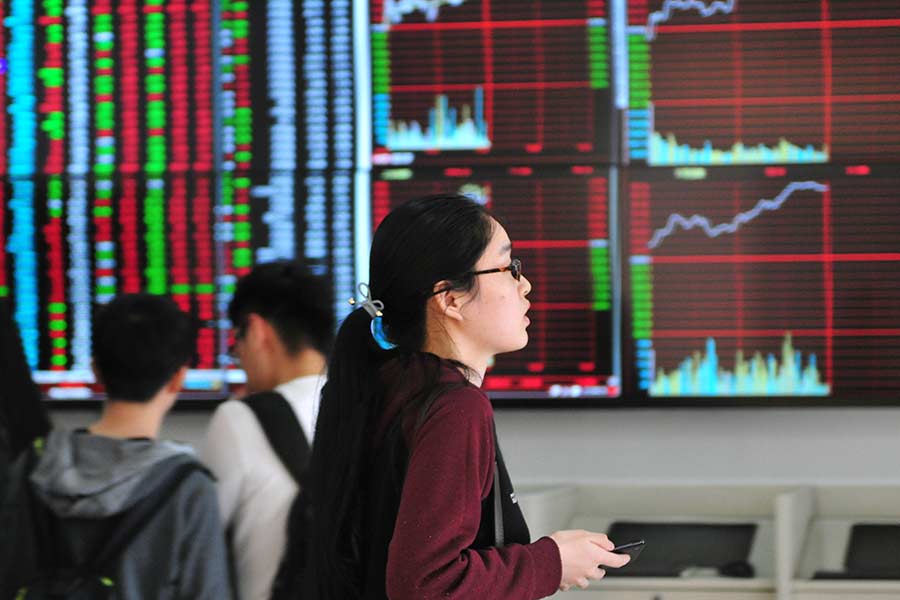
The Shanghai Stock Exchange launched the STAR Market, a Nasdaq-styled science and technology board, on June 13 to high expectations, which were stoked by market-oriented regulatory rules.
Is the STAR Market different from the SME board for small and medium-sized enterprises and the ChiNext board in terms of valuation systems? Definitely!
First of all, the formation of issue price will depend more on demand on the STAR Market.
The submarket revokes the unwritten rule of the issue price - the upper limit of price-to-earnings ratio at 23 - which is seen on other boards of the A-share market.
Therefore, institutional investors will play a more critical role in deciding the issue price of a stock, as investment banks will rely mainly on investor bids, instead of the regulatory ceiling, to decide the issue price.
By Friday, 124 firms had filed applications to go public on the new board, among which three are yet to earn a profit. How to value a firm that has high future growth potential but is losing money now? This is a huge challenge to market participants.
The PE ratio approach will not work anymore. The issue price will reflect institutional investors' demand after carefully weighing risks against benefits.
The STAR Market, however, will still exhibit the phenomenon of underpricing in IPOs, or having an issue price lower than the closing price of the first trading day.
As long as information asymmetries among participants continue to exist in the IPO process, we will continue to observe underpricing in China, the United States, and other markets around the world.
The STAR Market will also affect valuation levels of other submarkets, specially by depressing market value of so-called "shell corporations" and boosting valuations of listed companies in certain industries to the levels of those listed on the new board.
There has been a long queue for IPOs on other boards in the A-share market. A company could wait for two to three years to get listed after filing its IPO application. The lengthy IPO process forces some firms to resort to an alternative route that takes shorter time to get approvals: reverse merger, or to take control and merge with a dormant listed company that is usually called a shell entity.
This route, however, comes with significant costs of buying the shell. For instance, Beijing Qihu Keji Co Ltd and SJEC Corp completed a reverse merger deal in February 2018. Shareholders of Qihoo 360 bore the cost of 1.82 billion yuan ($263 million) because it was the market value of SJEC.
Therefore, firms taking this route usually choose listed firms with small market capitalization to minimize costs. Chinese investors rationally anticipate the likelihood and push up the valuation of potential targets.
The shortened IPO process of the STAR Market, which should last no more than about four months, significantly lowers the time cost of getting listed. The reverse merger route becomes less attractive. Hence, stock prices of listed small-cap firms may fall as shells become less valuable.
Moreover, the STAR Market attracts firms in their early stages, firms with dual-class shares, growing firms that are yet to earn a profit, and red-chip firms (which are based on the Chinese mainland but incorporated overseas). These firms are refused by other boards of the A-share market.
Paucity of these firms on China's capital market has led to difficulties in determining the value of listed firms in the same industries. Investors need information to evaluate the dynamics of a certain industry, how a firm moves along the product life cycle, and growth opportunities in the industry.
When more firms in different life stages go public, the existing listed firms in the same industry benefit as their market valuation may rise with more industry information becoming available to investors. More transparency of industry dynamics also provides benchmarks for pricing unlisted firms during mergers and acquisitions by listed firms.
This industry spillover effect happened when the ChiNext board was inaugurated in October 2009. The first 28 firms that listed on ChiNext were not as matured as their industry peers listed on the main boards. PE ratios of these industry peers increased dramatically after the debut of ChiNext, especially during the October 2009-April 2010 period.
Many things continue to unfold. China's capital market is on the cusp of a new era.
Luo Wei is an associate professor of accounting at Peking University's Guanghua School of Management.