



Regulator confident in reining money flux









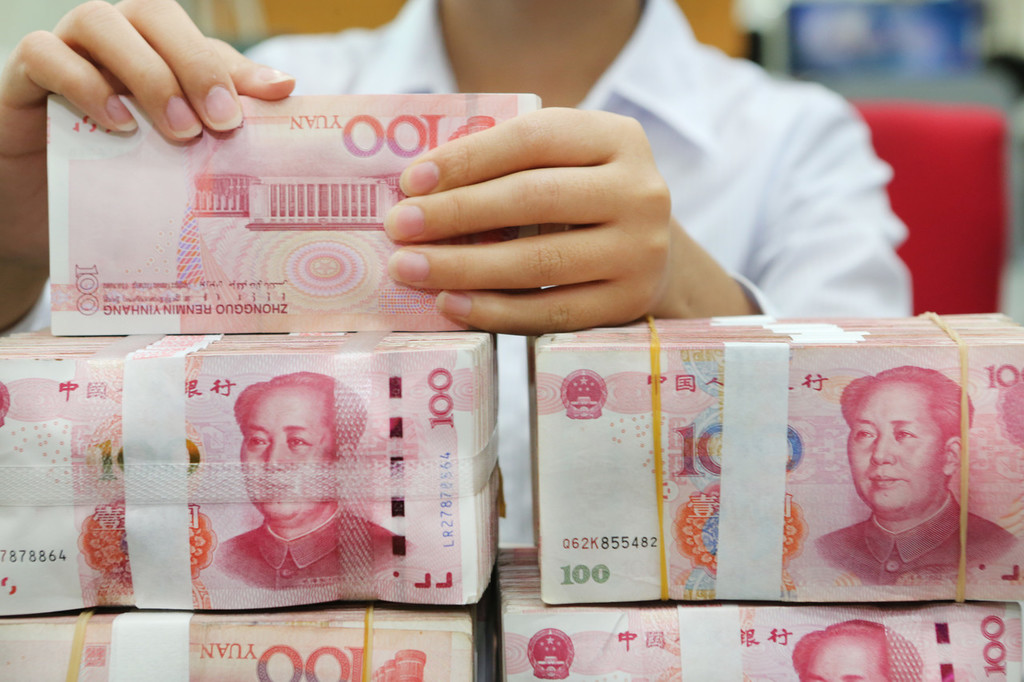
China's financial regulator said the country will keep crossborder capital fluctuations under control, during the process of opening the financial sector further, to limit risk of exposure to speculative money from outside.
The country is taking measures "to effectively iron out crossborder capital flow fluctuations and reduce their impact on the foreign exchange rate", said Huo Yingli, director general of the Macro Prudential Administration of the People's Bank of China, the central bank.
Her remark came after policymakers upgraded the country's opening-up plan following the G20 Summit in Japan. Chinese leaders have vowed to lift all foreign investment restrictions, aside from a new edition of the negative list, and to focus on greater openness in many key areas, such as the financial sector.
The central bank is strengthening monitoring of cross-border capital flows, to tame unexpected fluctuations that could hurt the stability of the yuan, Huo told a financial forum on Saturday.
The regulator is balancing the broader opening with market stabilization and will achieve high-quality opening-up, although difficulties of risk control may be on the rise, she said.
Huo confirmed that constraints on cross-border financial transactions-both inward and outward-will gradually decrease until fully canceled.
In the face of uncertainties from trade tensions, some regions and countries are shifting to prefer using their own currencies in global trade and investment, prompting reforms in the existing US-dollar denominated global monetary system and providing more potential for the yuan's broader use worldwide, Huo said.
According to economists, if the trade dispute and gloomy economic outlook push the US central bank to further ease monetary policy-a policy rate cut in July that's highly expected by the global market-capital flows into emerging economies may rise and the speculative fund will boost the prices of investment assets.
It is wise to open the Chinese financial sector, but it needs to be at a gradual and cautious pace, said Yaseen Anwar, former governor of Central Bank of Pakistan.
The yuan is able to remain stable amid a deepened opening process, or even if the US Federal Reserve unexpectedly changed its monetary policy, given the "sufficient ammunition" owned by the Chinese central bank, he said.
The monetary authority is working to remove obstacles in the yuan internationalization process, according to observers, who expect that a broader opening of China's financial market will substantially boost the use of the yuan overseas.
An index that indicated yuan use in global trade, investment and foreign reserves saw a marked rise in the first quarter of this year to 3.2 percent from 2.95 percent at the end of 2018, according to the Renmin University of China's International Monetary Institute.
The index peaked to a historical high of 4.91 percent in the second quarter of last year, when global direct investment shrank amid rising trade friction. At that time, the yuan became the world's third-largest international currency, surpassing the British pound and Japanese yen, the institute found.
The foreign exchange regulator is trying to combine onshore and offshore foreign exchange markets, which are currently running under different yuan exchange rates. Through banks in Hong Kong, foreign investors in the offshore market are allowed to exchange foreign currencies based on the onshore exchange rates, according to the central bank's Huo.
Foreign institutions will no longer be barred from transfers across different investment connection programs, such as the stock and bond connect mechanisms between the mainland and Hong Kong and the Shanghai-London stock connect, she added.
Wang Fang, a professor at the Renmin University institute, said Chinese companies and financial institutions need to enhance their capacity to manage risk in crossborder business transactions, and prevent policy and legal risks coming from some foreign countries.
Foreign investors' participation in the Chinese domestic financial market is increasing. Foreign holdings of Chinese bonds hit 1.89 trillion yuan ($275 billion) in May, up by 27 percent from a year earlier. Foreign investment in stocks listed onshore reached 1.51 trillion yuan, a year-on-year growth of 14 percent, according to the central bank.
China surpassed Japan to become the world's second-largest bond market at the end of May.




















