Battery-processors charged with preventing pollution









Pressing problem
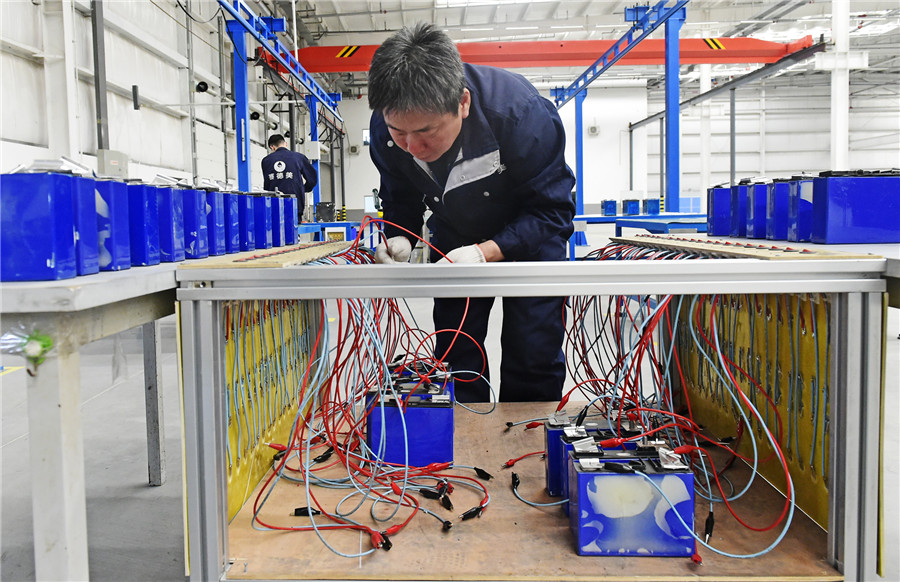
However, the batteries that power the vehicles have to be replaced once their storage capacity falls below 80 percent, while their service life ranges from five to eight years, depending on the frequency of charging. This means the batteries are retired long before the vehicles they power.
While several bodies have produced different estimates of the number of spent batteries that will require disposal, they all agree on one thing - they will arrive soon.
China Automotive Technology and Research Center Co estimates that 120,000 to 200,000 metric tons of batteries will be retired from 2018 to 2020, and the number will rise to 350,000 tons by 2025.
However, a report released last year by three expert bodies, including the Institute of Process Engineering at the Chinese Academy of Sciences and the Chinese Research Academy of Environmental Sciences, estimated that the number will exceed 400,000 tons by 2022.
Spent batteries can pose both safety and environmental risks. Though no longer useful, they still contain a charge, and the heavy metals in them, such as cobalt and nickel, along with organic matter and carbon materials, can cause pollution.
Zhang Tianren, chairman of Tianneng Group, one of China's largest battery manufacturers, said many of the spent cells could be used for power storage in the telecommunication sector if they are still in good condition.
However, they will still need to be disposed of sooner or later, and improper disposal could result in severe water and soil pollution.
"It is hard to restore soil that has been penetrated by heavy metals, even decades later," he said.
Sun Zhi, a researcher with the CAS institute, said the methods of extracting metals from spent batteries derive from traditional metal smelting industries, and while many companies have the requisite abilities, it is still a major challenge to extract all the resources and avoid pollution at the same time.
According to the institutes' report, many processing technologies can result in the release of pollutants that pose severe threats to people, water and soil.
One of the major challenges comes from the disposal of the electrolytic fluid that carries the electrical charge, because the present method generates wastewater or gas that contains fluorine, which can be harmful to human health.





- PLA Daily: China resolute in winning anti-graft war
- China unveils regulations on Party organization elections within armed forces
- Pick your own cherished flowers in downtown Shanghai
- Liangjiang New Area of Chongqing inaugurated
- 17 rescued Filipino crew members transferred
- Team of Chinese, US scientists identifies key tumor cell state driving cancer growth, drug resistance