



Tokyo-Seoul trade dispute more dangerous than it seems









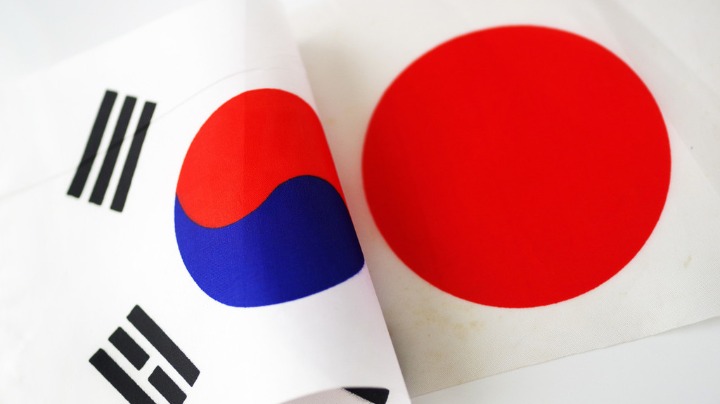
The meeting between foreign ministers of Japan and the Republic of Korea, Taro Kono and Kang Kyung-wha, on Thursday on the sidelines of the ASEAN Regional Forum failed to ease the Tokyo-Seoul trade conflict, so all eyes are on a trilateral meeting between Kono, Kang and US Secretary of State Mike Pompeo on Friday.
As the trade friction between Tokyo and Seoul simmers with Japan restricting the export of three materials essential for making semiconductors and liquid-crystal display panels to the ROK, and Tokyo is expected to remove Seoul from its preferential trade list under "national security" grounds, multiple ROK airlines are reportedly planning to suspend some flights between the two countries.
It remains to be seen whether the intensifying trade conflict that threatens to harm the entire semiconductor industrial chain and involves complicated political and economic factors could be resolved under the World Trade Organization's framework even though the ROK has sought to solicit support at the world trade body.
Compared with the export restrictions, the removal from Japan's "white list" which facilitates bilateral trade would deal a stronger blow to the ROK. Besides, judging by Tokyo's stance and statements, it is quite possible that it would use more tools including increasing the trade restrictions to intensify sanctions against Seoul.
While Seoul is at a disadvantage as the diplomatic negotiations and ROK enterprises' search for replacement of materials have not yet yielded the expected results, the ROK public's campaign to boycott Japanese goods would not be enough to prompt the Shinzo Abe administration to change its stance.
If the conflict worsens, the ROK semiconductor industry would be the first to bear the brunt, with many companies being forced to reduce production, even shut down. Oxford Economics projects a 0.5 percent decline in the ROK's GDP growth in 2019-20 while Goldman Sachs forecasts a decline of $10 billion in the ROK's current account this year if the semiconductor production falls by 10 percent.
Also, some ROK observers have begun to doubt whether the Moon Jae-in government has paid ample attention to the signs of Japan's changing export management method, leading to the deterioration of the political environment in the country. Since the removal of Seoul from Tokyo's "white list" would signify that problems do exist in the ROK's security management, it could harm the ROK's national image worldwide.
Yet the Japan-ROK trade conflict will not leave Japan unscathed. The increasing restrictions on exports to the ROK would also shrink Japan's exports.
Worse, Japanese enterprises, mostly small and medium-sized companies, which supply semiconductor materials will suffer big losses if ROK companies are forced to seek replacements. And without the ROK as a strong partner in the semiconductor industry, Japan will gradually lose its advantages as a high-tech products' supplier because many cutting-edge technologies are developed through close cooperation between suppliers and producers.
The Japan-ROK trade row will have a huge negative impact on East Asian economy, even the global economy, as the measures adopted by the Abe administration could damage the information technology industry's supply chain in the whole of Asia. And apart from further undermining bilateral ties, the trade row will also delay the China-Japan-ROK free trade zone negotiations.
Thanks to the changes in the political and economic landscape, geopolitical and diplomatic conflicts are becoming increasingly evident in economic frictions, especially those in advanced industries.
Although both Japan and the ROK account for a relatively small percentage of each other's trade volume, high-tech-related trade rows will inflict huge damage on regional and global trade which will be hard to mend. Which makes dispassionate dialogue to resolve the conflicts and create a friendly, cooperative atmosphere imperative.
Besides, using export restrictions as a foreign policy strategy could become the new norm in economic conflicts in East Asia, especially because Japan's Ministry of Economy, Trade and Industry established a new department to centralize the management and control of high-tech trade in April.
As such, Chinese enterprises should learn from the Japan-ROK trade conflict and expedite the development of the high-end electronics industry.
The author is a lecturer at the School of Asian Languages and Cultures, Zhejiang International Studies University.
The views don't necessarily represent those of China Daily.





