



India and Pakistan have to find a way out of security dilemma









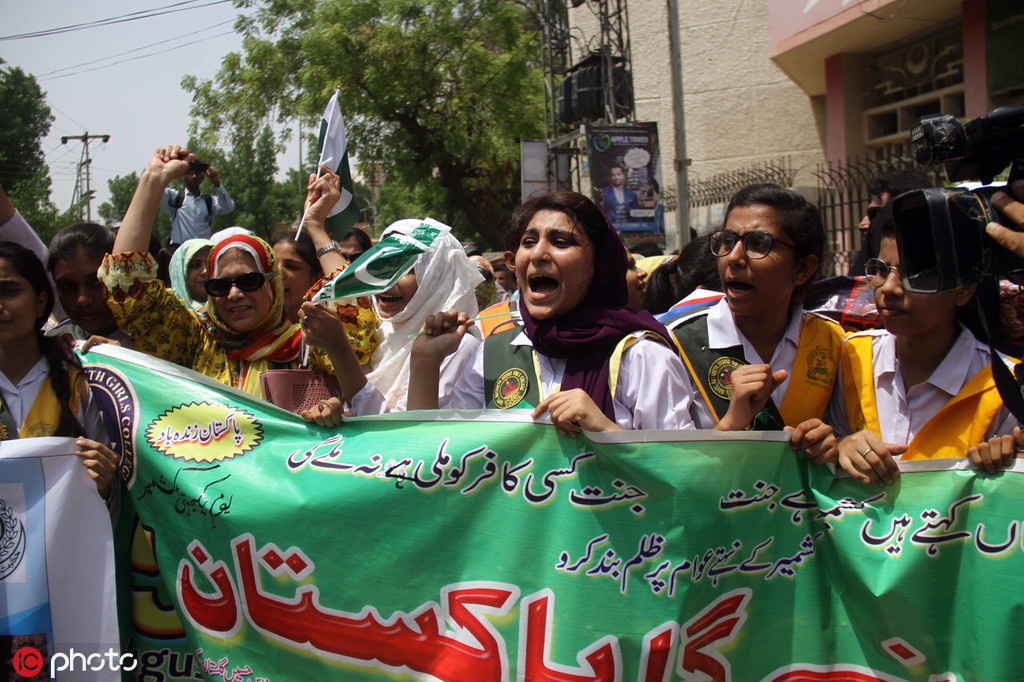
India and Pakistan have locked horns again, exchanging fire across the Line of Control on Saturday, one day after the United Nations Security Council convened an unofficial meeting on the dispute over Kashmir between the two neighbors.
That New Delhi has scrapped the special status of India-administered Kashmir and thus changed the status quo of the disputed region has led to the flaring of tensions between the two neighbors. However, it is the security dilemma that India and Pakistan have been struggling to overcome for decades that is at the root of the problem.
The two countries should have shaken off the burden of colonialism and treated each other as friendly neighbors after the British colonial rulers partitioned India into two countries in 1947. But the two sides have not shown the courage, confidence and wisdom to break from their colonial past and embrace a brighter future.
The three wars, plus the 1999 Kargil conflict, the two sides have fought and the continuous exchange of fire across the Line of Control between them have made their bilateral dispute one of the most pressing issues in the world. No wonder India's move to change the status quo in Kashmir has evoked a strong response from Pakistan.
The security dilemma has not only hurt the two countries' development but also affected regional peace and development. Both India and Pakistan have invested huge resources in pointless military confrontations, and diplomatic and public relations campaigns, as well as tried to develop nuclear weapons that are extremely costly to make and maintain. They could have used these resources to promote socioeconomic development had they not been locked in a security dilemma.
In terms of regional development, the contradictions between the two sides have seriously restricted the integration of South Asia and made the South Asian Association for Regional Cooperation all but defunct. Worse, the security dilemma has forced the two sides to see each other as enemies.
But after decades of confrontation, both India and Pakistan should have realized the security dilemma is extracting a very high price from them. In terms of national strength, India largely outperforms its neighbor and constantly squeezes Pakistan's say in the international community, with many Indian strategists claiming that, if the strength disparity between the two sides continues to widen in favor of India, Pakistan will eventually cave in.
The security dilemma, however, is a result of cognitive conflict, not the strength gap between the two sides. It would be impossible to end the conflict between the two sides if Pakistan's security concerns are not addressed. Besides, despite being relatively weak, Pakistan has enough power to restrain India's development and make India's dream of becoming a major power increasingly challenging and uncertain.
As for Pakistan, its most pressing task should be to develop a modern national identity, stabilize its domestic politics, ensure orderly socioeconomic development, and promote tolerance among different religious and ethnic groups. And since its "nuclear deterrence" has reduced the possibility of a full-fledged war with India, Pakistan should allocate more resources to expedite development, including building the China-Pakistan Economic Corridor.
It is hoped, however, that in the long run, India and Pakistan would reach an agreement to "shelve their disputes and seek common development" and thus end the security dilemma. Given its advantage in national strength, India should adopt a strategy of restraint while trying to better understand Pakistan's complex political landscape and security situation. India should also try to comprehend and address Pakistan's genuine security concerns and pay heed to the Pakistani government's goodwill gesture of holding talks, rather than trying to strategically isolate Islamabad and issue irresponsible statements such as the one on changing India's "no first use" nuclear policy.
It is also hoped the two countries would adjust their strategic thinking and build a more benign relationship which in turn would stabilize bilateral ties and promote regional peace and development.
The author is deputy director of and an associate researcher at the Institute of South Asian Studies, China Institutes of Contemporary International Relations. The views do not necessarily reflect those of China Daily.








