Lifting quotas restrictions is step up for financial market reform, opening-up










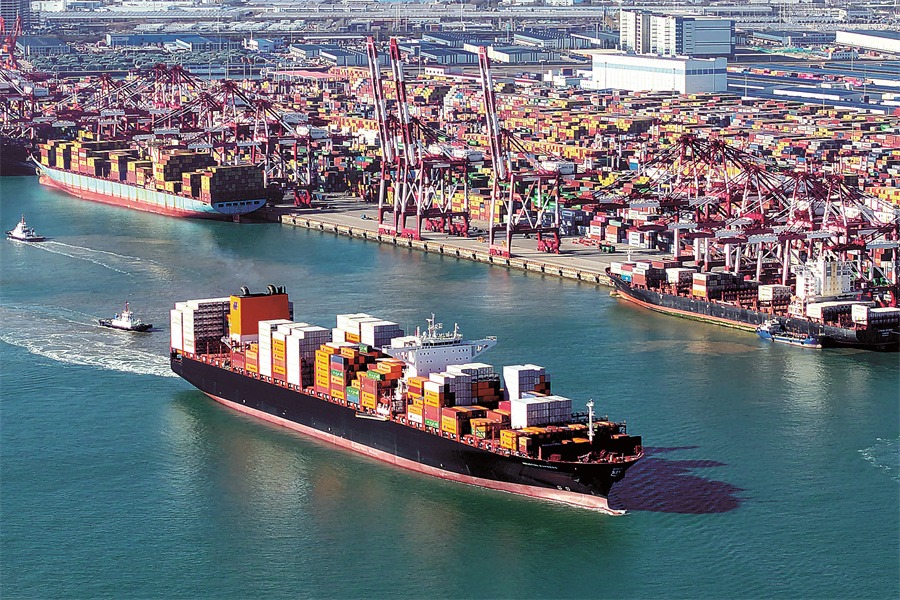
Earlier this week, China's foreign exchange regulator announced the decision to remove quotas on the dollar-dominated qualified foreign institutional investor (QFII) scheme and its yuan-denominated counterpart, RQFII. Under the changes, foreigners get to invest in Chinese securities by completing an easy registration process. FTSE China A50 futures rose as much as 0.6% in Singapore on the news.
The move has come following earlier signs of financial market opening-up. In January, China doubled the QFII quota to $300 billion. Also, draft rules were published earlier this year to combine the QFII and RQFII investment schemes, while simplifying access for overseas investors. Last year, China removed lock-in periods and allowed foreign investors to repatriate funding at any time.
The step-up of China's financial market reform and opening-up is a welcome sign while the world's second largest economy enhances its position as a credible, attractive financial investment destination. I believe there are several key take-aways that come out of the latest investment quota lifting.
First of all, China's incremental approach to financial reform is working well. Over the past four decades of the reform and opening-up process, China has done marvelously in manufacturing and trade, apparently some of the "easier" tasks for an emerging economy. However, for rising China to be fully integrated into the global financial market with unobstructed capital flow, such sea change cannot happen overnight, and any incremental change involves significant risk as it impacts financial stability.
Overall, China has managed well incremental change as the country adapts and mitigates any risk along the road towards full integration. This incremental pace aligns well with growing overall national economic strengths. Financial integration with the global market supports economic growth, while economic capacity provides the necessary resilience for China to address any financial upheaval, not the least manifested in the 1998 and 2008 financial crises.
Secondly, on a more technical note, lifting foreign investment quotas doesn't necessarily mean a quick increase of inbound funding. Chinese regulators won't be so naive as to expect capital inflows as an immediate result of the latest move. In fact, any subsequent investment trend has to depend on the fundamental outlook of the underlying economy, in which Chinese regulators have the biggest confidence, backed by a huge patience that can be measured by years and even decades.
That said, lifting foreign investment quotas is not a short-term maneuver to offset immediate stress, as voiced by certain pundits raising concern about current trade tensions and resultant capital flow. Chinese regulators are thinking in a much longer time frame than typical market participants. Therefore, building on past efforts to address market accessibility, the latest move is a natural evolution towards financial market opening-up. It'd be wrong to make any hyped over-interpretation.
Thirdly, given overall market reaction in the past couple of days, people with insights on China are generally positive about the quota lifting. Increasingly, the "China Opportunity" in the financial sector is being recognized by international investors. To provide a wider context, a growing number of global index publishers, including MSCI, FTSE Russell and S&P Dow Jones, are adding China stocks and bonds into their benchmarks. Such developments and easier financial market access coupled with ongoing index inclusion are sure to push China's capital markets into the global investment mainstream.
Next, it would be interesting to observe how outbound investment from China, particularly the Qualified Domestic Institutional Investor (QDII) scheme, might be de-regulated. Though there is no concrete news as of now, I remain fully confident in the direction towards financial market reform and opening-up. Even more step-ups are sure to take place.
The author is a Beijing-based consultant working on international development issues, covering public health, clean energy and poverty reduction.
The opinions expressed here are those of the writer and do not represent the views of China Daily and China Daily website.