



People focus of human rights development









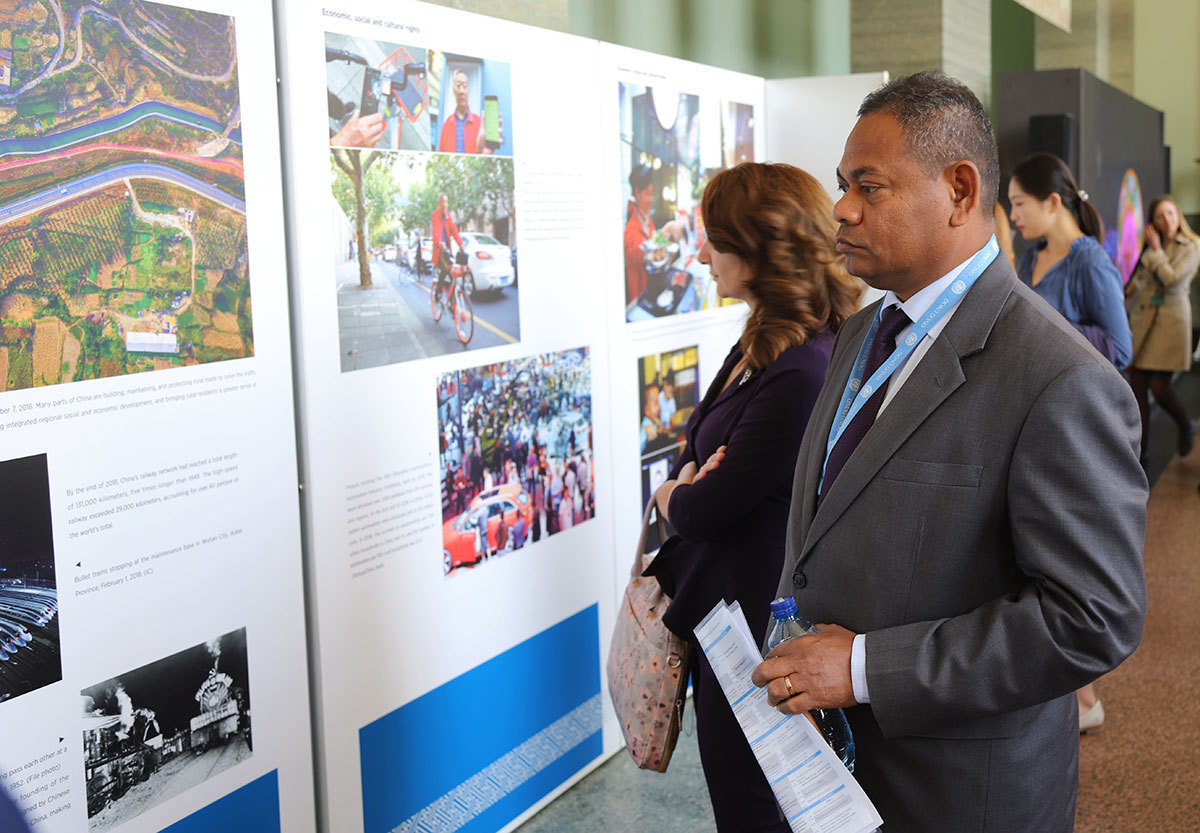
The on-going 42nd session of the United Nations Human Rights Council held in Geneva, Switzerland, is studying in depth the pressing issues in the field of international human rights and promote cooperation among countries to advance the cause of human rights worldwide.
At the meeting, China will present to other members its achievements in human rights development since the founding of the People's Republic of China on Oct 1, 1949, summarize its experiences on human rights development, and elaborate on its human rights development concept.
Due to Western powers' aggressive colonial policies in the aftermath of the two Opium Wars in mid-19th century, China was on the verge of losing its sovereignty, and its people were humiliated and left staring at starvation. After New China was founded, the government abolished the unequal treaties imposed on the country by the Western powers and banned the imperialist forces in order to safeguard national sovereignty, interests and dignity.
Over the past seven decades, the Chinese people's living standards have dramatically improved. Today, they have adequate food and clothing and are looking forward to building a moderately well-off society in an all-round way. Also, Chinese people's per capita disposable income has increased from 497 yuan in 1949 to 28,228 yuan in 2018.
Based on the 2010 poverty criteria for rural residents, 770 million people in China's rural areas were living in poverty in 1978, but the number dropped to 16.6 million by the end of 2018.
Thanks to the popularization of the nine-year compulsory education, the education level in China has greatly improved and illiteracy rate drastically reduced.
In 2018, China's gross senior-high-school enrollment rate reached 88.8 percent, with the gross enrollment rate in higher education institutions rising to 48.1 percent.
Before the founding of New China, people didn't have access to even the most basic healthcare services and almost no medical security.
Since 1949, the country has set up a healthcare service system covering both urban and rural residents, effectively guaranteeing and significantly improving people's right to health. By the end of 2018, the average life expectancy in China had reached 77 years, the infant mortality rate dropped to 6.1 per 1,000, and the main health indicators of Chinese residents were better than the average level of those in middle-and high-income countries.
China has also established the world's largest social security network, with 942 million people covered by pension insurance and 1.344 billion covered by basic medical insurance by the end of 2018.
Before Oct 1, 1949, ordinary people in China neither had the right to participate in national administration nor did they enjoy full personal freedom. New China established the system of people's congresses, in which people became the masters of the country. According to the Constitution, all power of the State belongs to the people, and the organs through which people exercise their power are the National People's Congress and local people's congresses at various levels.
The National People's Congress and local people's congresses are democratically elected by the people, are responsible to the people and subject to people's supervision. All citizens aged 18 or above have the right to vote and stand for election regardless of their ethnic identity, race, gender, occupation, family background, religious belief, education level and economic status.
The reason why New China has made such remarkable achievements in promoting human rights is that it follows the correct path of human rights development. Under the leadership of the Communist Party of China, the country adheres to a people-centric human rights development philosophy, regards people as the main participants and promoters of human rights development, and believes that safeguarding people's interests is the fundamental purpose of its human rights development.
In the 70 years since the founding of New China, the Chinese people, led by the Party and the government, have worked tirelessly and successfully to develop human rights in accordance with China's national conditions. This path is rooted in China's historical tradition and national conditions, draws on the experience of other countries and incorporates the essence of socialism with Chinese characteristics.
The author is a professor at the Party School of the Communist Party of China Central Committee (China National School of Administration). The views don't necessarily represent those of China Daily.





