



Intangible cultural heritage protection boosts soft power









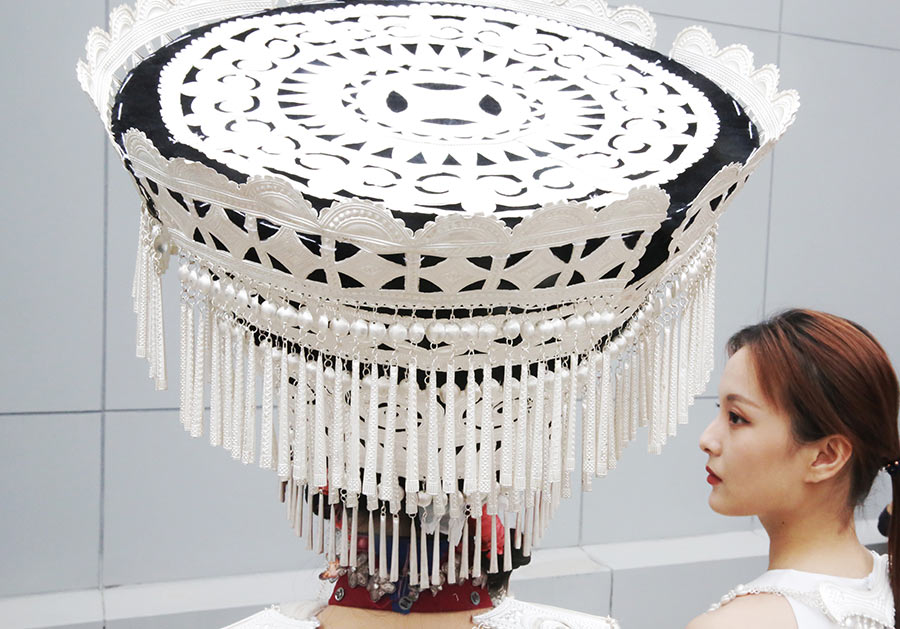
The Chinese government has attached great importance to intangible cultural heritage since the founding of New China in 1949. Which has not only raised the status of folk artists but also made them part of the mainstream and integral to national events.
In 1979, the then Ministry of Culture (now the Ministry of Culture and Tourism), National Ethnic Affairs Commission and the China Federation of Literary and Art Circles jointly launched a 30-year program to compile a comprehensive list of China's intangible cultural heritage and classify them into 10 groups, including folk songs, dramatic folk music, instrumental music, folk dance, folktales and ballads, so as to better protect the nation's folk heritage.
The compilation of "the complete works of Chinese traditional crafts" began in 1997, two years after the establishment of the Traditional Chinese Craft Research Union. The year 1997 also saw the State Council, China's Cabinet, issuing regulations on the protection of traditional arts and crafts.
China joined the Convention for the Safeguarding of Intangible Cultural Heritage in 2004, a year after UNESCO adopted it. And in 2006, the State Council released the first national intangible cultural heritage list comprising 518 items, and followed it up with a list of another 510 in 2008, 191 in 2011, and 153 in 2014.
Apart from the national list of intangible cultural heritage, China also has provincial-, municipal-and county-level lists, which have helped identify the inheritors of the nation's intangible heritage and provided them with subsidies to better protect the intangible heritage.
By 2018, the Ministry of Culture and Tourism had approved five batches of lists with 3,068 national-level inheritors and 14,928 provincial-level inheritors.
Since China passed the Intangible Cultural Heritage Law in 2011, 26 provinces and regions have issued guidelines for the protection of their intangible cultural heritage. And with more than 1 billion yuan ($140.91million) being invested every year in research and maintenance, the country's intangible cultural heritage now has both legal and fiscal protection.
On Oct 31, 2011, the former Ministry of Culture announced the first 41 model bases for the "productive protection" of national intangible cultural heritage. Which has resulted in, for instance, the Regong Art Academy in Qinghai province transforming thangka, a kind of Tibetan scroll painting, into collectibles. And the holistic concept of protecting intangible cultural heritage has helped maintain the atmosphere among communities of artist so they can produce more intangible cultural products.
Besides, the Ministry of Culture and Tourism has set up 21 national cultural ecological experimental centers since 2007, spread over 17 regions, including 11 in ethnic group area.
Yet the core of intangible cultural heritage protection rests with the people and social practice. That's why the former Ministry of Culture, together with the Ministry of Education and the Ministry of Human Resources and Social Security, launched a training program for the inheritors of intangible cultural heritage in 2015 in which students from about 100 universities, including Tsinghua University, could participate.
The training program, which promotes industry-college-research cooperation, not only attracts more participants but also offers potential young inheritors and people from different sectors a chance to study and contribute to the protection of intangible cultural heritage.
Thanks to training programs, traditional craft workshops, poverty alleviation workshops and cultural and ecological experimental centers, the industry-college-research cooperation mechanism has significantly helped in upgrading intangible cultural heritage protection and made traditional crafts popular among the people.
Due to the progress of socialist culture in the new era, the protection of intangible cultural heritages have entered a new stage, where they are playing an increasingly important role in targeted poverty alleviation work, boosting cultural tourism and strengthening China's soft power.
And owing to its increasing awareness about the protection of intangible cultural heritage, the younger generation is playing a vital role in rejuvenating traditional Chinese culture.
The author is head of the Department of Art History at the Academy of Arts& Design, Tsinghua University. The views don't necessarily represent those of China Daily.





