



Multilateralism essential to BRICS and the world









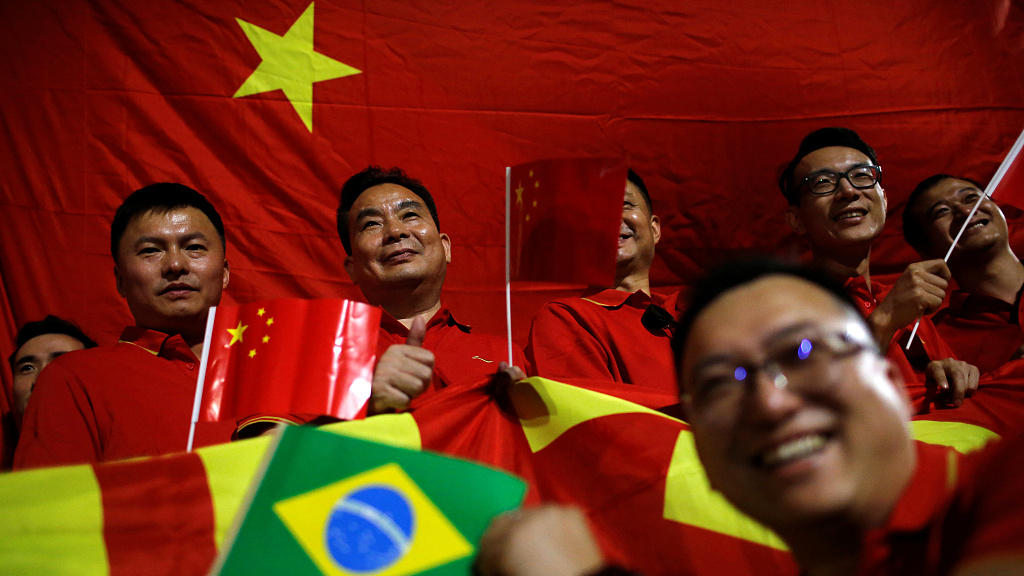
The 11th BRICS Summit has ended in Brazil with a strong commitment to multilateralism, a subject essential to improving global economic growth, cooperation among countries and its industries as well as to enhance financial tools that would help to build a less unequal world. On its closing speech in Brasília, host city of this year's event, Chinese President Xi Jinping has said that there is a concern about rising protectionism and unilateralism, giving developing countries like BRICS more responsibility to strengthen stable and multilateral global governance.
The joint communication signed by the BRICS leaders -- Brazilian President Jair Bolsonaro, Indian Prime Minister Narendra Modi, Russian President Vladmir Putin, and South African President Cyril Ramaphosa -- has also stressed the importance of the subject.
It has been a summit where the role of business and industries was cheered as a tremendous force for the economy. Essentially, the message that has emerged is that the public sphere should work hand in hand with productive sectors.
Innovation and digital economy were other points highlighted those days in Brasília, and all governments promised to make efforts to discuss and implement the best policies, a commitment that would meant a lot to the future. The BRICS countries are responsible for almost 50 percent of global economic growth -- China alone has a share of 30 percent for five years. At a time when the world faces many changes, such a powerful multilateral group could lead to a more balanced and shared path to development.
In the first decade that has just ended, BRICS had offered examples on how to build pragmatic and institutionalized tools. Just to mention two of them, after intense technical and political exchanges among business, academic and official communities from all the five countries, two institutions had emerged. One is the BRICS Contingent Reserve Arrangement (CRA), a shared fund of $100 billion that offers protection against liquidity pressures to any of its members. And the other is the New Development Bank (NDB), which is already financing projects and building its portfolio alongside other traditional multilateral institutions.
Curiously, the CRA and the NDB were first drafted at the Fortaleza Summit, in 2014, in northeastern Brazil, giving that edition a special importance to the group. This year, the joint declaration has 73 paragraphs, any of them preparing a new institutional tool among the five countries. But it's impossible to skip the idea that the document actually reinforces the importance of coordinated work for the global agenda, with commitments especially on environment protection.
China and Brazil, this year's host
On the sideline of this year's multilateral gathering celebrating its 11th edition, Chinese President Xi Jinping was the first to have talks with Brazilian President Jair Bolsonaro. "China is part of the Brazilian future," said Bolsonaro at the Palácio do Planalto, the official national government building. The cordial ambience was celebrated in Brazil. In all the talks with business people, academics or observers of Sino-Brazilian relations, the message was clear -- the moment is very special to amplify the cooperation.
This is the second bilateral meeting since October, when the Brazilian president spent three days in Beijing. In both opportunities, Xi and Bolsonaro had signed documents aiming to promote exchanges on trade, investments, education and culture, to mention some sectors. The support of multilateralism was present once more, expressing not just a political commitment but a constructive relationship. This is fundamental, not just because both sides are working hard to put their economies on a good track, but also because the new Brazilian administration had taken power less than one year ago, in January.
China is the biggest Brazilian trade partner and a heavy investor in the Brazilian economy. A close and smooth bilateral relationship would bring positive outcomes for both sides. Xi also expressed that China aims to open its economy, expanding the share of its exports and imports. This sounds perfect to Brazil, still a country very timid on its exchanges in China: There are less than 50 Brazilian enterprises working in the Chinese market. It's time to think about how to grab those opportunities and keep the BRICS platform and its financial institution, NDB, as important bridges to access the market of our largest partner.
Janaína Camara da Silveira is a journalist who holds a master's degree in economics, and the founder of Radar China, a project dedicated to bring information about China to a Brazilian audience.





