Further opening-up to benefit foreign firms










Setting out the comprehensive strategic design of China's institutional system in the medium and long term, the Fourth Plenary Session of the 19th Communist Party of China Central Committee called for carrying out all-round high-level opening-up with greater depth, broader range, and more strength. Which will have a long-term impact on China's overall reform and opening-up.
In terms of economic and political development, the world has reached a crossroad, with economic globalization encountering unprecedented resistance, and trade disputes and geopolitical conflicts among major countries adding to global economic uncertainties and risks. The International Monetary Fund has lowered its global economic growth forecast for this year to 3 percent, the slowest since the 2008 global financial crisis, while the global trade growth forecast has been reduced to 1 percent, much lower than the global economic growth.
Besides, protectionism and trade conflicts have made global business activities more volatile and unpredictable and dented the confidence of investors, leading to a significant fall in global foreign direct investment.
The new round of opening-up the Fourth Plenary Session has called for is expected to be more proactive and thus propel China's economic development leading to profound changes in the global economic landscape.
First, China will make greater efforts to push forward the new round of opening-up. President Xi Jinping proposed five measures to promote reform and opening-up at the G20 Summit in Osaka in June: continuing to expand opening-up, taking the initiative to expand imports, constantly improving the business environment, fully implementing equal treatment policy for domestic and foreign enterprises, and vigorously driving trade talks.
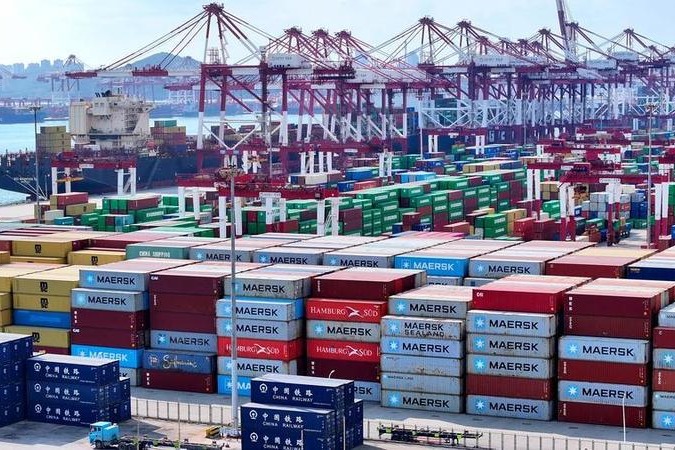
To implement all these measures, for example, China has slashed import tariffs from 9.8 percent in 2017 to 7.5 percent after repeated voluntary adjustments. As for the trade structure, China's actual weighted-average tariff rate is now only 4.4 percent, close to the level of developed economies-the US' weighted-average import tariff rate is 2.4 percent, the European Union's 3.0 percent and Australia's 4 percent.
Second, China will make more efforts to comprehensively open up the economy. It will also promote the synchronized development of imports and exports, goods and services trade, and bilateral trade and two-way investment, as well as facilitate the free flow of international and domestic factors, efficient allocation of resources and the integration of the market.
China has extended the opening-up policy nationwide, from south to north, east to west, and from the coastal to the inland region. Today, all coastal provinces, municipalities and autonomous regions have free trade zones, increasing the number of FTZs in the country to 18. In particular, the China (Shanghai) Pilot Free Trade Zone is seeking to achieve breakthroughs in facilitating investment, free flow of goods, and rapid sharing of information.
China played an active role in the negotiations on market access among countries under the proposed Regional Comprehensive Economic Partnership framework at the recent meeting of ASEAN+3(Association of Southeast Asian Nations plus China, Japan and the Republic of Korea). And it will make extra efforts to ensure the RCEP agreement is signed next year, so as to accelerate Asia's economic integration.
China has already signed 17 free trade agreements with 25 countries and regions, with talks on 13 such agreements continuing and eight being under study. Which shows FTAs have become an important part of China's new round of strategic global layout, and a necessary choice to help build an open world economy.
Third, the Fourth Plenary Session also emphasized institutional opening-up. The modernization of China's economy is in line with the development of globalization. Also, over the past two years, China has expedited the pace of reform in key areas and constantly improved the business environment for both domestic and foreign enterprises. It has reduced the negative list to expand market access for foreign enterprises, and introduced measures such as loosening foreign equity restrictions on banking, securities and insurance industries, which signifies the unprecedented opening-up of the financial sector, as part of China's institutional opening-up.
Institutional opening-up is higher-quality and higher-level opening-up. The Foreign Investment Law, which will come into effect on Jan 1, will provide the institutional guarantee for equal participation of foreign capital in the Chinese market.
Yet many issues remain to be resolved on the way to building an equal and transparent institutional environment for various types of ownership. For instance, specific institutional arrangements, including the treatment standard, complaints mechanism, dispute settlement and security review of foreign capital need to be specified and improved, and relevant laws and rules devised.
To this end, the Fourth Plenary Session has sought to strengthen the fundamental role of the competition policy and introduce foreign capital in competitive fields. There is also a need to build a business environment where domestic and foreign enterprises are treated equally and compete on an equal basis so that global investors can fully enjoy the dividends of China's new round of opening-up and achieve win-win results together with their Chinese counterparts.
The author is lead researcher in the Department of American and European Studies, China Center for International Economic Exchanges. The views don't necessarily represent those of China Daily.