



China's economy to stay resilient









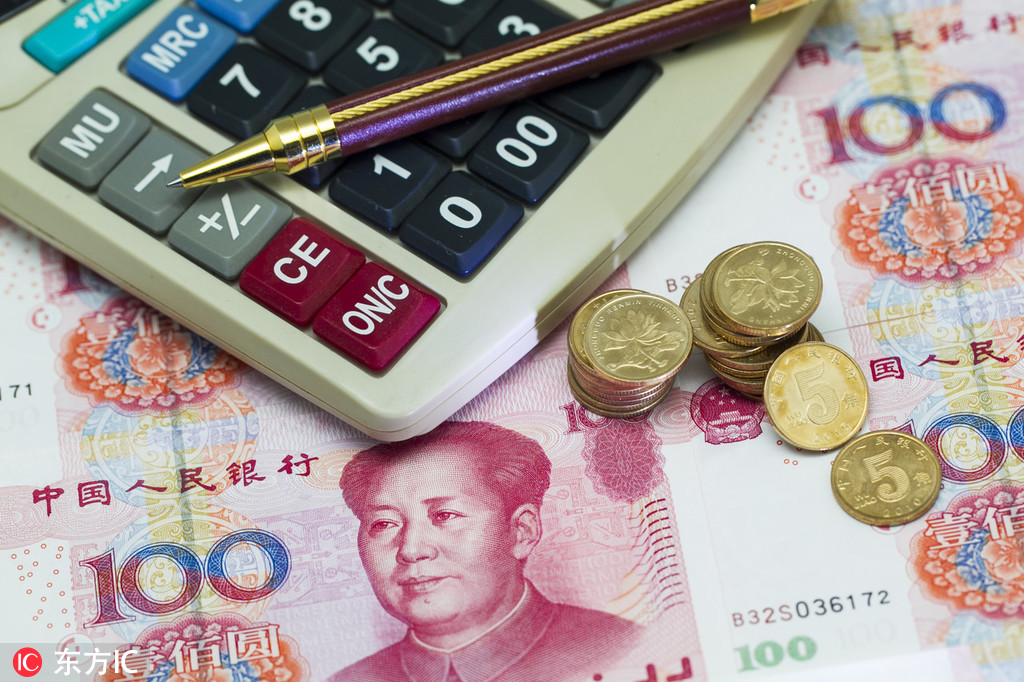
Editor's note: Will China set a growth target above 6 percent next year? How will China achieve such a goal? Two economists share their opinions on China's economy in 2020. Full text below.
Growth target to remain an anchor in 2020
The year 2020 marks the closing year of a decade-long endeavor for China, as the country’s leadership has pledged to build a moderately prosperous society by 2020, a year before the 100th anniversary of the Communist Party of China. To achieve that goal, China needs to double real GDP from the 2010 level by next year — and therefore requires a minimum growth of 6.1-6.2 percent in both 2019 and 2020.
Despite external and domestic challenges, China’s 10-year goal appears within reach. The meeting of the Political Bureau of the CPC Central Committee on Dec 6 reaffirmed the commitment, and called on the government to keep economic growth within a reasonable range by properly using counter-cyclical tools.
We think the government will set the 2020 growth target around 6 percent, providing policy support for a slightly higher growth rate. While GDP growth rates up to 2018 are likely to be revised based on the latest economic census, we (at Standard Chartered Bank) believe the upward revisions will be marginal and insufficient to meaningfully lower the 2020 growth target.
Govt realizes structural downward pressure
Compared with the growth target of 6.0-6.5 percent set for 2019, a lower target would suggest the government recognizes the structural downtrend of the economy and does not want to over-stimulate the economy, especially because of an already high leverage ratio and the need to reserve policy space in its long-term competition with the United States. Still, to stabilize employment and build some cushion for achieving the decade-long goal, we expect the government to err on the higher side of 6 percent.
The US-triggered trade war and the property sector are sources of downward pressure on China’s economy. If a “phase one” deal at the Sino-US trade talks pre-empts new US tariffs and includes some rollback of existing tariffs, we estimate the existing tariffs will trim China’s 2020 growth by 0.3 percentage points. In a worse-case scenario where all announced US tariffs are fully implemented, China’s growth could reduce by up to 0.6 percentage points next year.
Yet despite restrictive housing policies curtailing property developers’ appetite to acquire land and launch new projects that bodes ill for property investment next year, we see some positive factors, including policy support and cyclical tailwinds, which would help contain the risk of a sharp downturn. Therefore, we forecast 6.1 percent growth for 2020, above market consensus.
Policy support to fuel growth
Proactive fiscal policy has been doing the heavy lifting this year. While the official budget only shows a deficit of 2.8 percent of GDP this year, the broadly defined budget deficit, which covers both the general public budget and the government funds budget, has been increased to 6.5 percent of GDP this year from 4.7 percent last year. Data so far suggest the budget will be fully implemented, delivering fiscal stimulus of 1.8 percent of GDP. Fiscal stimulus, in fact, has played an important role in offsetting the fallout from China’s deleveraging measures last year and higher US tariffs this year.
We also expect the government to keep the broadly defined budget deficit around 6.5 percent of GDP in 2020. The official budget, however, may only show a deficit of 3 percent of GDP, observing the implicit ceiling of 3 percent. The mix of fiscal support, however, may shift from tax cuts to spending, as it tends to have a higher fiscal multiplier. And as the meeting of the Political Bureau of the CPC Central Committee emphasized the need to strengthen infrastructure construction, both central and local government bond issuance quotas will likely be raised to finance the deficit.
The authorities have shown a preference for maintaining a conventional monetary policy for as long as possible. Recent statements by senior People’s Bank of China’s officials suggest deep skepticism over the utility and sustainability of quantitative easing and negative interest rates, tools that have been commonly used in major advanced economies. As such, China is unlikely to engage in aggressive monetary easing due to concerns over the already elevated debt level and the diminishing effects of policy loosening on activity in the real economy.
Accommodative monetary policy expected next year
We expect monetary policy to be accommodative in 2020. Both the reserve requirement ratio (RRR) and medium-term lending facility (MLF) rate are likely to be cut, and the central bank might keep monetary and total social financing growth slightly above nominal GDP growth next year. To achieve that, it will have to cut the RRR to raise the money multiplier, as its balance sheet has not been expanded for a while.
We forecast three RRR cuts of 50 basis points each, or an equivalent liquidity injection through a targeted RRR cut or central bank lending, in the first three quarters of 2020 to accommodate government bond issuance and to prevent a crowding-out of the private sector. In addition, to facilitate a decline in the average lending rate, the central bank may cut the MLF rate by 10 basis points each in the first and second quarters, with pass-through to the seven-day reverse repo rate and loan prime rate.
Next year will be a year of soft but stabilizing growth for the global economy in our view. And we forecast global growth at 3.3 percent for 2020, slightly higher than our 3.1 percent estimate for 2019.
Industrial inventory likely to bottom out
In China, infrastructure investment may pick up further, supported by fiscal spending, faster project approvals and the lowering of the project capital requirement. The industrial inventory cycle appears close to bottoming out, curbing downside risks to manufacturing investment. Historical data suggest there is an inventory cycle that lasts three to four years, and it has been three and a half years since the last bottom of the cycle.
Besides, car sales may become less of a drag on retail sales next year, due to recent policies to encourage car purchases. Automobile sales dropped 9.7 percent year-on-year in the first 10 months of 2019 because of the expiration of the tax benefit, slower home sales, and restrictive purchase policies in large cities. But since the base effect has waned in recent months, sales growth has become less negative — and could further pick up next year.
Ding Shuang, chief economist for Greater China and North Asia, Standard Chartered Bank.





