



O2O model heralds hospital-to-home medical care









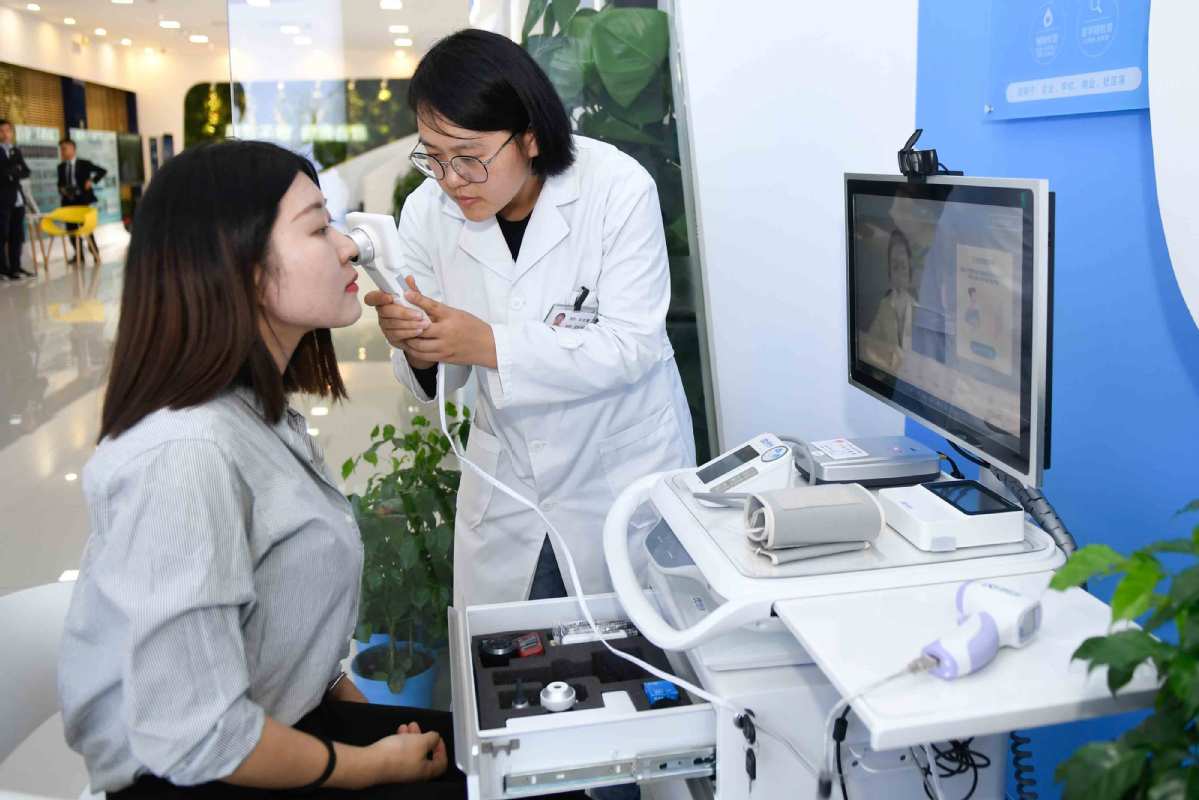
Medical treatment in China will increasingly evolve from the current model of patients seeing doctors exclusively in physical hospitals into a combination of initial offline consultations with online follow-up consultations, or the offline-to-online (O2O) model, providing improved efficiency and convenience, industry experts said.
Xie Fangmin, CEO of Jianke.com, China's leading business-to-consumer pharmaceutical e-commerce platform, believes that it is well-positioned to support healthcare providers to embrace this online future.
Jianke's telemedicine software provides each registered doctor with a unique QR code. After an initial offline consultation, patients scan this code using their mobile phone to establish a doctor-patient relationship through Jianke's platform, which facilitates online follow-up consultations and electronic prescriptions and prescription refills.
During its 2019 Partnership Summit, the Guangdong-based company announced its strategic plan for 2020 and beyond, aiming to develop a smart hospital of the future, and expanding from its original "services plus pharmaceutical products" operating model into a true "Hospital to Home", or H2H enabler.
"By leveraging technological advancements, common medical services, drug services and chronic disease management can move from hospitals to patients' homes. This will improve the patient experience, enhance the availability and accessibility of medical services and medicines, thereby providing patients with an improved quality of life," said Xie.
He noted that the H2H model has the potential to break down traditional barriers to healthcare access in China, where medical care is still largely delivered offline at physical hospitals. At the same time, it can also help transform the entire healthcare paradigm from disease treatment to preventive care and comprehensive health management.
"We believe that our model can be especially beneficial to patients suffering from chronic illnesses, such as liver disease, diabetes, cardiovascular and neurodegenerative diseases," he said.
According to a report from Beijing-based market consultancy Analysys, in 2019, the online transaction volume of prescription drugs is estimated to grow by 42.1 percent year-on-year, while that of offline hospitals and retailers will only increase by 4.3 percent.
Meanwhile, data from the National Health Commission showed that in 2017, China's online healthcare market reached 32.5 billion yuan ($4.6 billion), 45.87 percent higher than that of the previous year. Industry experts estimated the market will grow to 90 billion yuan by 2020.
Cheng Ji, deputy secretary-general of the Life Oasis Foundation of the China Primary Health Care Foundation, said that with the help of internet-based healthcare, prescription drugs that would have originally taken over 10 days from prescription to delivery to a patient's home now take only three days.
"Once a patient has purchased medicine from physical hospitals or offline retailers, they can obtain prescription refills online afterward," Cheng said.
Xu Jiawei, China business unit head for Cialis and retail distribution at Eli Lilly and Co, said that e-commerce healthcare has transformed the nature of the digital media.
"Using the communication power of the internet, information can be conveyed to patients directly. E-commerce links hospitals and pharmacies to form a complete healthcare ecosystem, which includes online consultation, offline referral, electronic prescription and drug delivery," he said.
In April 2018, the State Council, China's Cabinet, issued new guidelines to promote internet-based healthcare, encouraging medical institutions to leverage internet-based technologies to improve the efficiency of medical services.
In August 2019, the National People's Congress released an amendment, offering further guidance to expressly permit the sale of prescription drugs online.
Xie from Jianke noted that the H2H model enables doctors to serve patients with greater precision. "In the future, we believe that the H2H model will continue to develop in coordination with changes to social insurance and pensions, while creating value for all stakeholders."
By the end of October, 100,415 doctors were registered on Jianke's telemedicine platform, growing 2,500 percent year-on-year. Jianke's H2H business unit also partnered with 114 pharmaceutical enterprises, ranking first in the industry, while facilitating 1.6 million online electronic prescriptions.




















