



Kim Jong Un doubles down on nuclear development









Editor's note: Tom Fowdy graduated from Oxford University's China Studies Program and majored in politics at Durham University. He writes about international relations focusing on China and the Democratic People's Republic of Korea (DPRK). The article reflects the author's opinions, and not necessarily the views of CGTN.
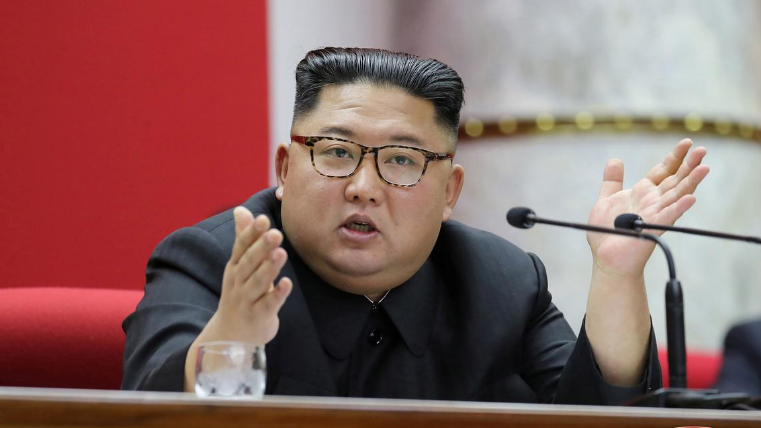
DPRK leader Kim Jong Un commenced his New Year's speech by urging his country to "brace for long term confrontation with the U.S." stating that Pyongyang was "no longer bound" by the temporary pause in nuclear and missile testing which was held throughout negotiations in 2018 and 2019. In turn, he also convened a plenum of the Workers' Party of Korea where he pledged to affirm the development of strategic and nuclear weapons.
Kim further stated that hope for sanctions relief was now fading and the country would ultimately have to solve its economic problems, with the U.S. refusing to compromise on this matter. Although he did not formally announce an end to negotiations with Washington, nevertheless he criticized their "gangster-like demands" and cited their continuing "hostile policy" as the rationale behind the decision.
These developments mark a significant shift in tone from the DPRK and set a tense agenda for 2020. The efforts of the previous year have come to nothing. Pyongyang is making it crystal clear that they will never surrender their nuclear weapons, and reaffirming the long-standing strategic logic that such a program is intrinsic to their national survival.
Washington must instead, learn to co-exist with it and in light of such, Kim is warning that if they do not negotiate fairly, they will now push to accelerate these capabilities.
2019 was a damning failure for U.S.-DPRK diplomacy. A golden opportunity lost and squandered. However, that failure was clear by the year's beginning, not to the very last moments.
The ill-fated Hanoi summit in February, which was abruptly aborted by Trump, served to set a tone for the rest of the year. The United States persistently stuck to a demand that Pyongyang cede the entirety of its nuclear program before it received any sanctions relief, a measure which the DPRK found persistently unacceptable.
Kim Jong Un left the summit with the recognition that Washington was not likely to shift from this demand, and in turn began to sharpen his own leverage. Short-range missile testing resumed not long after, with Pyongyang testing more missiles than in 2017, albeit with less intensity.
As nothing changed, the country then set a year-end deadline that if Washington did not change its position, then it would consider going back to "the old way" – hinting at the resumption of nuclear and missile testing.
Thus, what observers see now is not a surprise. The DPRK has not abandoned diplomacy in its entirety, but it has significantly hardened its line and vows to strengthen its hand.
Although it's long been known in conventional wisdom, Pyongyang is now making it clear that denuclearization is not on the table, by reaffirming the strategic purpose of nuclear weapons to the country's survival. This marks a return to the Byungjin doctrine, a policy commenced in 2016, which argued for a dual pursuit of nuclear weapons and economic development. The policy was placed on a hiatus whilst talks took place and Pyongyang committed to testing, but now it is back.
Therefore, what happens next? We are likely to see more provocative testing occur over the next few months, this could come in the form of satellite launches, medium-range ballistic missiles, and intercontinental ballistic missiles.
An outright nuclear test is unlikely (although cannot be ruled out) given that it will invoke greater sanctions on Pyongyang and cost of diplomatic support from Russia and China, who are advocating relief at the United Nations. Nevertheless, Kim makes it clear the country is not afraid of additional pressure and places confidence in the belief that increasing their capabilities can force Washington's hand.
Thus, 2020 is likely to be a rocky year for U.S.-DPRK relations. It could involve a return to threats and confrontation. Pyongyang has responded to inadequate diplomacy the year previously by doubling down on its commitment to its nuclear program and its strategic importance.
Whilst it is open to negotiations, it is nevertheless formally taking the idea of full denuclearization off the table. This affirms what many have been saying for a long time, the United States must ultimately learn to live with a nuclear-capable DPRK and stop pursuing a pipe dream based on "commitments," which Kim never pledged or made. Trouble lies ahead otherwise.


Today's Top News
- Consultative suggestions provide policymakers with essential inputs to finalize five-year plan
- Decoding China: How the people run the country
- AI helping to redefine entrepreneurship
- China's judges enhancing global role
- FM calls for joint efforts to de-escalate Mideast tensions
- Bridging the last mile so that farm technology reaches field and table





