



Africa should turn locust swarms into a value chain









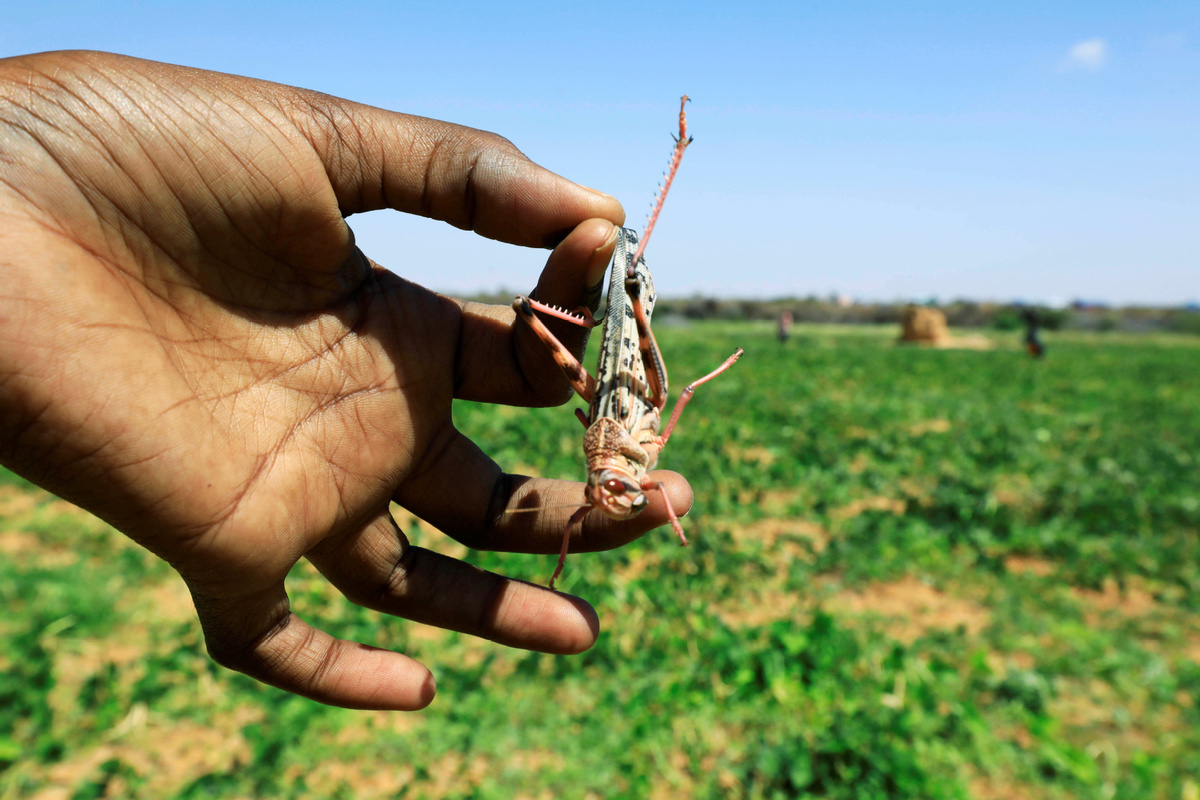
Desert locusts have ravaged tens of thousands of hectares of grazing land and food crops across Somalia, Ethiopia and northern parts of Kenya, according to the Food and Agricultural Organization. The swarms are not expected to relent soon due to their growing population on the coasts of Egypt, Sudan, Eritrea, Saudi Arabia and Yemen.
Locust swarms pose danger to the already stretched food security situation in African countries. A single swarm can consume more than 200,000 tons of vegetation and multiply tenfold to 16-fold in three to six months.
Desert locusts are not a new phenomenon in Africa or Asia.
Locusts are a good source of nutrition. Yet their potential for human consumption remains largely untapped in many parts of Africa. Feedipedia, an online encyclopedia of animal feeds, says locusts are highly nutritious and contain large amounts of protein, fiber and fatty acids.
Over the years, locust swarms have caused major devastation across the continent, leading to hunger, starvation and heavy crop loss in West and North Africa, Madagascar, the Horn of Africa and East Africa.
Most of the continent's responses to locust infestations have been reactionary rather than proactive.
Locust infestation is not one country's problem. When conditions are right in the Middle Eastern countries for locust populations to grow, it is expected that the swarms will reach Africa at some point.
With most African countries battling youth unemployment, stretched financial capabilities and malnutrition in children, it is about time they participated proactively in eliminating the threat of locusts each time there is an upsurge in their numbers.
The main method of combating locusts, which are considered an agricultural pest, is through spraying. However, the use of insecticides is like shooting oneself in the toe, since the environmental and financial implications are far-reaching. Biological control, on the other hand, offers greater benefits.
The capturing, drying and inclusion of locusts in the food chain, especially as a supplement in food for humans as well as livestock, can greatly contribute to food security, improved nutrition and alternative income channels.
The mass preservation of locusts by turning them into edible pellets could ensure they are available even when the massive swarms disappear.
Entomophagy, the consumption of insects, has been promoted in the past as a sustainable source of protein for humans as well as animals. In the Philippines, locust meal has gradually started to replace expensive fish meal for poultry.
In China's Tibet autonomous region, free-range chickens-those allowed to roam freely outdoors rather than being confined in an enclosure-are used to stop the population of grasshoppers from spiraling out of control.
In Japan, quails fed with locust meal have shown higher production capacity, laying more eggs than when fed with the more expensive fish meal.
Experiments in China have established that free-range chickens could help control infestation of pastures by locusts. In the year 2000, China released more than 700,000 ducks and chickens to combat the swarms.
Unlocking the value chain for an insect-based economy in African countries affected by locusts would not only guarantee income for young people but also provide access to essential nutrition. This only requires the creation of an enabling environment by governments, the equitable allocation of resources, including infrastructure, and creation of awareness among citizens.
The export and import of insects plays a strong economic role throughout Southeast Asia. In Thailand, the insect trade is currently valued at more than $1.14 billion a year.
In China, the supplementation of conventional poultry feed with locust meal has not only yielded positive results but also reduced the cost of production, enabling farmers to make more profits.
African countries should attempt to advance the potential for an insect-based value chain that can be harnessed to guarantee success.
The author is an independent business and finance consultant based in Nairobi. The views do not necessarily reflect those of China Daily.










