



China leads in renewable energy sector
Industry to gain further momentum on nation's market-oriented efforts









Since the renewable energy law took effect in January 2006, China's renewable energy sector has grown into the world's largest from its modest beginnings, with rapid utilization of renewable power and the advancement of related technologies.
In 2018, 26.7 percent of the electricity generated in China, or 1,867,000 gigawatt hours, was from renewables, increasing 10.6 percentage points from the level in 2005.
The central authorities have invested more than 3 billion yuan ($434.66 million) on research and development of renewable energy technologies during the 12th and 13th Five-Year Plan (2011-20) periods, data from the National Energy Administration and the Ministry of Science and Technology showed.
In the coming 14th Five-Year Plan (2021-25) period, wind and photovoltaic power across China are to fully achieve power grid parity, or the tipping point at which their generation costs are the same or less as electricity from the power grid, thanks to the country's efforts to reach a greener energy mix, industry experts said.
Li Ye, executive director for regulation at the National Energy Administration, said during the annual China EV 100 Forum held on Jan 10-12 that China's non-fossil energy power capacity had totaled 800 gigawatts by the end of 2019, accounting for 41.5 percent of the total.
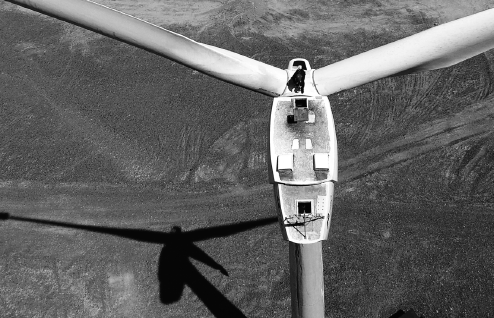
The capacity of hydropower, wind power and PV power respectively hit 360 GW, 200 GW and 190 GW, levels that top those seen in the rest of the world.
He said the average utilization rate of hydropower, wind and PV power had achieved 97 percent, 96 percent and 98 percent respectively in 2019. Non-fossil power, which also includes nuclear power, contributed to 30 percent of total power generation.
Kou Nannan, head of China research at Bloomberg New Energy Finance, said enhancement in market-oriented competition would further boost the development of China's new energy sector.
"The costs of wind and PV power are set to continue dropping during the 14th Five-Year Plan period, making them increasingly competitive, as reforms in the electricity market deepens, with market forces playing a bigger role in the new energy sector," he said.
For the long term, the renewable energy industry will develop in a healthy fashion without subsidies, thanks to market competition that brings down costs.
It is within the industry's expectation that the authorities will cap and finally phase out subsidies for new projects, although it is difficult for some players to make sustainable profits in certain regions without those subsidies, according to Kou.
He also said reducing curtailment and increasing utilization of renewable power, especially in the country's central and eastern areas, should be the new focus for the next phase development of renewables. The development of new technologies on energy storage, demand side response and microgrid is also important, as the future of renewable energy is increasingly digital.
Li Junfeng, director of the renewable energy branch of the China Energy Research Society, also said the phasing out of subsidies, a booster to market-oriented competition, will accelerate the ability of renewables to reach grid parity.
It is important that everyone fully realizes the importance of renewable energy development for the transition toward a greener energy mix in China and high-quality development, he said.
"The renewable energy law establishes policies for national renewable energy targets, and renewable power connection and purchase. But not everyone has a mindset to embrace a high proportion of renewable energy in the energy mix, and curtailment remains a problem," said Li, who is also former head of the National Center for Climate Change Strategy Research.
Kou added that decarbonization of the energy system should be accelerated, and this will rely not only on the development of wind and PV power, but also carbon-neutral power from alternatives that include energy storage, hydrogen, biomass, and nuclear energy.


Today's Top News
- Consultative suggestions provide policymakers with essential inputs to finalize five-year plan
- Decoding China: How the people run the country
- AI helping to redefine entrepreneurship
- China's judges enhancing global role
- FM calls for joint efforts to de-escalate Mideast tensions
- Bridging the last mile so that farm technology reaches field and table





