



Freedom of press should by no means be leveraged









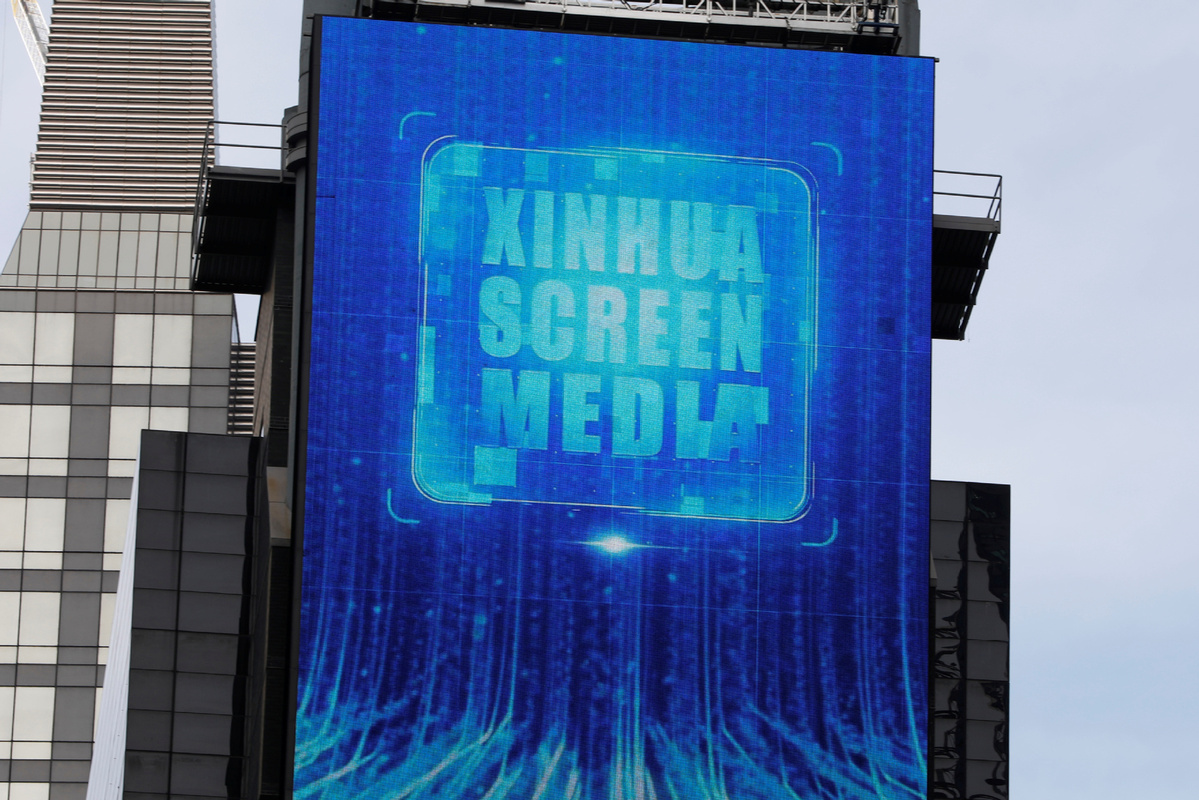
The US State Department on Monday again slapped additional restrictions on Chinese media working in the United States. Five agencies have already been classified as "agents of the Chinese government", including Xinhua News Agency, China Global Television Network, China Radio International, China Daily and Haitian, which distributes People's Daily. The total number of Chinese personnel allowed to work for these media groups will be set at 100. In addition, Chinese journalists will now receive visas only for a limited period of time.
The ostensible reason is an alleged tightening of restrictions on foreign journalists in China. The real catalyst, however, seems to have been China's refusal to renew the press credentials of three reporters for the Wall Street Journal when the Journal published a highly insulting article by Walter Russell Mead, who resurrected some of the epithets thrown around by the jingoist colonial press in the 19th century. While even staff at the Wall Street Journal judged the epithet "The Sick Man of Asia" as highly insulting to China, the Journal refrained from issuing any public apology for printing the article. If a reputable US journal had issued an article taking up some of the "lynching" rhetoric from the Jim Crow era here in the US, you would have seen the boom come down hard on that journal-with or without an apology. The effect in China of the "sick man" epithet is the same. But Mike Pompeo's State Department has taken the Wall Street Journal case to heart, as it has such an excellent record in slinging dirt on China which Pompeo would like to cut down to size.
These new restrictions are no doubt aimed at the same time at controlling the narrative. Presently, anyone who wants to say a kind word about China is immediately suspect. Most Chinese journalists, who, in my experience, are truly journalists eager to ferret out the truth in their reporting, are also very patriotic, as are most US journalists. They feel the need to give a more objective picture of the situation facing China and the world than you will find in the New York Times. At the same time, much of the American public has become so disgusted by the mainstream media that they are also looking for a more rounded view of world events. Which is why networks like Xinhua and CGTN are helping to capture a wider market both here in the US and abroad. In that sense, clamping down on the Chinese media here is an ideal way to prevent any alternative "narrative" to what Pompeo's State Department and the "mainstream" US media are putting out about China.
The measure is counter-productive for the US as well, since these same Chinese networks also have the function of reporting to the Chinese people the events that are occurring in the US. Anyone who follows the reporting of these Chinese outlets knows that they do a pretty good job of reporting-both the good and the bad. For example, ordinary Chinese viewers know probably more about the development of the US space program, its history and accomplishments, than do US viewers.
But in our own country, there was little coverage of China's landing on the far side of the moon, while at the same time there was a lot of coverage of a bunch of irate young Hong Kongers trashing their city and waving the Union Jack. Unfortunately, our press has become incredibly jingoistic, while the Chinese press remains relatively balanced. So why shouldn't they be granted freedom of press in order to create a better portrayal of the US than that of just another colonial power trying to keep China down?
The author is the Washington bureau chief of the US publication Executive Intelligence Review. The article was first published on China Today. The views don't necessarily represent those of China Daily.





