



Is Asia ready for 'Industry 4.0' revolution?









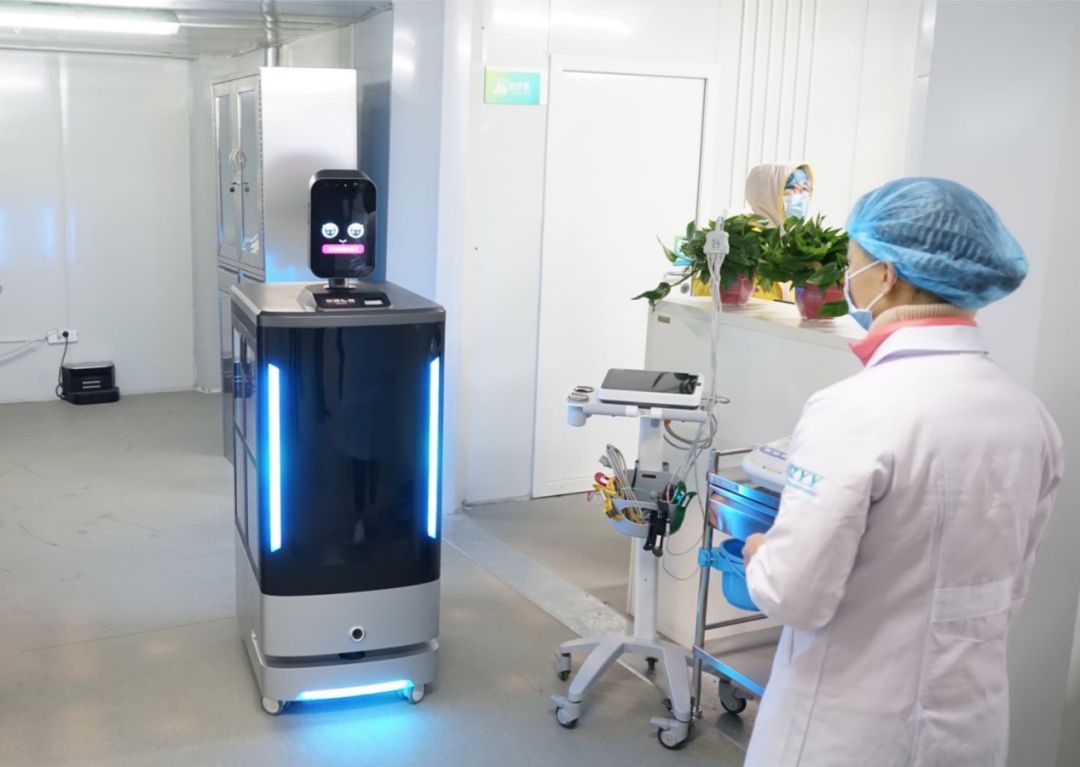
Smart technologies such as artificial intelligence, it seems, are threatening to disrupt the longstanding "Asian growth model" that has fueled industrial development in digital technologies that may take away jobs-particularly routine tasks in the global production chain-as well as pump prime upgraded ones in the new era.
Countries need to quickly adapt to the changes if they want to leverage opportunities from this new industrial revolution, widely dubbed "Industry 4.0". Governments should prioritize skills development programs and focus on soft skills, digital literacy, and practical training at all levels of education to prepare their workforce for Industry 4.0.
Until now, developing Asia has largely benefited from the "flying-geese" pattern of industrial succession. Initially, Japan was the "lead goose" and upgrade from labor-intensive to high-tech industries. As Japan shifted to advanced industries, labor-intensive manufacturing was relocated to developing countries such as China, Indonesia, Thailand, Vietnam and India. Such offshoring generated jobs in these countries. But, this "passing flock" approach may not work anymore. Automation will reduce production costs making traditional offshoring unnecessary in the global value chain.
For example, a recent Asian Development Bank study shows that the unit labor cost of producing a cotton shirt in the United States-previously about $7 compared to about $0.50 in India or $0.22 in Bangladesh-would fall to $0.40 in the US and Europe if robots were used. This would encourage "reshoring" as advanced economies replace human inputs in routine tasks. Vietnam, for example, might lose 26 percent of its jobs to this reshoring.
Even within developing Asia, automatic machines have started to replace human labor. For example, a recent Bangladeshi government report shows that the total number of garment workers in the country declined from 4.4 million in 2013 to 3.6 million in 2017, with automation believed to be the main cause. At the Esquire Knit Composite in the northern outskirts of Dhaka, Bangladesh, fully automatic machines from Italy are used for cutting and semi-automatic machines from Japan are used for sewing and finishing. Only ironing and folding remain manual, which accounts for 30 percent of labor in the factory. Even this will likely change soon, as automatic ironing and folding machines have appeared in some factories.
To future-proof the labor force, modernizing the region's skill development system is necessary. In this regard, four areas need to be addressed urgently.
First, authorities need to develop a workforce that can adapt to the dynamic demands of Industry 4.0 technologies. Foundational and occupational skills as well as the ability to learn continuously are core requirements for the new generation of workers. According to the World Economic Forum, at least half of the existing workers in Asia need significant new or upgraded skills. And around half of these retraining activities have to rely on external private and public training providers.
Second, we need to strengthen digital skills. The Philippines has introduced a national digital literacy education framework for students at the primary and secondary levels. It aims to produce 21st century digital citizens who can use information and communications technologies (ICT) and digital tools confidently, responsibly, and ethically.
Third, the region needs to move away from rote learning practices, putting the emphasis instead on creativity, critical thinking, and problem solving, as well as on soft skills such as communication.
And fourth, the region needs to respond to emerging opportunities by developing industry-relevant skills. The top trends in the job market include new skills such as machine learning engineers, application development analysts, back-end developers, and data scientists. While very few institutions in developing Asia are ready to prepare workers in these new fields, some have begun exploring programs to do so.
For example, Sri Lanka is establishing new technology faculties in 11 public universities. Industry collaboration and innovation centers have been established in these universities to produce a new breed of professionals who are equipped with the ability to use Industry 4.0 technologies.
In Bangladesh, 640 ICT learning centers in secondary schools across the country started operation in 2019 as a pilot for digital literacy education. And Kyrgyzstan and Armenia are planning to strengthen education in STEM(science, technology, engineering and mathematics). Such initiatives should be prioritized and expanded. Countries can learn from such experiences to develop effective systems for skills development based on their own institutional structures and context.
As this new industrial revolution unfolds, skills development systems in developing Asia need major transformation. Failure to act now will have serious consequences, as the continued rapid growth of developing Asia depends on it.
The author is vice-president (Operations 1) of the Asian Development Bank. The views don't necessarily reflect those of China Daily.





