



Fight against virus to boost globalization









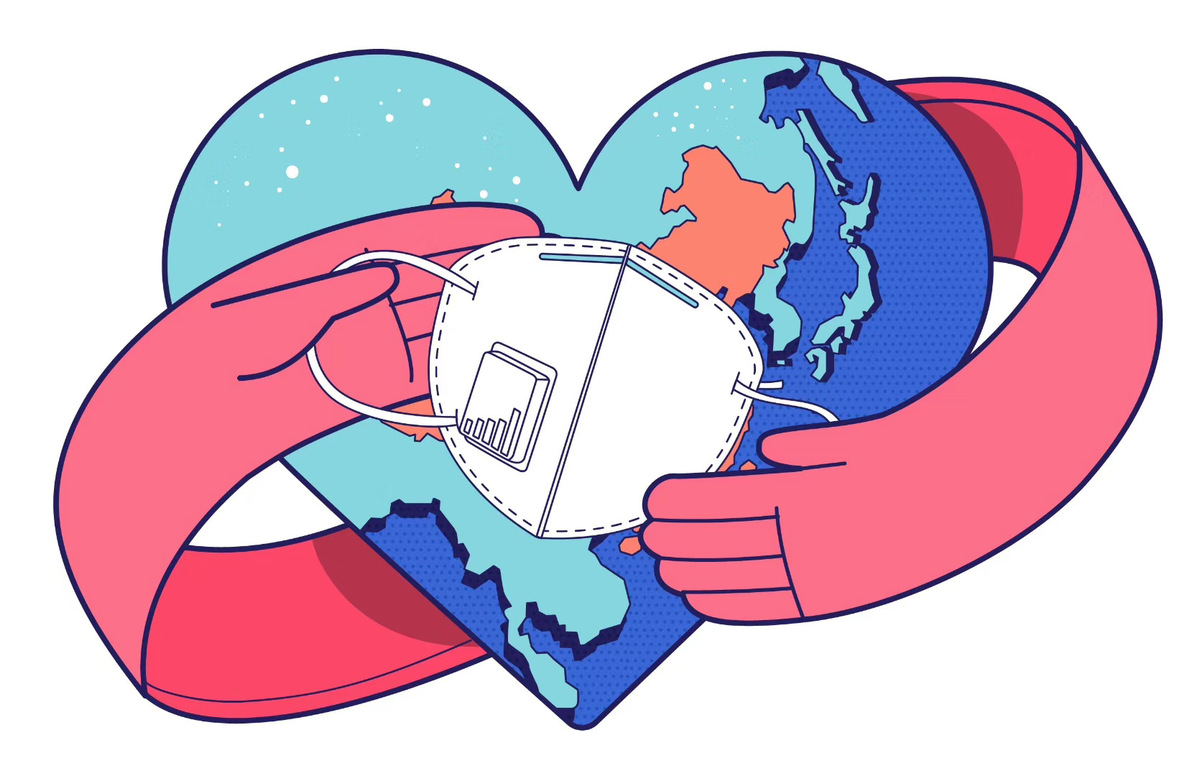
Editor's Note: The world economy is encountering strong headwinds, especially because the novel coronavirus outbreak has disrupted global supply chains, giving rise to fears that it would undermine the globalization process. Will economic globalization come to a grinding halt? Two experts share their views on the issue with China Daily's Wang Kan. Excerpts follow:
New drivers of economic growth emerging
In the short term, the coronavirus outbreak is a blow to the world at large. But it has hit the economy the hardest. The impact of the pandemic has also been immense on the tourism industry, including the aviation and hospitality sectors, and business activities.
The Chinese economy, too, will suffer, as its export and import growth rates are expected to decline, at least in the first quarter of this year, and the disruption in production has affected its supply chain.
As the novel coronavirus has spread to more than 140 countries and regions, slowing down their trade and other economic activities, there are concerns that the pandemic could jeopardize economic globalization.
But despite the coronavirus outbreak posing a threat to the world economy in the short term, it cannot change the trend of globalization. The pandemic could necessitate an adjustment in the international economic landscape, as advanced technologies such as artificial intelligence (AI) and big data are already playing a significant role in prevention and treatment of novel coronavirus pneumonia.
And the application of these technologies to boost production and other economic activities is likely to drive economic growth in the future. Since the coronavirus outbreak has disrupted global trade in a major way, many countries have realized the need to strengthen cooperation and better coordinate their moves to overcome the global health and subsequently economic problem, which in turn will mitigate the potential of "de-globalization".
Thanks to globalization, economies across the world are closely interconnected, meaning any disruption in economic activities in one region is bound to influence trade and investment in other regions. So it is imperative that all countries make concerted efforts to fight the virus and, by doing so, strengthen the globalization trend.
Globalization will gain in strength
The spread of the novel coronavirus to more than 140 countries and regions has shaken the industrial chain and supply chain, raising concerns that globalization may slow down, leading to de-globalization.
But the epidemic cannot break the chain of communication and exchange among countries. Also, the existing international division of labor division has been determined by the level of development of different countries' productive forces, which is decisively influenced by the relations of production prevailing in those countries.
More importantly, the international division of labor is very important for expanding trade between countries, and therefore constitutes the objective basis for the development of the world market.
That's why an emergency like the coronavirus outbreak can affect the global supply chain and international trade only temporarily, but cannot have a permanent debilitating impact on global trade.
The epidemic may weaken the structure and system of globalization, but it will not put an end to globalization; instead, it could initiate a new globalization model.
In fact, the future of globalization is promising, especially because of the development of AI, big data, internet of things and 5G technology, as they seem set to become the new drivers of economic growth.
In spite of the epidemic disrupting the global supply chain, it will not force major global suppliers such as China, Germany, Japan and the Republic of Korea to overhaul their own or the global supply chain.
So, the impact of the epidemic on the world economy will be temporary, although the global supply chain could undergo an adjustment. And there are enough reasons to believe that globalization will gain in strength and become more open, inclusive and balanced after the outbreak is contained.
Ren Lin, a researcher at the Institute of World Economics and Politics, Chinese Academy of Social Sciences
Gu Xueming, president of Chinese Academy of International Trade and Economic Cooperation
The views don't necessarily represent those of China Daily.





