



Bracing for impact of COVID-19









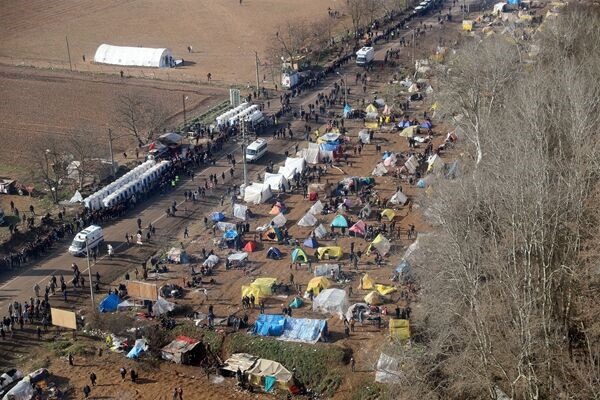
How are you supposed to wash your hands regularly if you have no running water or soap? How can you implement "social distancing" if you live in a slum or a refugee camp? How are you supposed to stop crossing borders if you are fleeing from war? How are those with pre-existing health conditions going to take extra precautions if they already can't afford or access the treatment they need?
Everyone is affected by the COVID-19 pandemic, but the impact may be felt by some more than others.
As the epidemic spreads further, it will continue to expose the inequalities that exist in national health systems, especially in the exclusion of certain groups from accessing care, either because of their legal status or because of other factors that make them a target.
It will expose the under-investment in free public healthcare for all, which means that access to quality care will for some be based on purchasing power and not medical need. It will expose the failure of governments to plan for and deliver services – not just health services – best meeting the needs of all. It will expose the life-threatening vulnerabilities caused by displacement, violence, poverty and war.
The people who will especially suffer will be those already neglected – due to austerity measures, who have fled because of war or who don't have access to treatment for existing conditions because of privatized healthcare.
And it will also be those who can't stock up on food because they already can't afford a meal every night of the week, who are underpaid, overworked and deprived of sick leave, unable to work from home – and those trapped in conflict zones under bombing and siege.
And how are you supposed to treat patients without full access to needed resources? Many health systems bracing for the impact of COVID-19 are already at breaking point by war, political mismanagement, under-resourcing, corruption, austerity and sanctions, barely able to cope with normal patient loads, let alone an emergency.
COVID-19 is demonstrating how policy decisions of social exclusion, reduced access to free healthcare, and increased inequality will now be felt by all of us. These policies are the enemy of our collective health.
As Médecins Sans Frontières / Doctors Without Borders (MSF) is scaling up its response to the COVID-19 pandemic, we will focus on the most vulnerable and neglected. We started working in Hong Kong earlier this year in response to the first cases, and we now have medical teams deployed to respond in the heart of the pandemic in Italy. We will continue to scale up as feasible as this crisis spreads.
However, there are decisions that can be taken now that will already ease the impending disaster that many communities may soon face. The congested refugee camps on the Greek islands need to be evacuated. That doesn't mean sending people back to Syria where war still rages. It means finding a way to integrate people into communities where they will be able to practice safety measures such as social distancing and self-isolation.
In addition to this, supplies need to be shared across borders according to greatest need. This must start with states in Europe sharing their supplies with Italy. It will soon need to extend to other regions that will be hit by this pandemic and whose ability to cope is already compromised.
MSF will also need to manage the gaps we will face in staffing our other ongoing emergency projects. Our medical response to measles in DRC needs to continue. So too does our response to the emergency needs of the war-affected communities of Cameroon or the Central African Republic. These are just some of the communities we cannot afford to let down. For them, COVID-19 is yet another assault on their survival.
This pandemic is exposing our collective vulnerability. The powerlessness felt by many of us today, the cracks in our feeling of safety, the doubts about the future. These are all the fears and concerns felt by so many in society who have been excluded, neglected or even targeted by those in positions of power.
I hope COVID-19 not only teaches us to wash our hands, but makes governments understand that healthcare should be for all.
Jonathan Whittall is director of the Analysis Department for MSF – Operational Centre in Brussels.





