



Online teaching in time of health crisis









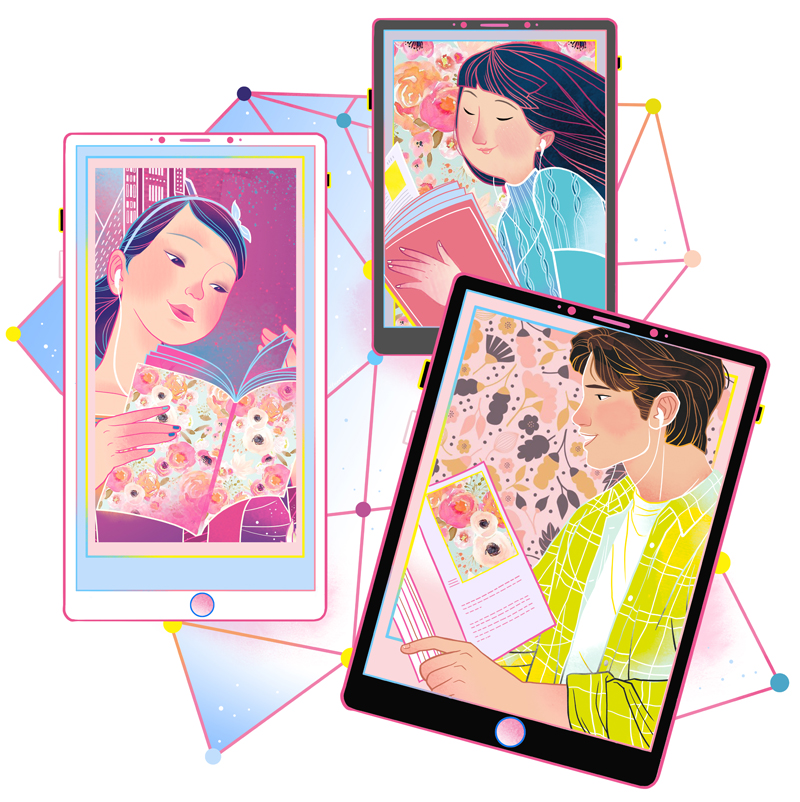
The novel coronavirus pandemic has disrupted the education of about 300 million students across the world. More than 190 countries have reported an increase in confirmed cases, and over 160 countries have shut down schools nationwide. Which means the pandemic poses an unprecedented challenge to the education system, and could change our idea of education from in-person teaching in brick-and-mortar classes on campuses to online classes.
China was the first country to order the closure of schools and universities in the wake of the coronavirus outbreak in late January. Initially, the Ministry of Education ordered all schools to defer their reopening date after the winter vacation, shifting the new semester from mid-January to mid-February. But even at the end of March, it is still uncertain when the schools would reopen, because the decision still rests on when the epidemic would be contained.
However, despite the schools not reopening, the ministry has said that children's education should not be disrupted. As a result, almost all schools started distance teaching and learning in late February according to the normal national academic calendar. And in two to three weeks, solutions to many education-related problems, from the local to the national levels, started emerging. The entire country has turned into a living lab for distance learning enabled by information and communication technology (ICT).
The informatization of education over the years faces a serious test. In China, informatization of education also means raising the digital literacy rate while applying ICT to develop digital learning resources.
As part of its national anti-epidemic strategy, the Ministry of Education mobilized the educational network from the national to the local levels to offer recorded teaching programs online while requiring each educational institution to make its plan according to the local situation. And for the university sector, the ministry required 22 Chinese online learning platforms to provide all their learning materials for free, including 24,000 video-recorded tertiary-level courses across 30 disciplines.
Most schools and universities have provided some form of distance learning during the ongoing fight against the coronavirus, consisting mainly but not restricted to online education. The key issues that have cropped up are the means of imparting education and its quality, highlighting the diversity and disparities in the two environments-the provider's environment for teaching and learning support, and the individual learner's living socio-economic and technological environment. Yet both environments play a key role in the effectiveness and efficiency of teaching and learning.
Essentially, it takes three basic elements to move an entire school or university online: determination, broadband and broadcast. So there is a high possibility that more educational institutions, including universities, will shift to online teaching to resume "normal" classes.
For example, with more cities in the United States reporting an increase in confirmed coronavirus cases, the provost of Stanford University recently announced the cancellation of all in-person class meetings, and said classes that required in-person instruction would be moved to the online format. And the University of Washington announced that no inperson classes would be held on the campus.
In 1996, the late Steve Jobs, founder and CEO of Apple, said,"What's wrong with education cannot be fixed with technology. No amount of technology will make a dent."
Despite educators and ICT experts widely agreeing with Jobs' argument, could the pandemic-induced shift to online education also bring about a paradigm shift? Is online education sustainable, at least parallel to normal school teaching? And can it fundamentally change the nature of school teaching? Or will online teaching vanish with the end of the pandemic?
Only an in-depth, long-term research can give us the correct answers.
The authors are associated with the Institute of Education of Tsinghua University. The views don't necessarily represent those of China Daily.





