



Covid-19 does not discriminate, nor should our response









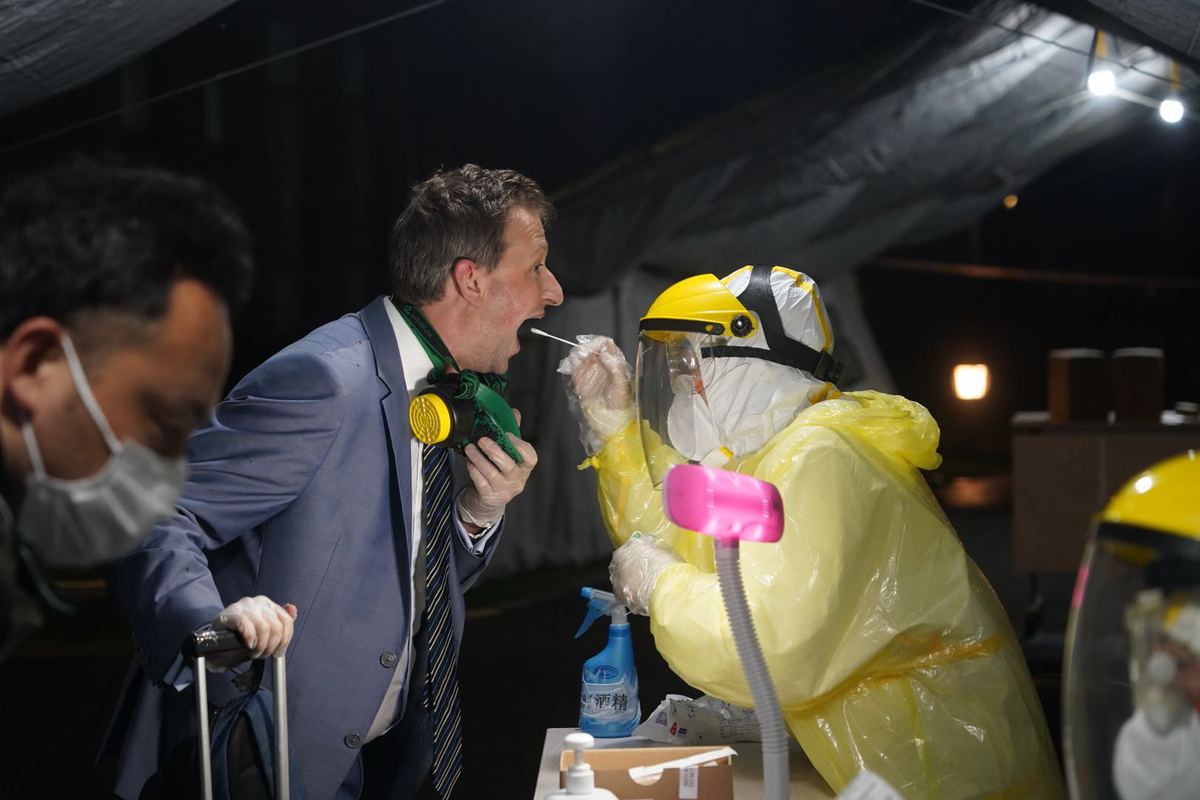
On 20 March 2020, the UN Network on Migration issued a statement in which it stressed the importance for "all authorities to make every effort to confront xenophobia, including where migrants and others are subject to discrimination or violence linked to the origin and spreading of the pandemic. COVID-19 does not discriminate, nor should our response, if it is to succeed." China was directly confronted by the new virus. As more and more countries around the world are battling to control the dramatic spread of this new virus on a global scale, a look into China's experience of proactively integrating the needs of migrant populations in its COVID-19 public health response mechanisms may provide some good practices for countries to draw from, in their attempt to enhance ongoing disease mitigation and control efforts.
While the rapid escalation of the COVID-19 outbreak posed serious challenges to China's disease prevention and control systems, the Chinese government, under President Xi Jinping's leadership, introduced a series of unprecedented measures early on when the epidemic broke out. Following active participation of the highest authority and the general public, as well as the coordination between the central and local governments, the efforts were efficiently realized across provinces, and the situation has improved since late February and been brought largely under control. Various government agencies introduced targeted and effective measures to address public concerns in different areas, among which prominently featured the management of foreign nationals.
China currently hosts more than a million foreigners, who reside in the country for a multitude of reasons including work, study, business and research. By the time the outbreak started picking up, many of them have had legitimate reasons to fear for their own safety and wellbeing as they gradually found themselves stranded in different parts of the country. Travel or movement restrictions introduced in the first part of February in the affected regions to control community transmission placed them then at a disadvantage in the general population due to a variety of factors including a lack of local support systems and language barriers. Their disadvantaged status demanded full, timely and specific attention by the Chinese authorities – a shared responsibility with respective foreign consular services in the country.
As the outbreak intensified, the Ministry of Foreign Affairs (MFA) shared epidemic-related information in a quite open, timely and transparent manner through its regular press briefings and other channels. The National Immigration Administration (NIA), in the exercise of its entry and exit management functions, introduced measures to make sure necessary service deliveries remained operational and special situations were duly considered. For example, by targeting institutions and establishments such as universities, research institutes and private companies where the presence of foreigners was prominent, the NIA's Entry and Exit Administration provided online services or allowed the procedures to be processed in nearby offices. Starting from February 27, two-month renewals were automatically granted to foreigners whose visas or residence permits expired during the period of prevention and control, without having to undergo any procedures. By the end of March, almost sixty thousand foreigners benefited from this measure.
Meanwhile, the NIA made itself as available and accessible as possible to foreign nationals in China through responsible information sharing, thereby preventing panicking and urging self-protection against the virus. On January 30th, the NIA published the English version of the Questions and Answers Concerning Immigration and Exit-Entry Administration during the Period of Prevention and Control on Pneumonia Caused by Novel Coronavirus through its social media channels including Weixin and Weibo public accounts. The Q&A answered questions regarding visa and residence permit application procedures during the crisis period and how to proceed in such extraordinary circumstances.
To make the information about self-protection measures available to foreigners, the NIA also compiled and translated the Public Prevention Notes provided by the Chinese Center for Disease Control and Prevention. The final Public Prevention of Pneumonia Caused by Novel Coronavirus was published on social media in six languages including English, Russian, French, German, Japanese, and Korean. In addition, the NIA also sent text messages and emails containing these materials to those who resided in China to ensure timely and effective information sharing. Other measures included setting up a 24-hour multi-lingual hotline, making email inquiries accessible and developing a mobile program for quickly and clearly accessing entry and exit information. These steps were all taken to ensure foreigners were well-informed of the current situation and relevant regulations that concerned their daily proceedings in China.
Such strengthening in official communication was certainly effective in conveying key messages and providing guidance, but equally importantly, helped mitigate the risk of discrimination and stigma against this particular group. After the World Health Organization (WHO) declared the COVID-19 outbreak a Public Health Emergency of International Concern (PHEIC) on January 30th, IOM Director General António Vitorino stressed, in an interview with China Central Television (CCTV) on 12 February 2020, the idea that global action should be based on evidence instead of fear to counter misinformation and to avoid stigma and discrimination. In this respect, the NIA's prompt actions and information accessibility assured migrants that their status and conditions were equally addressed, to the greatest extent possible under the given circumstances, along with Chinese nationals, thereby providing an important stimulus to the prevention of stigma and discrimination against foreign nationals while enhancing public health protection efforts.
COVID-19 is a challenge faced by all human beings collectively. Strengthening international cooperation is critical. While battling against the coronavirus domestically, the Chinese government has also been upholding the principle and vision for constructing a community of shared future for mankind. Therefore, the government initiated and participated in international cooperation with an open, transparent and responsible attitude, and regularly updated WHO and the international community on the current situation. It also supported other countries' national efforts in preventing and controlling COVID-19 by hosting video conferences, generously providing supplies and equipment, and sending teams of medical experts, including to my country of origin, Italy.
In early February, shortly after the epidemic broke out, IOM was one of the first UN agencies to mobilize resources and support openly China's efforts to contain COVID-19 by donating critical equipment to protect health personnel working tirelessly at frontline in China. "This donation is a small but meaningful contribution as it shows IOM's appreciation for, solidarity with, and confidence in, the capable steps China continues to take to protect and support citizens, both nationals and foreign, within and beyond its borders," said at the time IOM Director General António Vitorino. A week earlier, the Bangkok-based IOM Regional Director for Asia and the Pacific, Dr. Nenette Maria Motus, called on all parties to work together to prevent the undue stigmatization of international travelers, in line with international health principles, and in support of the WHO's Emergency Committee cautioning against actions that promote stigma or discrimination.
At a time when we see the COVID-19 pandemic rapidly spreading worldwide, the virus is currently on the decline in China. However, the nation is still on high alert over risks of reimportation of COVID-19 associated with international travel. Migrant-inclusive responses and strategic communication continue to be key in correctly informing and addressing public perception of migrants, both internationally and domestically, along with all those who reside in or are associated with the virus-affected areas.
In this regard, China's experience in embedding migrants from the onset of the virus in its outbreak response proves to be a good practice. Mutual understanding and knowledge sharing continue to lay the ground for international cooperation and solidarity between and among people, within and across borders, for the responsible and effective response to COVID-19 and eventually, global recovery from the pandemic.
The author is Chief of Mission at International Organization for Migration (IOM) China.
The opinions expressed here are those of the writer and do not represent the views of China Daily and China Daily website.





