



Africa needs immediate help to fight the epidemic









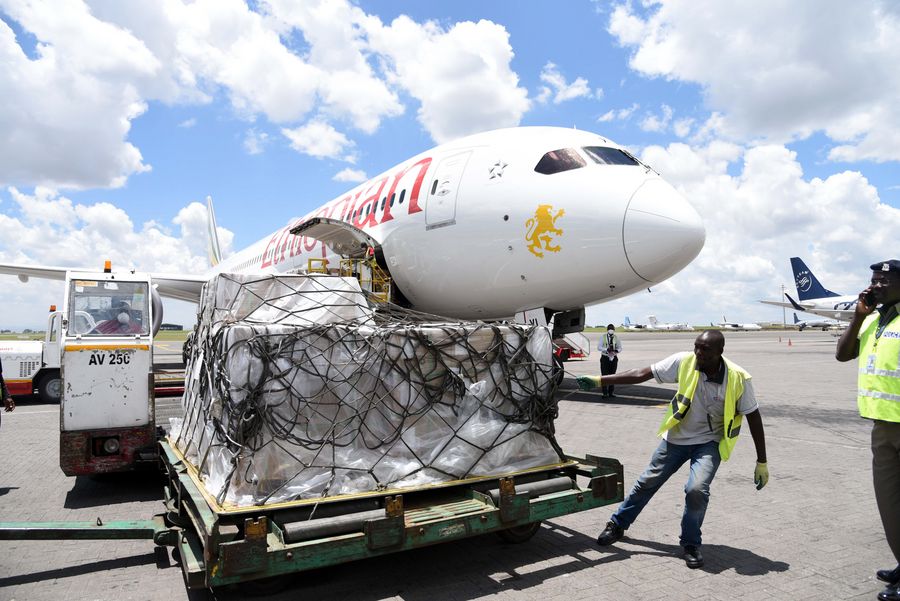
Given the growing number of novel coronavirus cases in Africa, the international community needs to provide special assistance for African countries because they have relatively weak healthcare systems, poor sanitary conditions and public awareness, and face a shortage of medical supplies. As for African countries, they should wake up to the coronavirus threat and prepare to deal with the worst.
The African Union and African countries have been closely watching the trajectory of the spread of the virus and taken measures to combat it based on their own real conditions and capacities. A number of African countries have declared a state of emergency and introduced various measures to slow the spread of COVID-19 including closing border ports, making quarantine mandatory, banning public gatherings and shutting down schools.
But despite being necessary and effective, these measures are not enough to test and treat the rising number of infected people. Africa desperately needs medical supplies-and expert teams to train local medical workers-to fight the virus. As such, the international community should extend a hand to help the vulnerable African countries to prevent the virus from causing serious damage in the continent.
To begin with, the World Health Organization should help coordinate the response of different countries and send medical supplies and expert teams to Africa. China, Russia and Cuba have all sent expert teams to Italy to help contain the outbreak, but even more countries need to similarly help their African counterparts.
Africa's comparatively weak healthcare system, which has already been overwhelmed by the Ebola outbreak, AIDS/HIV, tuberculosis and other infectious diseases, may not be able to cope with a large-scale transmission of the novel coronavirus. In Mali, for example, there is one ventilator per 1 million people, and Kenya, a country with more than 50 million people, has only 550 intensive care unit beds. Worse, many Sub-Saharan countries don't have enough medical workers. Some don't even have isolation wards, and face severe shortage of essential medical gear such as face masks and personal protection equipment, and nucleic acid testing kits and ventilators.
On March 7, when China was at the height of the battle against the virus at home, it donated $20 million to the WHO to promote global cooperation to combat the virus. The Chinese government and enterprises have also supplied medicines and medical equipment to other countries. And the Jack Ma Foundation and Alibaba Foundation have delivered 5.4 million face masks, 1.08 million testing kits, 40,000 protective suits, and 60,000 face shields to African countries.
Still, more countries and companies need to help train African medical workers, and their medical experts should share their experiences of fighting the virus with their African counterparts so the latter can better combat the virus. The virus hit Africa relatively late with imported infections comprising most of the early cases, and therefore, African countries, if properly guided to take the right measures and provided with essential medical supplies, can still prevent a serious outbreak.
China has released seven editions of novel coronavirus pneumonia treatment regime and six prevention and control plans, which have been translated into multiple languages for the benefit of all. And on March 18, it held a videoconference with African nations and shared with them its experience of fighting the outbreak, the genome sequencing of the virus, and treatment of COVID-19.
Yet more experts and medical workers across the world need to be mobilized to help the African countries contain the virus. And since African countries have largely different local conditions and folk customs, they may require special training to fight the virus. As such, local volunteer organizations and NGOs should be mobilized to carry out the virus prevention and control measures.
It is also the responsibility of the international community to help the African states build necessary mobile networks and popularize virus prevention and control measures by combining online and offline training. More important, such measures should be taken as quickly as possible to prevent a worst-case scenario.
The author is a researcher at the Institute of West-Asian and African Studies and China-Africa Institute, Chinese Academy of Social Sciences. The views don't necessarily represent those of China Daily.








