Plenty of oil, but nowhere to put it









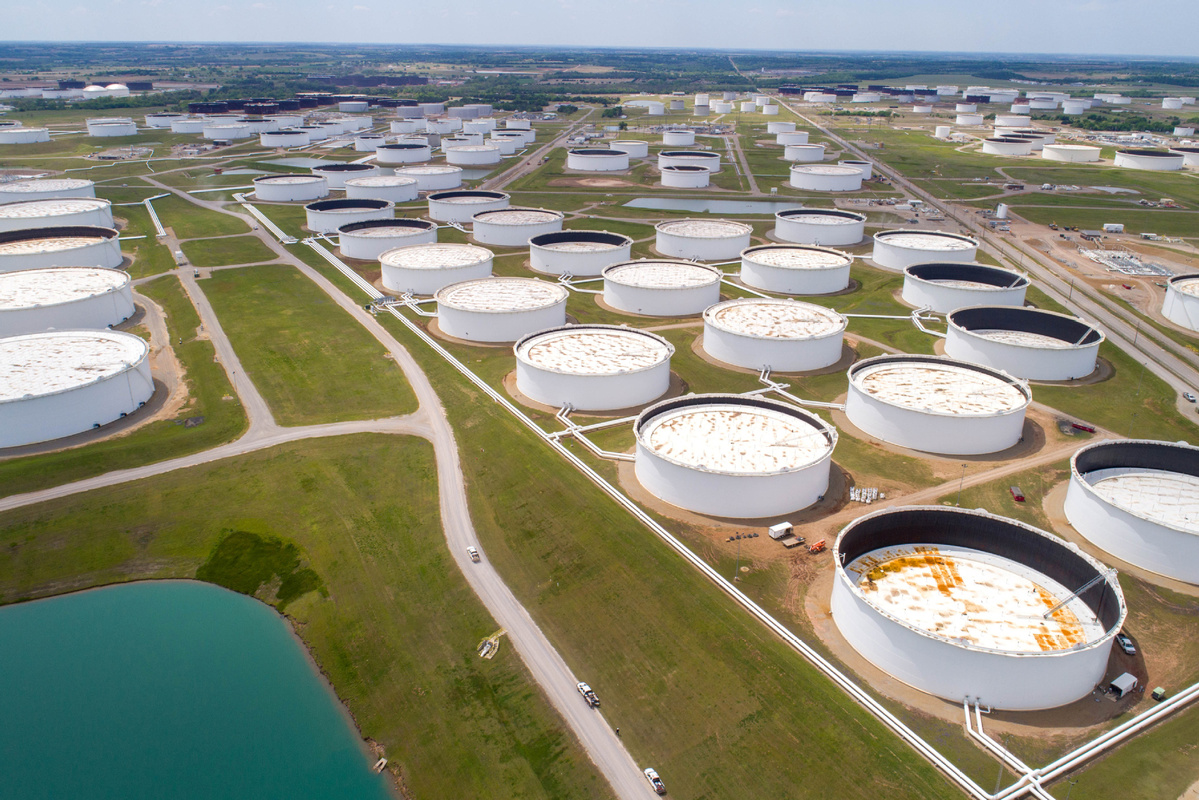
It was a historic first: US crude oil futures fell below zero on Monday, and it provided a brutal refresher course in the law of supply and demand for an economy stalled by government-ordered shutdowns to curb the spread of the coronavirus.
The problem: Oil production, even at reduced levels, exceeds demand, and storage space is filling up.
And the result: The collapse of prices for West Texas Intermediate crude, the US benchmark, which suggests that investors see no immediate economic turnaround in oil despite a slight rebound Tuesday.
Further dislocation is likely, but not all sectors of the economy will suffer equally. Some will be pummeled by low prices, but others may benefit.
Politics may be a key, unknown factor.
In a tweet, US President Donald Trump said he had directed Treasury Secretary Steven Mnuchin to draft a bailout plan for domestic oil and gas producers "so that these very important companies and jobs will (be) secure long into the future".
Trump offered no details, and any plan will have to be debated in Congress.
Companies can be hurt or helped by the collapse of crude oil prices in different ways.
"Upstream" and "downstream" refer to an energy company's location in the oil supply chain, and that position largely determines how it is affected by the plunge in prices.
Companies in upstream production search for oil deposits and extract them. Downstream companies are closer to the consumer and are involved in refining and marketing.
Schlumberger and Haliburton are large service companies that provide upstream production services in the oilfields. Diversified companies such as Exxon Mobil and Royal Dutch Shell are among the largest upstream operators, but they also are involved in retailing.
The plunge in oil prices will pound upstream companies as demand for their services declines. Production will be cut, earnings will fall, and workers will be laid off.
Downstream companies include Marathon Petroleum, Sunoco and Phillips 66, which was part of ConocoPhillips until the parent decided to spin off the downstream business in 2012.
Many consumer products come from downstream refining, including diesel, gasoline, heating oil, lubricants, propane and some pesticides.
Downstream companies are likely to benefit from the price drop because it means lower costs for raw materials, boosting profitability.
If the economy weren't locked down by government orders, large energy users such as airlines, trucking companies and railroads would benefit from lower fuel costs. But demand for air travel has collapsed as people stay home, and major airlines, including United, Delta and Southwest, have reduced flights.
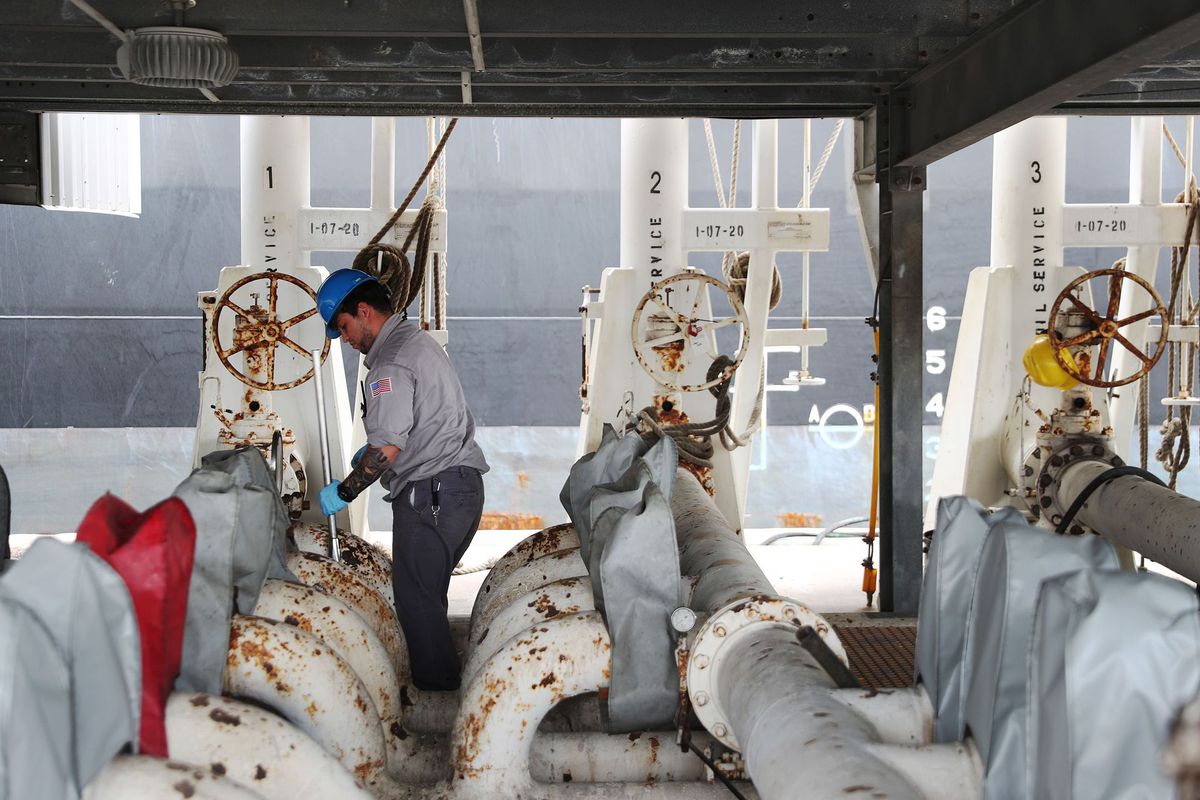
Fuel represents about 30 percent of an airline's operating cost. But a decline in oil prices won't benefit all airlines equally. The reason: hedging — buying jet fuel at a set price for a pre-determined term to avoid unexpected price spikes.
According to news reports, American Airlines doesn't hedge its fuel supply and is therefore likely to benefit from lower prices, while carriers that hedge are locked into higher prices despite the collapse of the crude oil market.
Freight traffic is down, and major railroads such as Union Pacific and Norfolk Southern will run fewer trains, but lower fuel prices won't offset reduced tonnage hauled and smaller profits.
Drivers pulling up to the pump for a fill-up will benefit from lower prices. The average price of a gallon of gasoline in California, the nation's largest market, is $2.80 a gallon, AAA reported. The price was about $3.25 a month ago and $5 or more in some areas prior to the coronavirus pandemic.
But lower prices hurt producers, especially in Kern County, where about one-third of California's crude oil is produced.
"The county is going to be in dire straits for the next year or so," Aaron Hegde, an economist at California State University, Bakersfield, told the Sacramento Bee.
Low oil prices will hit exploration and production companies hard, especially hydraulic frackers that can't operate profitability unless oil is selling for $30 to $40 a barrel.
Frackers pump water, sand and chemicals into wells to release trapped oil and natural gas. The process has made the US into the world's largest oil producer.
"It's a bit of panic in the oilfield," said Artem Abramov, head of shale research for Rystad Energy, to Reuters. "Many firms are stopping all activity right now."
Saudi Arabia and Russia flooded the market with cheap oil in an attempt to gain market share.
Planned production cuts by OPEC and the G20 nations won't kick in until May. As a result, producers are running out of space to store crude oil because even the reduced supply is outstripping weak demand, sending prices lower.
Michael Lynch at Forbes said OPEC producers such as Angola, Nigeria and Iraq that don't have sufficient refining capacity or long-term supply contracts with importing nations are likely to be severely hurt by the worldwide collapse in prices.
Saudi Arabia, OPEC's largest exporter, has signed major deals with China, the world's largest oil importer, thus assuring its position. Countries with long-term contracts will survive the price crunch better than those that rely on sales in the spot market, especially if demand remains weak.
Owners of storage capacity, or those who have leased it, are also likely to be winners despite the downturn in prices. Storage costs are rising as demand for tankers to store crude oil at sea grows because it makes little sense to sell large amounts at current prices.
The bet: Crude oil can be economically stored and sold at a profit when prices rebound. It's a reasonable bet — if the economy rebounds quickly.